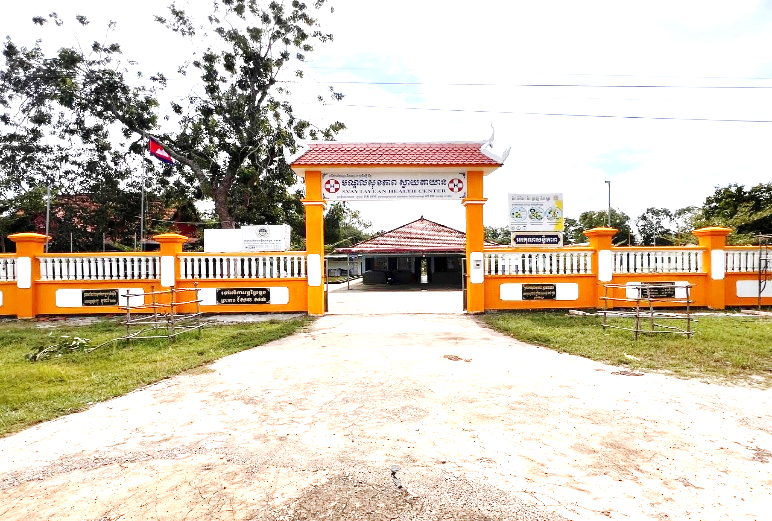
A journey of Change: How Social Accountability transformed Svay Ta Yean Health Centre

Not long ago, walking into Svay Ta Yean Health Center meant stepping into a place where hope felt distant. The building was old and worn, with only one shared bathroom, no medicine warehouse, and limited space for patients. Services were slow, staff were often absent or unprofessional, and transparency was almost nonexistent. For years, the center struggled with low patient turnout—only 250 to 300 visits per month—and the community had little trust or confidence in its care.
“In the past, the HC had an old building that had been in operation since 1998, which was not up to standard, had no medicine warehouse, and had only one shared bathroom (for men and women). Services were poor, with statistics showing that only about 250–300 people per month received services,” explained Mr. Chan Boran, Head of Svay Ta Yean Health Center. He added that challenges included “an insufficient number of staff, unprofessional attitudes, rude behavior, and inappropriate language toward clients, without regular staff on duty during official working hours.”
Everything began to change in early 2023. When Mr. Boran took leadership and STAR Kampuchea introduced the Implementation of the Social Accountability Framework (I-SAF), a new chapter unfolded. I-SAF aimed to make public services—especially health centers, schools, and commune offices—more transparent and responsive to citizens. Through community scorecards, interface meetings, and joint accountability action plans (JAAPs), voices that had long been silent were finally heard.
Community feedback revealed deep-rooted issues: irregular working hours, poor hygiene, lack of accountability, and no clear information about service fees or budgets. These conversations sparked action. The health center began reorganizing its processes, simplifying documentation, and ensuring equal treatment for all patients—rich or poor, with or without health equity cards. Staff committed to operating 24/7, attending regular meetings, and treating patients with respect and dignity.
Physical changes soon followed. The compound was paved, a motorcycle parking shelter was built, fences were repainted, and a new entrance gate and garden welcomed visitors. Transparency improved as income and expenditure details were shared publicly, and community members gained confidence to voice their opinions. The health center also strengthened its capacity with adequate medicines, clean maternity rooms, new beds, oxygen tanks, and essential equipment.
The impact has been remarkable. Monthly patient visits have tripled, rising from 250–300 to nearly 900. Deliveries increased to 18–20 births per month, and patients now come not only from Svay Ta Yean but also neighboring communes. Residents speak of kindness and professionalism:
“Here, healthcare providers deliver high-quality services. The medical staff are friendly, approachable, and provide good consultation and advice. They do not discriminate against patients, whether rich or poor. Those who arrive earlier receive services first, while those who arrive later are treated accordingly. In addition, there is a clear service fee schedule based on the type of illness,” said Ms. Sor Vanna, 54, from Prey Thlok Village.
“The healthcare providers here deliver services promptly, even on days when I arrive late due to difficulty crossing the road. I come here very frequently, yet I have never seen any staff member appear upset or speak harshly to patients. They are always very kind and gentle in their communication,” shared Ms. Nguon Ya, 74, from Prey Stieng Village.
Mr. Boran emphasized that these achievements were the result of “strong staff unity and teamwork, effective collaboration with local authorities and benefactors, and continuous support from the Provincial Health Department and the Operational District.” He added that the HC now “educates communities through visual materials, provides adequate medicines and medical equipment, maintains a clean maternity delivery room, and has mobilized support from benefactors to further develop and improve the HC.”
Looking ahead, the health center plans to maintain regular management meetings, ensure medicine supply, improve sanitation, and strengthen outpatient services—all guided by the JAAP. What was once a struggling health center is now a symbol of progress and accountability—a place where trust has been rebuilt, and health services truly serve the people.
What was once a struggling health center is now a symbol of progress and accountability—a place where trust has been rebuilt, and health services truly serve the people. Svay Ta Yean Health Center is one of six health centers located in Svay Ta Yean Commune, Kampong Rou District, Svay Rieng Province, under the supervision of Chey Phu Referral Hospital in Bavet City. Together, these centers play a vital role in delivering essential healthcare services across 11 communes, ensuring that thousands of residents have access to quality care.