
Beyond Trees: How Regreening Africa Is Integrating Gender and Disability Inclusion into Landscape Restoration

By: Seth Frimpong and Richard Appoh
Tamale, Northern Region, Ghana
“I used to think gender was only about women. Now I understand it is about fairness, participation, and ensuring everyone has an equal opportunity to contribute and benefit.”- Emmanuel Akumbun, AEA Bawku West District
Across northern Ghana, women and persons with disabilities continue to face barriers that limit their participation in restoration, agriculture, and decision-making processes. Unequal access to land, limited control over resources, restrictive social norms, and exclusion from community leadership structures often reduce their ability to benefit fully from development interventions.
Recognizing that successful landscape restoration must be inclusive to be sustainable, the Regreening Africa Project, implemented by World Vision and Catholic Relief Services, organized a four-day Gender and Disability Integration Training Workshop in Tamale from 28th April to 1st May 2026 for project staff and implementing partners from five districts, namely, Mion, Yendi, Bawku West, Garu, and Tempane.
The workshop brought together Agricultural Extension Agents (AEAs), Women in Agricultural Development (WIAD) Officers, and project staff to strengthen their capacity to integrate Gender Equality, Disability, and Social Inclusion (GEDI) into restoration and livelihood interventions under the project.
Rather than relying on traditional lecture-based training, the workshop adopted a highly participatory and reflective learning approach. Through debates, role plays, group exercises, plenary discussions, and real-life case analysis, participants explored how gender norms, disability, and power relations influence access to opportunities and project outcomes within farming communities.
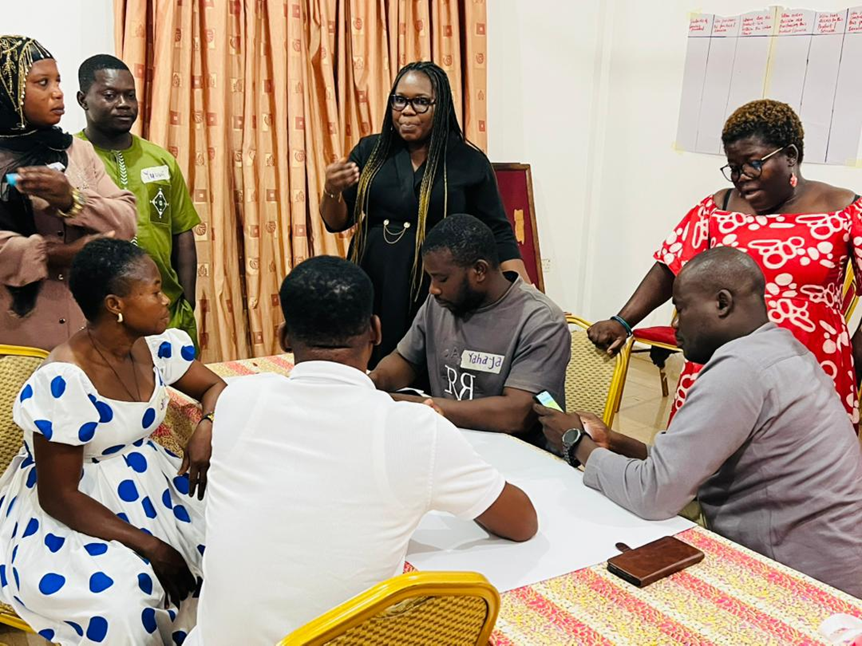
One of the most impactful sessions challenged participants to physically position themselves according to whether they agreed or disagreed with the statement: “Men are better farmers than women.” What began as a simple exercise quickly evolved into a powerful conversation about inequality, access to resources, and deeply rooted cultural perceptions.
Participants reflected on how women often perform the majority of agricultural and household labour yet have limited control over land, income, and decision-making. Many acknowledged for the first time that differences in productivity are often linked not to ability, but to unequal access to opportunities, training, and resources.
The workshop also deepened participants’ understanding of disability inclusion. Through guided discussions, participants examined how environmental barriers, inaccessible meeting spaces, communication challenges, and negative community attitudes unintentionally exclude persons with disabilities from development initiatives.
Joshua Atafo, An AEA from Garu District remarked:
“We realized that inclusion does not happen automatically. If we do not deliberately plan for persons with disabilities and vulnerable groups, they will continue to be left out.”
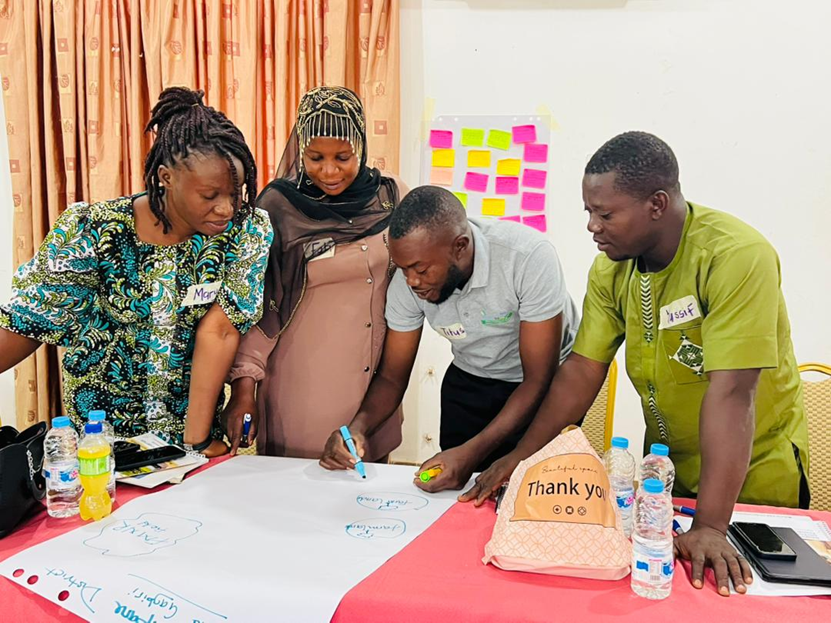
Another transformative moment came during the stakeholder power and influence mapping exercise. Participants analysed who holds power within communities and how those power dynamics affect participation in restoration activities. Traditional leaders, male household heads, and assembly members emerged as highly influential actors, particularly in relation to land ownership and community decisions.
At the same time, women, youth, and persons with disabilities were identified as groups with high interest in restoration activities but limited influence over decisions affecting them.
This realization prompted district teams to develop practical action plans aimed at strengthening inclusive participation within project implementation. The plans included:
targeted community sensitization,
promotion of joint household decision-making,
engagement of traditional leaders as champions of inclusion,
deliberate inclusion of women and persons with disabilities in trainings and restoration activities,
and adapting meeting arrangements to improve accessibility.
Importantly, the workshop shifted participants from awareness to action. Many extension staff acknowledged that they had previously focused primarily on technical restoration practices without adequately considering the social dynamics influencing adoption and participation.
By the end of the training, participants demonstrated stronger confidence in applying gender-responsive and disability-inclusive approaches within their field activities. Several district teams committed to integrating GEDI considerations into farmer mobilization, extension delivery, and monitoring processes.
The training reinforced a critical lesson for the Regreening Africa Project: sustainable restoration is not only about restoring trees and landscapes - it is also about restoring fairness, voice, participation, and opportunity within communities.
As the project continues to scale restoration efforts across northern Ghana, the integration of gender and disability inclusion is expected to strengthen community ownership, improve equitable benefit-sharing, and enhance the long-term sustainability of restoration outcomes.