
Seeds of Change: Building Local Capacity for Thriving Tree Nurseries and Landscape Restoration in Northern Ghana

By: Philip Yelmongmine and Richard Appoh
Bolgatanga, Upper East Region, Ghana
In the dry landscapes of Northern Ghana, restoring degraded land has become increasingly challenging. Years of declining soil fertility and erratic rainfall have made it difficult for farmers to establish and sustain planted trees. For many communities, the challenge is not only about planting trees, but also about finding the right seedlings to start with. Without access to quality planting materials or the knowledge to raise them, many restoration efforts have fallen short.
“I used to plant whatever seeds I could find, but many of them failed. I didn’t know why,” recalls John Akugri, a tree nursery operator from Bawku West District.
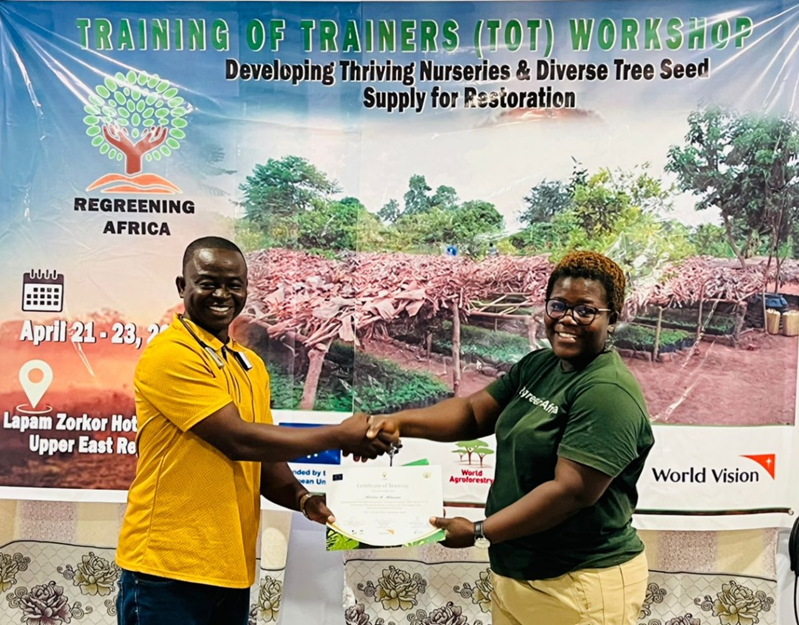
That began to change in April 2026. From 21st to 23rd April, a three-day Training of Trainers (ToT) Workshop was held in Bolgatanga, bringing together 35 participants from the District Departments of Agriculture, private nursery operators, the Forest Services Division, the University for Development Studies, and Bolgatanga Technical University.
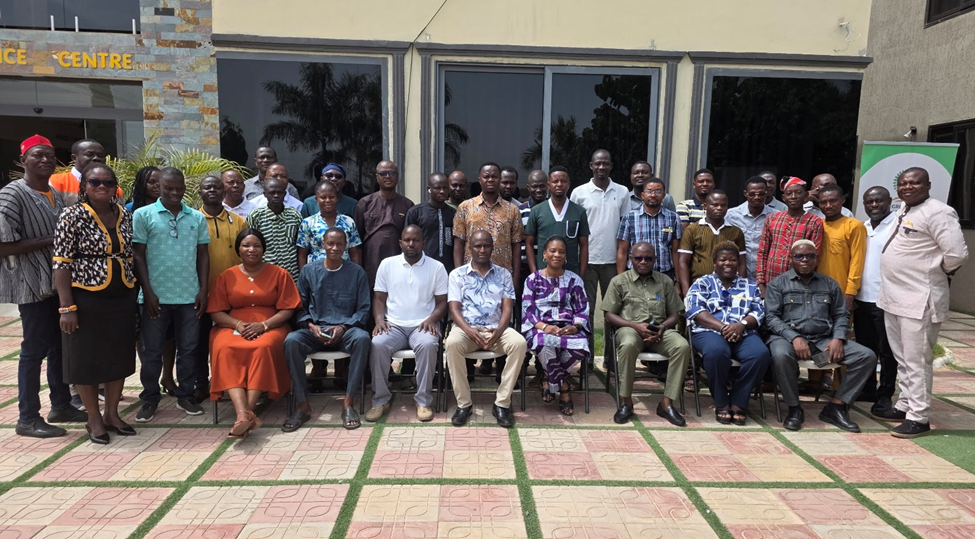
The training was organized by World Vision Ghana, in partnership with Catholic Relief Services and the World Agroforestry Centre, under the European Union funded Regreening Africa Project, which seeks to restore degraded lands in the Bawku West, Garu, Tempane, Binduri, Yendi, and Mion districts across Northern Ghana.
The goal was simple but powerful: to build local capacity to produce quality tree seedlings and restore degraded landscapes from the ground up.
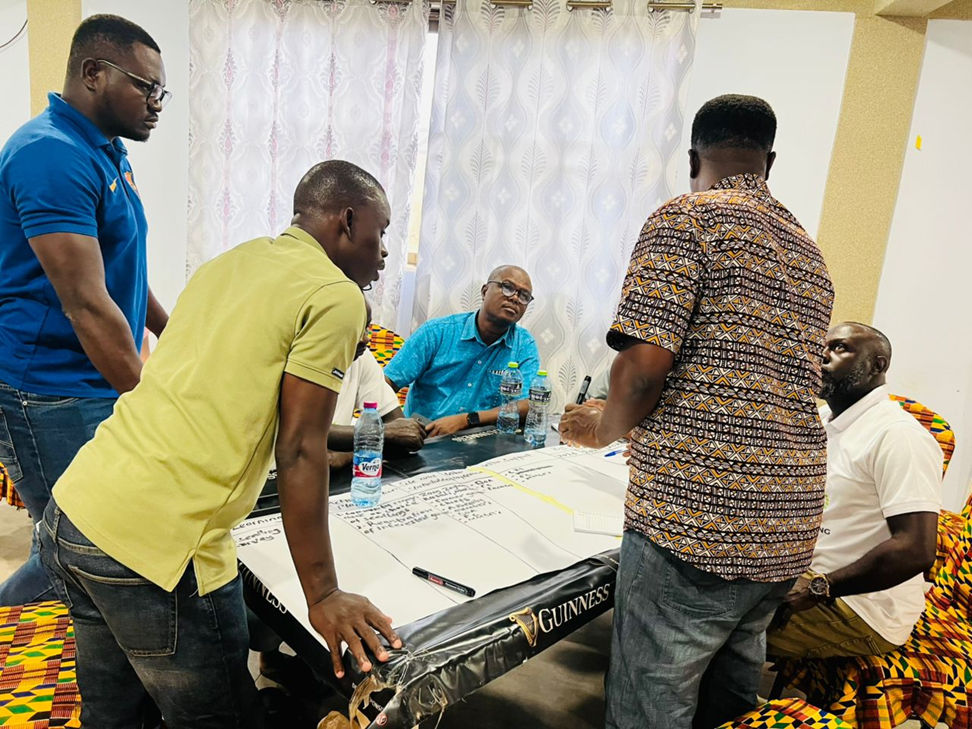
Participants engaged in hands-on learning, including mother tree selection, seed collection and processing, nursery establishment, and climate-smart nursery management practices. At the Rural Resource Centre in Bawku West District, they observed practical demonstrations that brought theory to life.
But beyond the technical skills, something deeper changed.
“Now I understand that success begins with the right seeds, the right knowledge, and the right approach. This training has completely changed how I will support farmers,” shared Aboko Stephen, an extension officer from Garu District.
Each of the 35 trained facilitators developed a practical action plan tailored to the needs of their communities. Together, they are expected to support hundreds of farmer groups to establish and strengthen tree nurseries, producing diverse, high-quality seedlings adapted to local conditions.
The ripple effects are already beginning to emerge. Stronger tree nurseries mean more trees. More trees mean healthier soils, improved crop yields, and greater protection against climate shocks. For rural households, this translates into increased income, improved food security, and renewed hope.
More importantly, the knowledge now lies within the communities themselves. By investing in local skills and leadership, this training is not only building capacity to produce healthy tree seedlings, it is planting the foundation for long-term resilience.