
"What If I Ruin It?”: From one pair of trousers to a livelihood of her own

How Sahira found her way through sewing
"I still remember the first thing I ever sewed. It was a pair of trousers for my four-year-old niece. Everyone in my family was so happy when they saw them. I was happy too. I never imagined then that sewing would become such an important part of my life."
My name is Sahira. I am 52 years old, and I live in Bartella, Ninewa, with my husband and our three children,
Growing Up With a Different Dream
When I was growing up, there were six of us at home. I had always wanted to continue my education, finish high school and go to university. My father was a teacher and the only person supporting our family, while my mother cared for the home and family. Our financial situation was difficult, so I could not continue my studies. I had wanted to finish secondary school and go to university, but it was not possible for me.
I was always interested in drawing and making sweets. Then, when I was twenty-two, something happened that changed the direction of my life.
A girl from my neighbourhood encouraged me to join a sewing course offered through the church. We attended the course for more than two months. I learned a new skill and, for the first time, started thinking about how I could depend on myself.
After the course, I began sewing simple things at home, clothes for dolls, small pieces of clothing and other items. I had a neighbour called Salma who was already a seamstress. She encouraged me to start sewing for customers, but I was very afraid of ruining the fabric.
I told her, “I can't do this. It's a big responsibility. What if I damage someone's fabric or clothes?”
She told me, “Don't worry. I'm with you every step of the way.”
That gave me the courage to try. Salma started sending some of her customers to me, she did not have enough time to complete their orders. She would tell them, “My neighbour is also a skilled seamstress.”
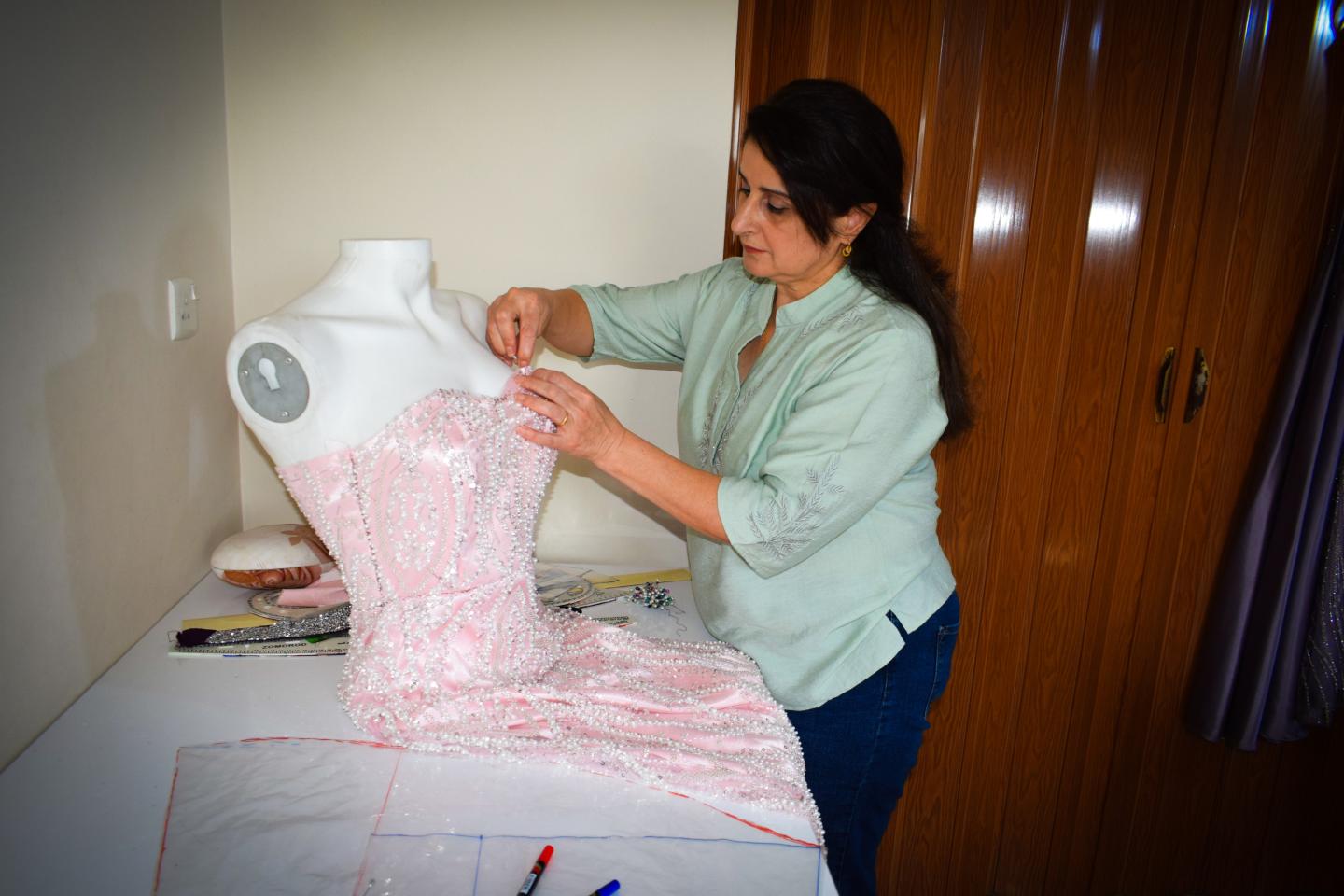
Little by little, I gained more customers. I started working from home and slowly built my reputation. I have always loved drawing, and that helped me a lot with sewing. I can draw different designs and then turn them into dresses and clothes according to what my customers want.
Working Hard, But Still Struggling
Then, in 2014, conflict forced my family and me to leave Bartella. We moved to Ankawa, Erbil, and stayed there for three years. During that time, I stopped sewing. I had left my sewing equipment at home, so when we were displaced, I could not continue my work. Those three years were difficult for our family. My husband was doing daily work, doing whatever work he could find to provide for us. We rented a house together with two other families and shared the rent, food and other expenses. The support we received from the church was also very important during that time. They provided us with food baskets, bedding and other essential items, which helped us get through those difficult years.
When we returned to Bartella, I started again.
Over the years, I gained more customers, especially during the summer when there are many weddings and celebrations. Sometimes I would work until three in the morning.
But my sewing machine was old and slow. I also did not have all the equipment I needed. Sometimes I had to refuse customers because I simply could not finish their orders on time.
My days were very long. In the morning, I would take care of the housecleaning, cooking and everything else that needed to be done. Then I would start sewing at around 3:30 in the afternoon and sometimes continue until 3 in the Morning. During the school year, I also needed to help my youngest daughter with her homework. Most days, I was sleeping for only about five hours.
More Than a New Sewing Machine
Then I heard about a sewing training supported by World Vision. I decided to participate because I wanted to refresh my knowledge, learn new techniques and improve the quality of my work. I also wanted to leave the house, meet other women and spend some time with people after being at home most of the year. I really enjoyed the training.
The trainer shared everything she knew with us and did not hold anything back. I learned new sewing techniques, but I also learned about violence against women and financial management. Most importantly, I met other women and had the chance to learn from their experiences.
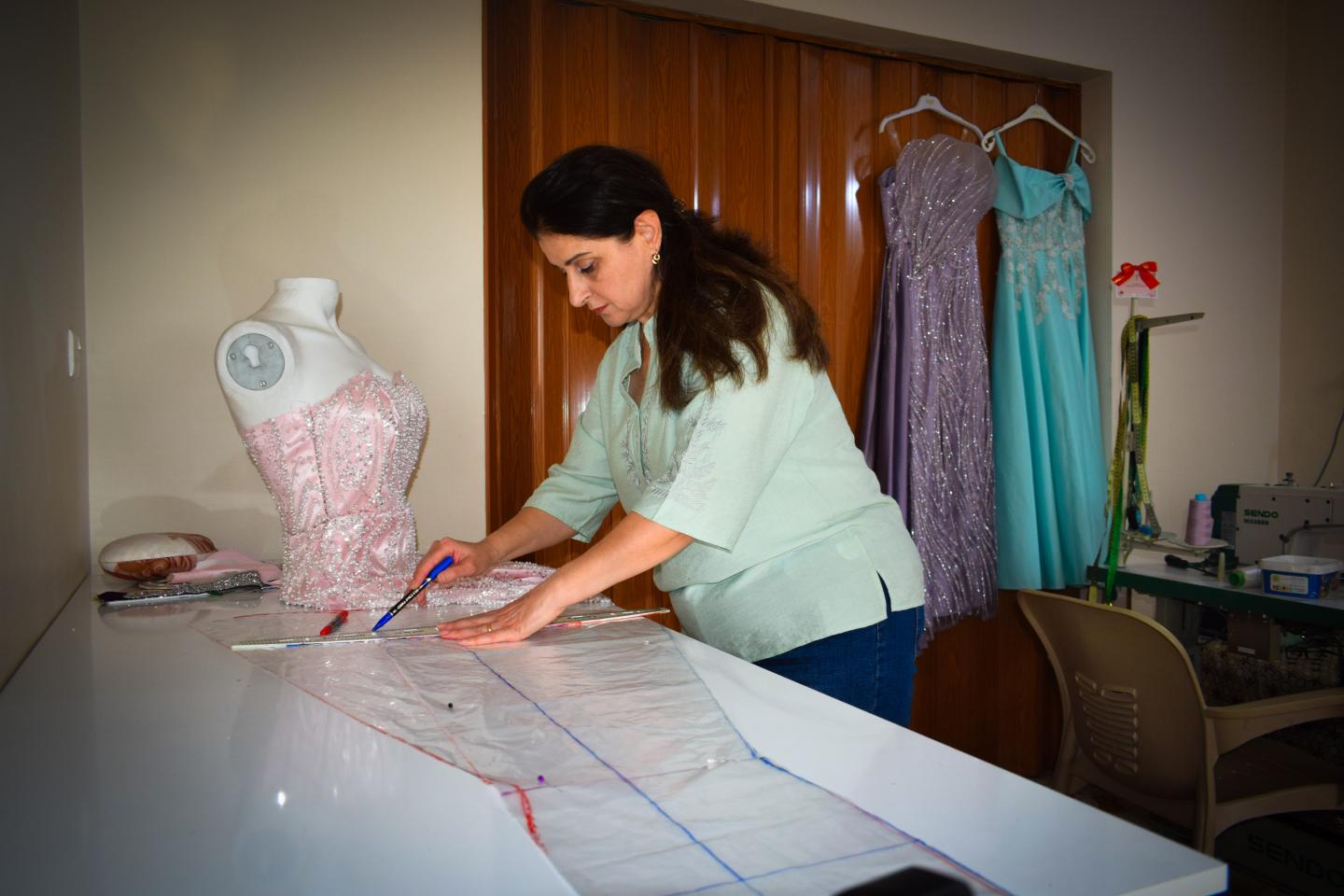
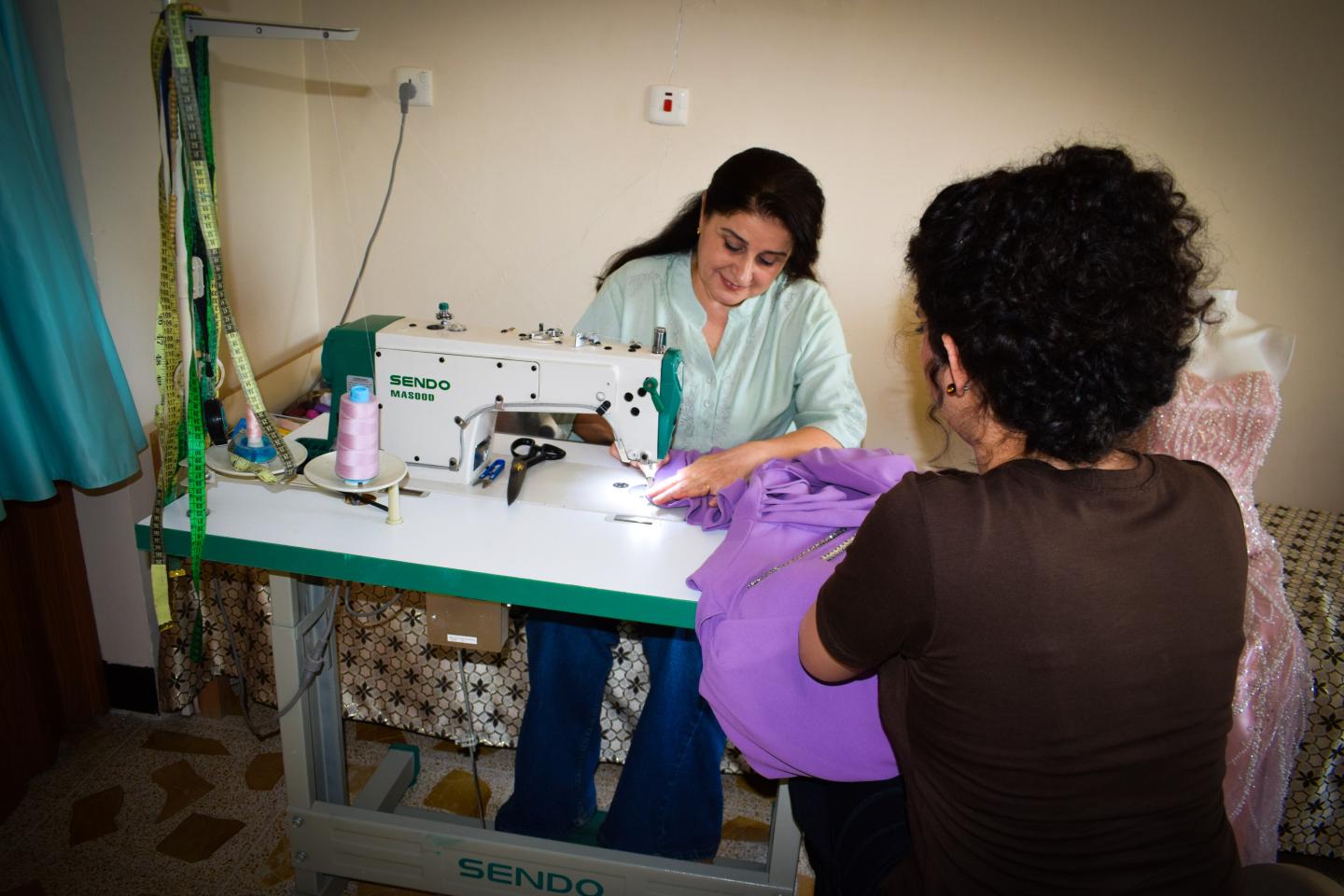
After the training, I received a grant. I knew exactly what I needed. I bought a new sewing machine, a cutting table, a professional steam iron and other sewing tools. The difference was huge.
My new machine is much faster, and the cutting table makes designing and sewing much easier. Before, I could not produce large quantities because my old machine was so slow. Now, I estimate that my production has increased by around 50 percent.
Now I Can Contribute Too
But it is not only my work that has changed. Before, most of the financial responsibility for our family was on my husband. He works on a daily basis, and I know how difficult it can be to meet all the family's needs.
Now, I can support him. I can also buy things for myself and my children without feeling the same pressure I used to feel. There are things I would avoid buying before because I was always thinking about the financial pressure on my husband. Now I can afford some of those things more comfortably. I feel more independent, and I feel better about myself.
Today, I can sew almost any model, even difficult designs. But I still get nervous sometimes. I care a lot about details. Before I work on the actual piece, I make a sample first. I need to be satisfied with the design and the quality before I show it to my customer. I don't accept work that is below my standard.
Of course, there are still challenges. Some customers are very, very picky. "There are a few who are really difficult," I say with a laugh. “I just have to be very patient with them!”
I am still working from home, and I still have my responsibilities as a mother and a wife. There are days when I am tired, and there are still many things I want to improve.
There Is Still More I Want to Do
But I am thinking about the future. One day, I would like to open my own tailoring shop outside my home. I also want to teach girls how to sew and help them learn a skill that can give them their own source of income.
When I think about where I started, I remember that little pair of trousers I made for my niece. It was just one piece of clothing. But for me, it was the first stitch in a much bigger journey.
And I am still sewing that journey.
Anita, 16, Sahira’s daughter, has also noticed the difference.
“It is a really nice feeling to see my mom a little more relaxed and comfortable when she is working. Her new sewing machine is much faster and makes her work easier. I’m also happy that things are better for us financially. Before, we couldn’t always buy the things we wanted, but now we can afford more things comfortably, especially some of the things we need as girls in the family.”
Through this project, 60 women like Sahera from different communities across Ninewa received livelihood skills training. Thirty women participated in sewing training and 30 in salon training, with each woman completing 15 training sessions. Participants also received grants to help them invest in their livelihoods. The support was made possible through World Vision United States of America.
For women like Sahira, the impact is not only in the equipment they receive. It is in the confidence to try, the ability to contribute to their families, and the possibility of opening a door for another woman to follow.