
Sajida’s Stubborn Optimism Made a New Beginning Possible in Iraq

For Sajida Nimr Farhan, rebuilding life after displacement once felt impossible.
The 34-year-old Yazidi mother lost nearly everything after the 2014 ISIS attack on Sinjar in the Ninewa Governorate of Iraq. During the violence, a member of her family was killed, forcing Sajida and her family to flee their home in Al-Qahtaniyya sub-district of Sinjar and seek safety in Khanke camp in the Duhok Governorate of the Kurdistan Region or Iraq.
For years, the family lived in tents under extremely difficult conditions, relying entirely on humanitarian assistance while struggling with fear, uncertainty, and trauma.
After returning to Al-Qahtaniyya in 2022, Sajida continued to face significant hardship. Living with a physical disability and limited livelihood opportunities, she found it difficult to support her children or contribute financially to her household.
“I used to feel completely helpless because of my disability,” Sajida says. “But the training and psychosocial support brought me back to life. Today I have my own business and depend on myself — something I never imagined possible.”
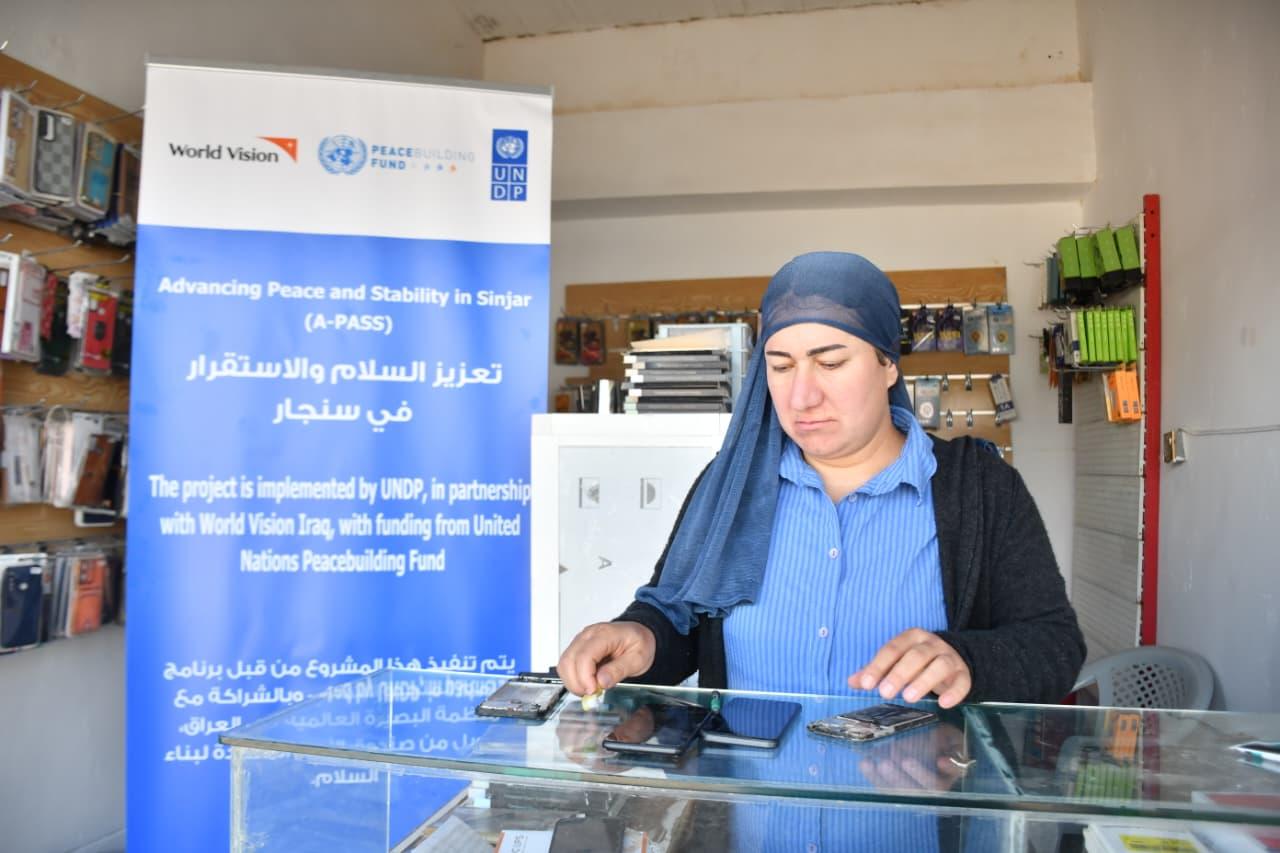
Sajida’s turning point came through the Advancing Peace and Stability in Sinjar (A-PASS) project, implemented by World Vision Iraq in partnership with the United Nations Development Programme (UNDP) and supported by the United Nations Secretary-General’s Peacebuilding Fund (PBF).
Through local peace teams and community leaders, Sajida was identified as one of the vulnerable returnee women who could benefit from the project’s integrated support approach. She participated in vocational training on mobile phone and computer repair, alongside business management training designed to help participants establish sustainable livelihoods.
In addition to vocational support, Sajida also received psychosocial support sessions that helped her cope with trauma, rebuild confidence, and reconnect with her community after years of displacement and isolation.
Following completion of the training, Sajida received a USD 2,000 grant that enabled her to establish her own mobile phone repair and accessories shop in Al-Qahtaniyya.
Today, the business provides a stable source of income for her family. With support from her husband, who has prior technical experience, Sajida continues to grow and develop the shop while applying the business management skills she gained through the project.
“The project did not only help me financially,” she says. “It helped me reconnect with my community, regain my dignity, and believe that life can move forward again.”
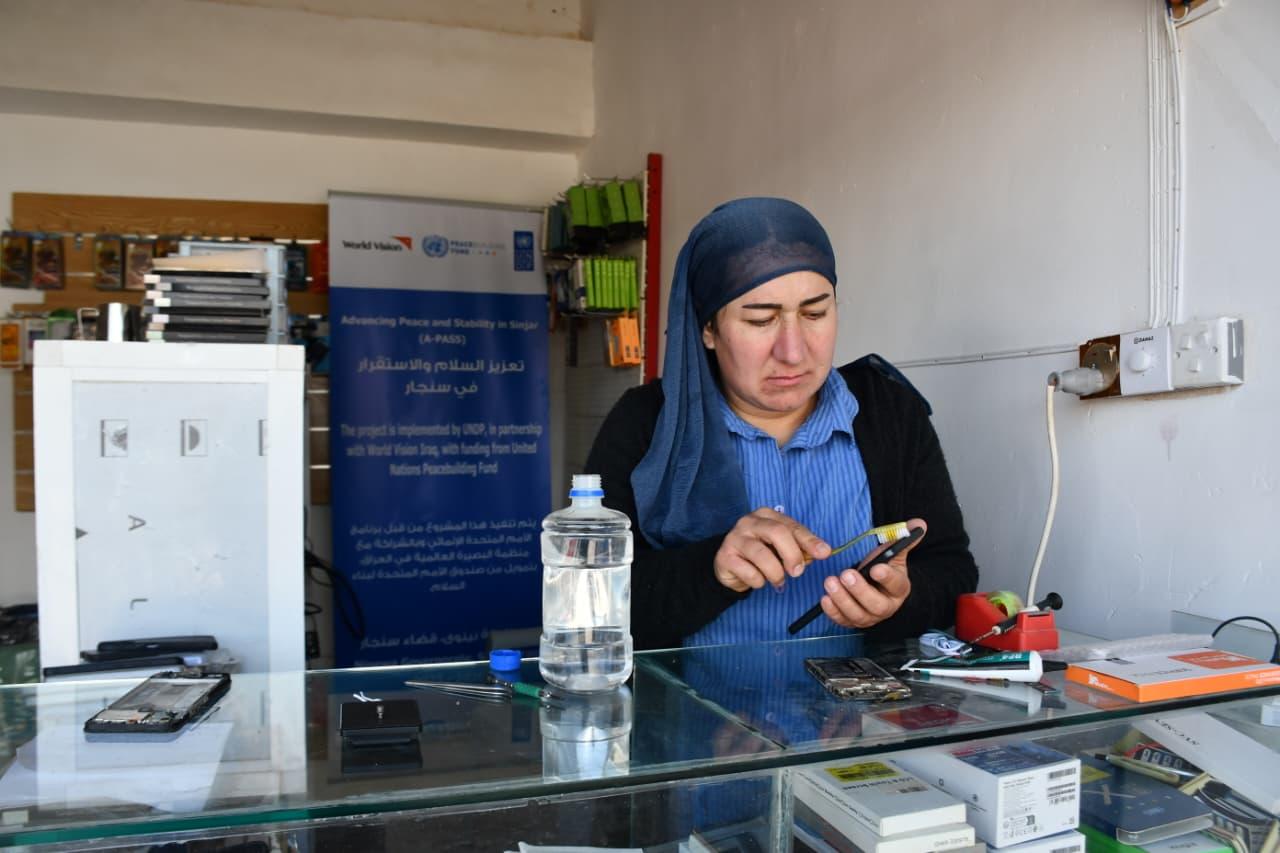
For Sajida, peacebuilding means more than economic recovery. It means regaining independence, restoring trust in the future, and rebuilding a sense of belonging within her community.
“Sajida’s story demonstrates how combining economic empowerment, psychosocial support, and community engagement can help conflict-affected families rebuild stability, resilience, and trust after displacement,” says Muntasser Hamid Abdullah, Project Manager at World Vision Iraq.
Today, Sajida dreams of expanding her business and creating a more stable future for her children.
“My dream now is to expand the shop and teach my children that even after everything we survived,” she says, “we can still build a future.”