
A Family Struggles to Survive Amid Somalia’s Drought

Lughaya, Somaliland
In a small village in rural Somaliland, Ayan Abdi sits outside her simple home. She has raised ten children over twelve years. However, the past two years have brought challenges that have changed their daily life.
“We used to have livestock,” she says. “It provided milk, meat and income. We supported ourselves. Life was different then.”
The drought has made it hard to maintain this way of life. The family lost their livestock, and many shops and livelihoods that depended on them have closed. Some children have had to relocate to areas with more resources to help them survive.
“We have nothing here, and some families had to move to other areas where there was rain,” Ayan explains.
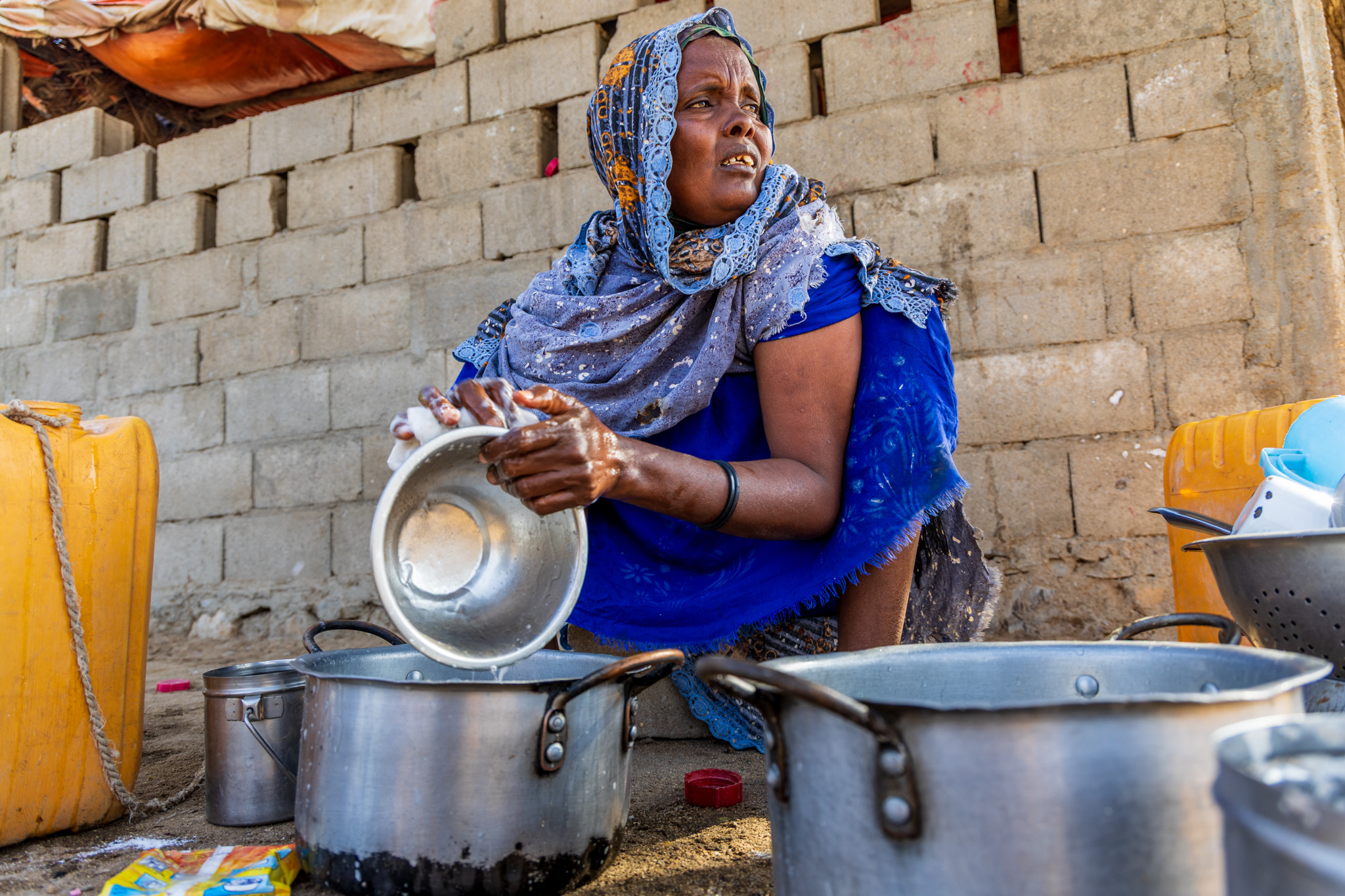
Ayan carries out daily chores at her homestead with the help of her children.
Without reliable access to food and water, children are vulnerable. Ayan says they sometimes only have sorghum to eat and must drink water from sources that can make them sick.
“They used to eat meat and drink milk,” she says. “Now they get very little, and their health is deteriorating. Women and children here are struggling.”
Education has also been affected. Several of Ayan’s children used to go to school, but she can no longer afford the fees, and teachers in the area are often unpaid.
“Our children are at home now,” she says. “The most important thing is to make sure they have something to eat.”
Getting water requires a long journey. The closest source of safe, filtered water is about four hours away. Families carry it by hand or on donkeys, while the nearby water is only suitable for cooking.
“We go far to find water we can drink,” she says. “Otherwise, we use the local water for cooking, but it is not clean.”
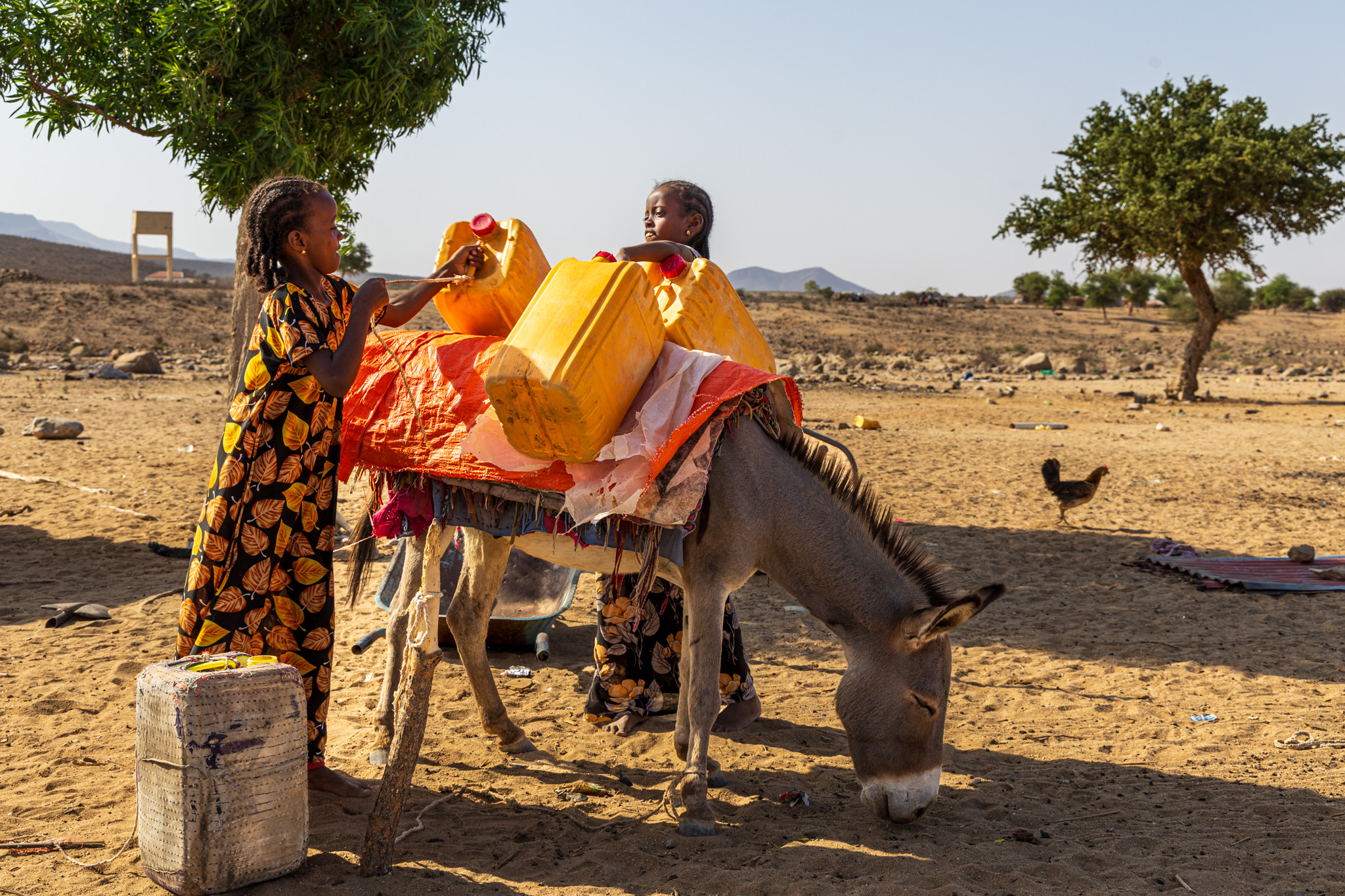
Ayan's elder daughter prepares the donkey to fetch water from a distant source. After a long journey, they return with water for the household.
Ayan describes a community where daily routines revolve around finding water and food. Pregnant women and young children are especially affected, often needing medical care. For her and her family, survival is measured in small, practical steps, finding water, preparing meals and keeping children safe and healthy.
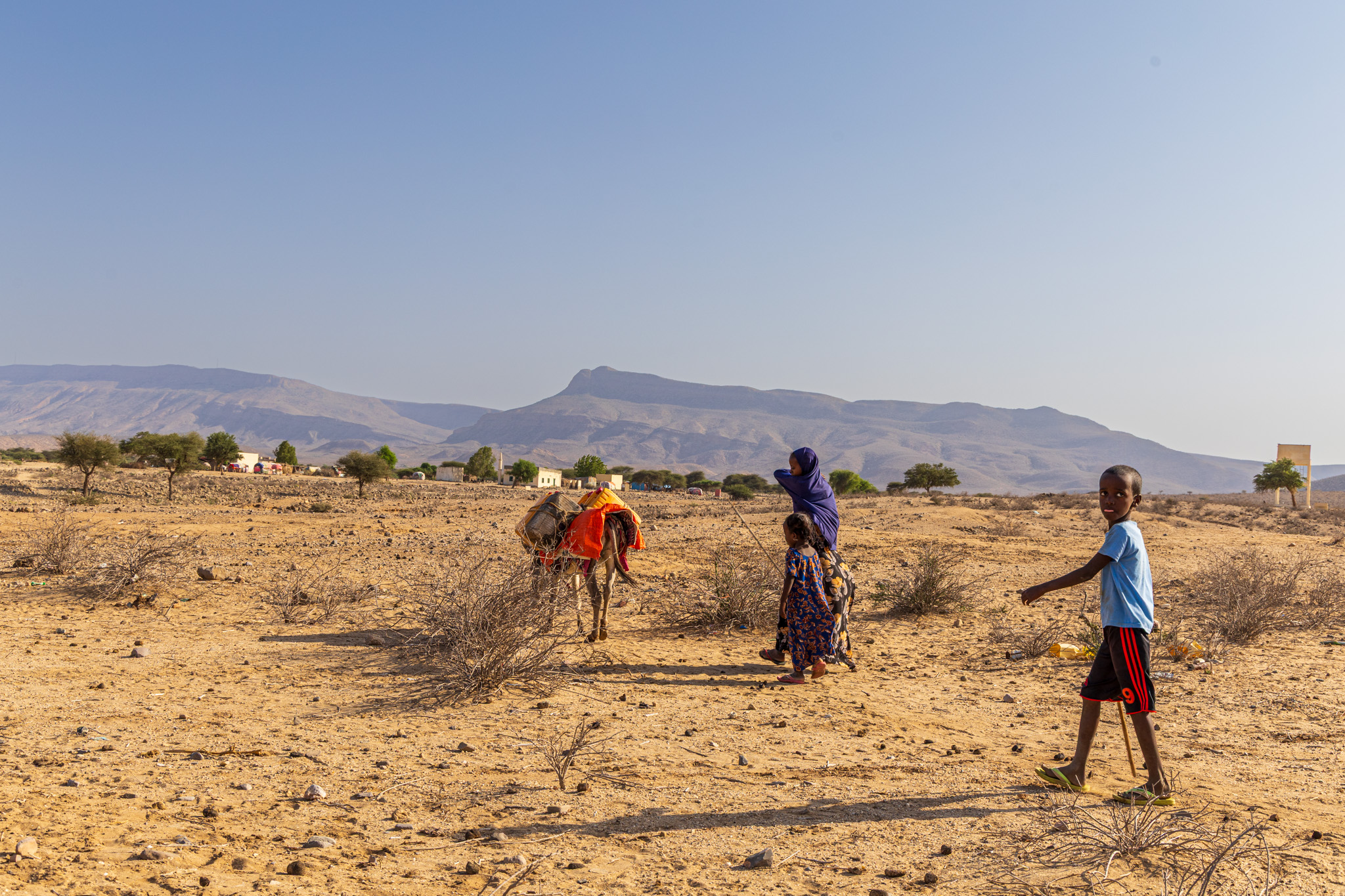
Ayan's children fetch water from a distant source. After a long journey, they return with water for the household.
--Ends--