
“I Dont Want My Children to Die of Hunger”: One Family's Fight Against a Famine Somalia Has Seen Before

The scale reads 6 kilograms. For most one-year-olds, that number would be alarming on its own. For Hanan*, it confirms what her mother, Mariam*, already feared.
A health worker at Waberi Health Facility wraps a measuring tape around the toddler's upper arm, a routine check that takes seconds but delivers a life-altering verdict. The reading falls well into the red zone. Hanan* is diagnosed, on the spot, with severe acute malnutrition.
It is not an isolated case. At Waberi, more than 1,500 children are being screened every month, and at least five new cases of severe malnutrition are recorded every day. In Buurhakaba, a district that food security assessments now place within famine conditions this has become routine. Behind the statistics is a stark reality: children are dying, and families are running out of ways to survive.
"We walked for three days to reach this health facility so that I could get my child some help," Mariam* says, her eyes filling with tears. "Waberi is the closest facility to us. Others have closed. Without this place, only Allah knows what would happen to us."
Mariam* is a mother of five. Hanan*, her youngest, is the first of her children to be diagnosed with malnutrition but Hawa does not believe she will be the last.
"I don't know what I will give my children to eat," she says. "I know the others will follow, because I have no food to give them. I don't want my children to die of hunger."
Not long ago, Mariam* was a farmer. Consecutive failed rainy seasons destroyed her crops and wiped out her livestock, stripping away the livelihood that once fed her family. Today, she has nothing left to fall back on, no harvest, no herd, no safety net.
Her story is not unique. It is a window into what humanitarian agencies like World Vision warn is a rapidly unfolding catastrophe, one shared by millions of families across Somalia who are now standing at the edge of starvation.
Hanan* represents Nearly 1.9 million children under the age of five in Somalia who are projected to suffer from acute malnutrition. Of these, nearly half a million (493,000) are experiencing severe acute malnutrition, which is the deadliest form of hunger.
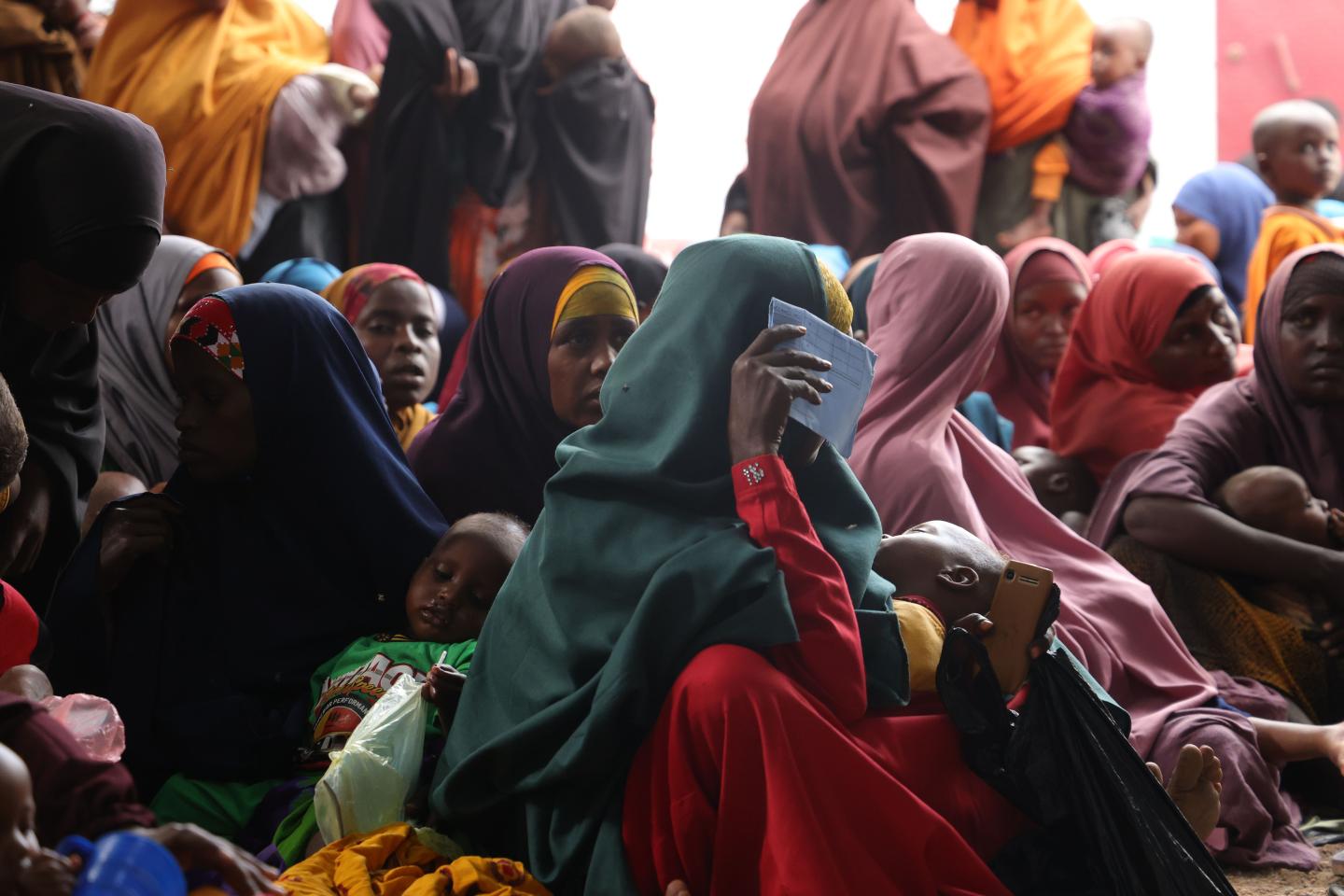
Somalia has lived through famine before. In 2011, more than 250,000 people died, half of them children under five in a crisis that unfolded gradually, visibly, while the world debated whether the threshold had been crossed, now the world is debating who deserves humanitarian support as once again another crisis unfolds.
Communities like Buurhakaba are now warning that history is repeating itself, only this time, health facilities are closing rather than expanding, and access to those still open is being measured in days of walking, not minutes of driving.
Somalia cannot afford another famine. The warning signs closing clinics, rising malnutrition caseloads, families walking days for care that used to be down the road are not distant projections. They are present in a scale reading 6 kilograms, in a mother's tears, in a household with nothing left to eat.
Without urgent, scaled-up funding and access for humanitarian response, Mariam’s* fear for her remaining four children will not stay a fear for long.
*Name changed for identity protection.