
Hands That Sow Hope: A 27-Year-Old Farmer Cultivates A Thriving Future

Mawa Muhamedi’s watermelon garden stretches across one quarter of land in Ludedela village, Lobule sub-county, Koboko district. At just 27, he has discovered empowerment through agriculture.
This season, his garden is flourishing. Moving between the rows, Mawa walks with a practiced eye, bending low to tap the melons and listening for the hollow sound that signals ripeness. His calloused hands, shaped by years of tending the land, lift each fruit with care, setting them aside in neat piles.
Behind him, World Vision staff follow with admiration, capturing photos and noting his words. They watch as Mawa explains how he nurtures the vines, and how this garden has become both his livelihood and his hope.
For the staff, the visit is more than documentation, it is witnessing transformation firsthand. For Mawa, it is a celebration of hard work rewarded, a season when the land has given generously, and a testament to resilience and dedication.
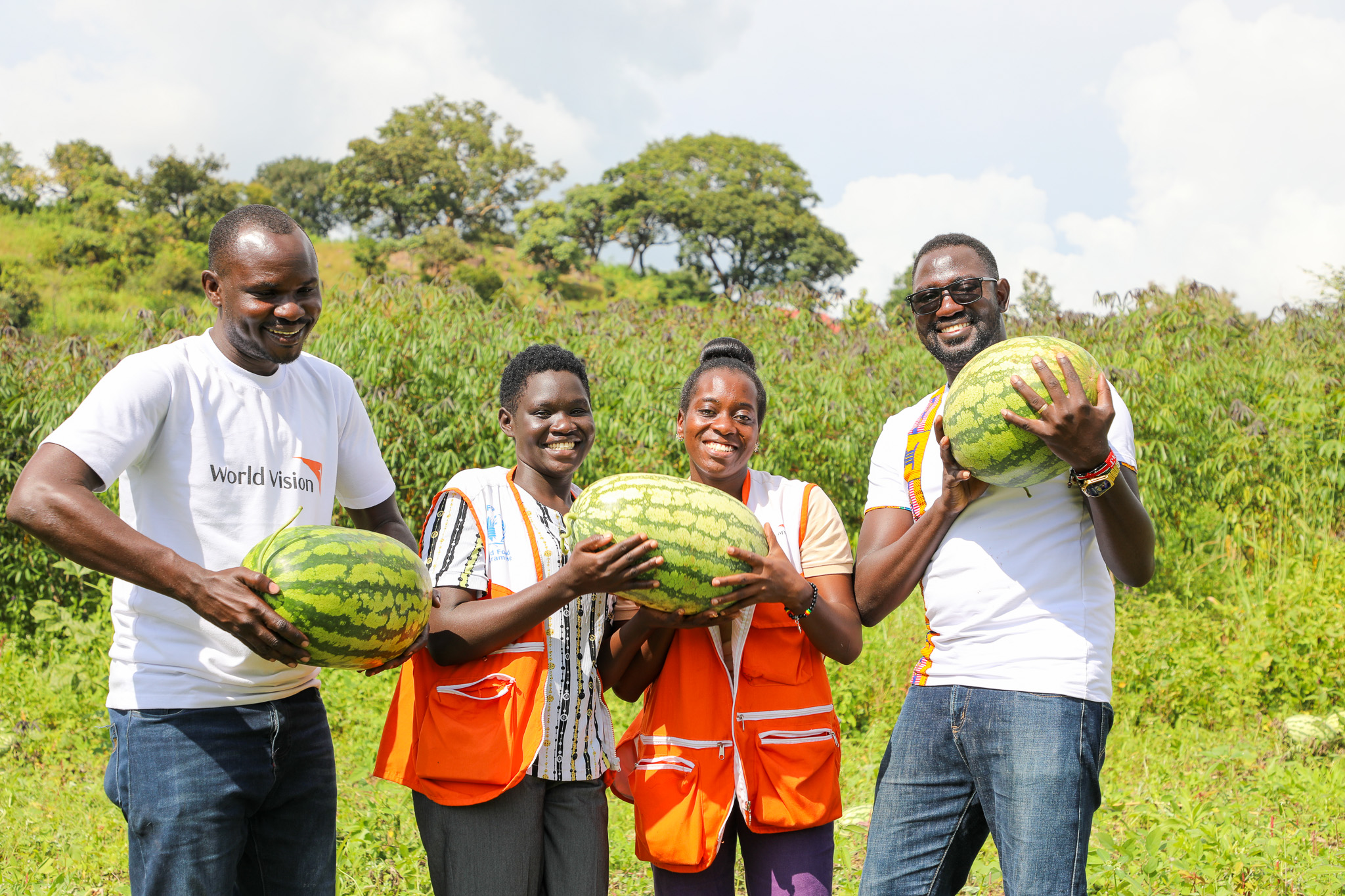
Mawa is part of a group of farmers that are receiving support from the Self-Reliance Model project (SRM) project, supported by World Vision in partnership with World Food Programme (WFP). The project aims to improve refugees access to essential needs through strategies that promote skills development, diversified incomes, and stronger market linkages, while addressing barriers that limit equal opportunities and the use of basic services.
“Initially, as a group, we received tomato seedlings which we shared among ourselves. I planted mine on one quarter of land, and by the end of the season, I harvested five boxes,” Mawa recalls.
“That was the beginning of my journey. I sold each box for 250,000 Uganda shillings (approximately 71 USD), earning a total of 1,100,000 Uganda shillings (approximately 310 USD). It was a breakthrough and my first step toward self‑reliance. I had never earned that much money in my life, and it was truly eye‑opening.”
From his earnings, Mawa paid Uganda shillings 300,000 (approximately 85 USD) for his daughter’s termly school fees, affirming, “My priority was my child’s education.” He set aside Uganda shillings 400,000 (approximately 113 USD) to cover household needs and reinvested wisely by purchasing two goats at Uganda shillings 100,000 (approximately 28 USD) each, demonstrating a deliberate shift toward asset building and long‑term stability.
“I wanted animals that could multiply and give me more income,” he explains. Motivated by this success, Mawa expanded his efforts, opening an additional one quarter of land for reinvestment. In August 2025, he planted watermelons, and by November his commitment bore fruit. He harvested 250 melons, selling them all for Uganda shillings 1,500,000 (Approximately 424 USD). The proceeds enabled him to provide nutritious food for his children while also increasing his monthly savings.
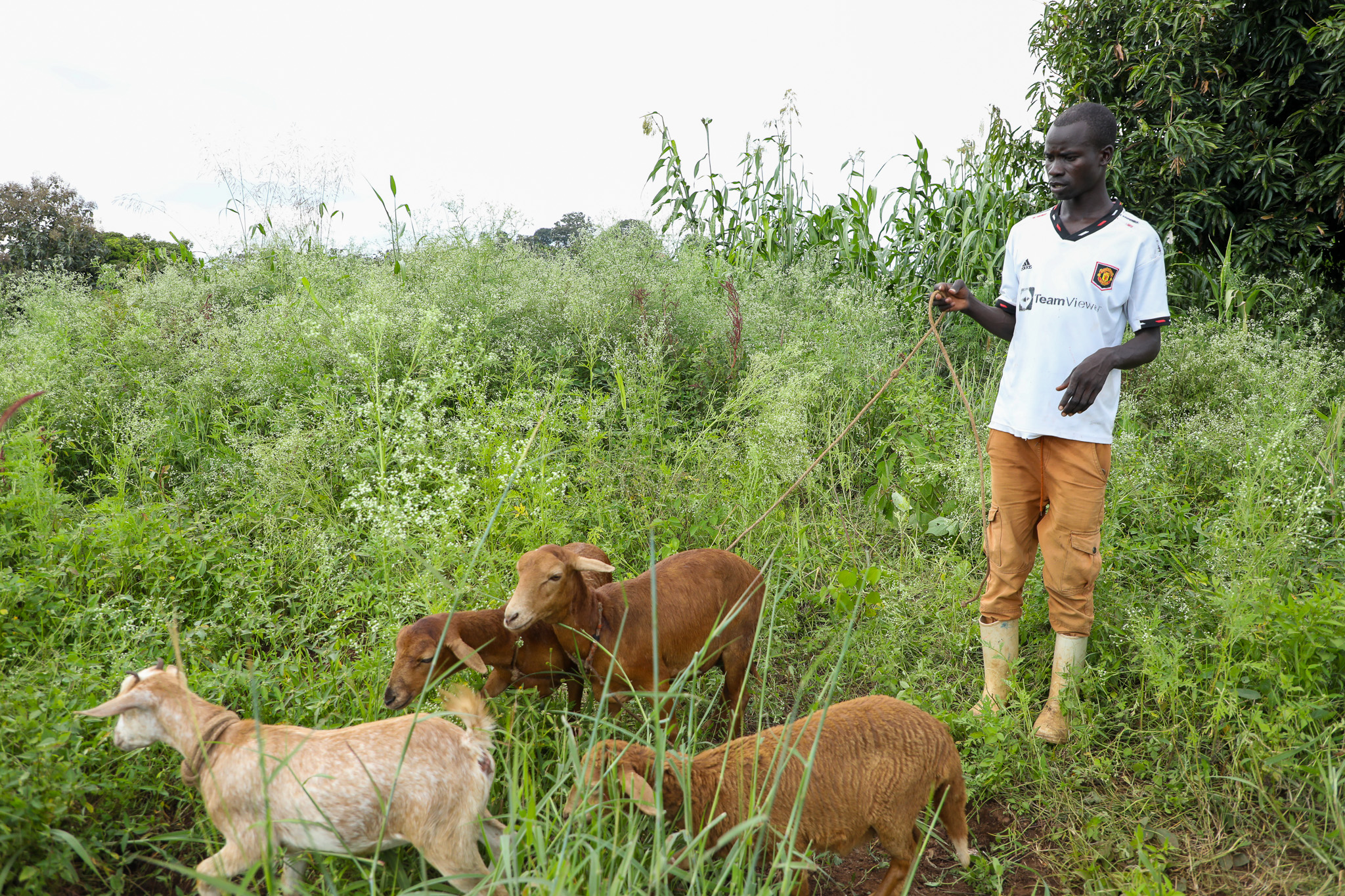
In September 2025, Mawa and his group received tomato seedlings from the project again. Rather than planting immediately, he intentionally saved them for the next season, demonstrating foresight, improved planning, and adherence to agricultural best practices promoted through Social Behavior Change mentorships and trainings under the project.
Today, Mawa is not only a thriving farmer but also a Social Behavioural Change mentor to fellow project participants. His journey illustrates that with the right support, knowledge, and behavior change, communities can build livelihoods that are sustainable, dignified, and resilient.
By: Derrick Kyatuka, Communications Manager.