
No Longer Hungry: How Refugee Families Are Building Resilience and Securing Sustainable Livelihoods

As the afternoon sun beats down over Bidibidi refugee settlement, six children return home from school to Martin Nyalimo’s modest house in Zone 3.
Their eyes are fixed eagerly on the kitchen, where rising smoke and the rich aroma of food signal comfort and security. Their mother greets them with a radiant smile, while Martin looks on with quiet pride.
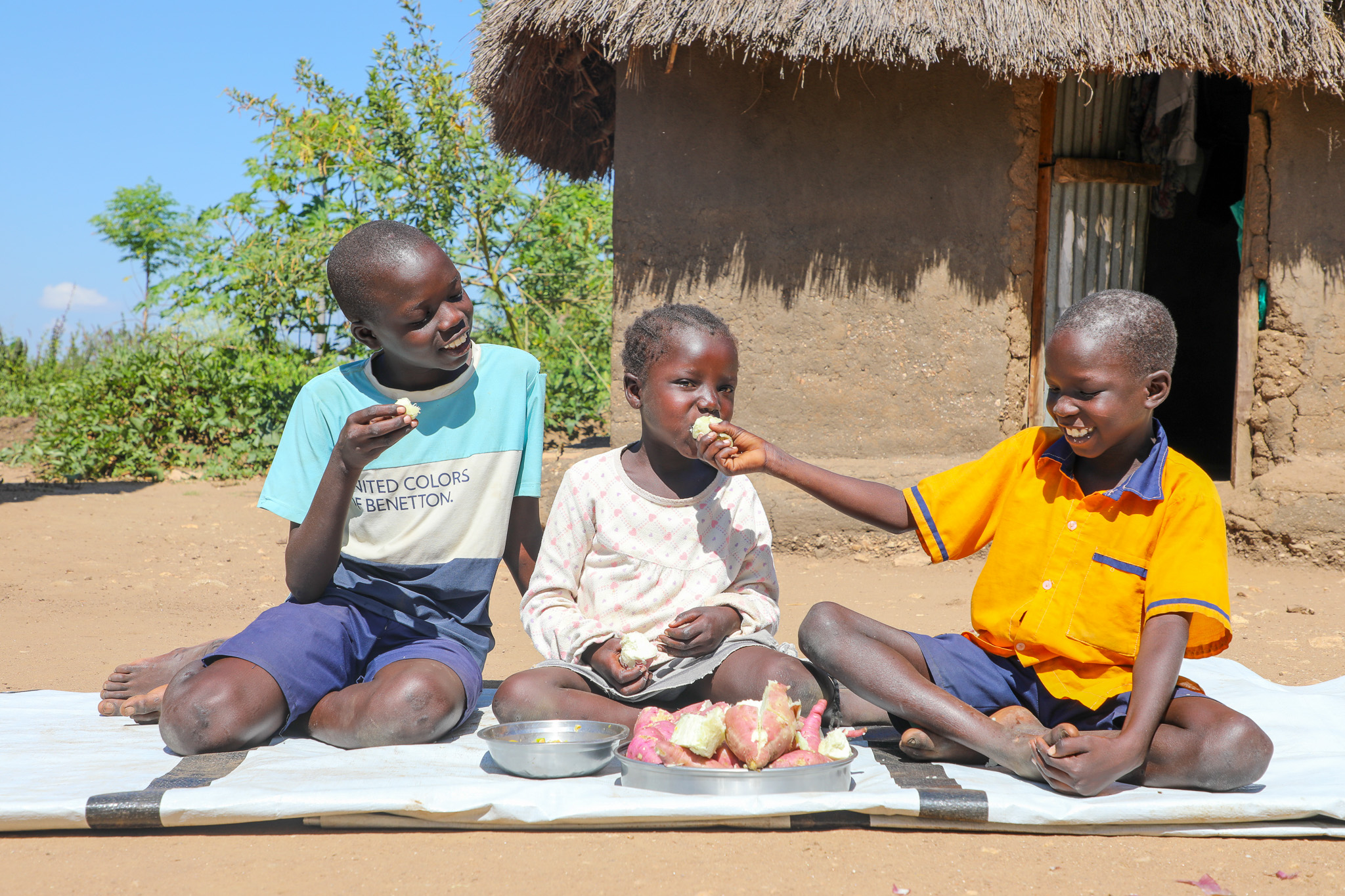
In front of the home, the children gather on a carpet under the open sky. Plates of boiled sweet potatoes and a small dish of tomato sauce are placed before them. The meal is simple, yet deeply meaningful. For these children, food is more than a meal—it is a symbol of joy, hope, and stability amidst the hunger crisis that continues to grip the settlement.
“I am happy because we have enough food at home,” says 14‑year‑old Justin, smiling as he scoops up a piece of sweet potato. “It feels good to come back from school and find something to eat because some of our friends don’t have food at their homes”.
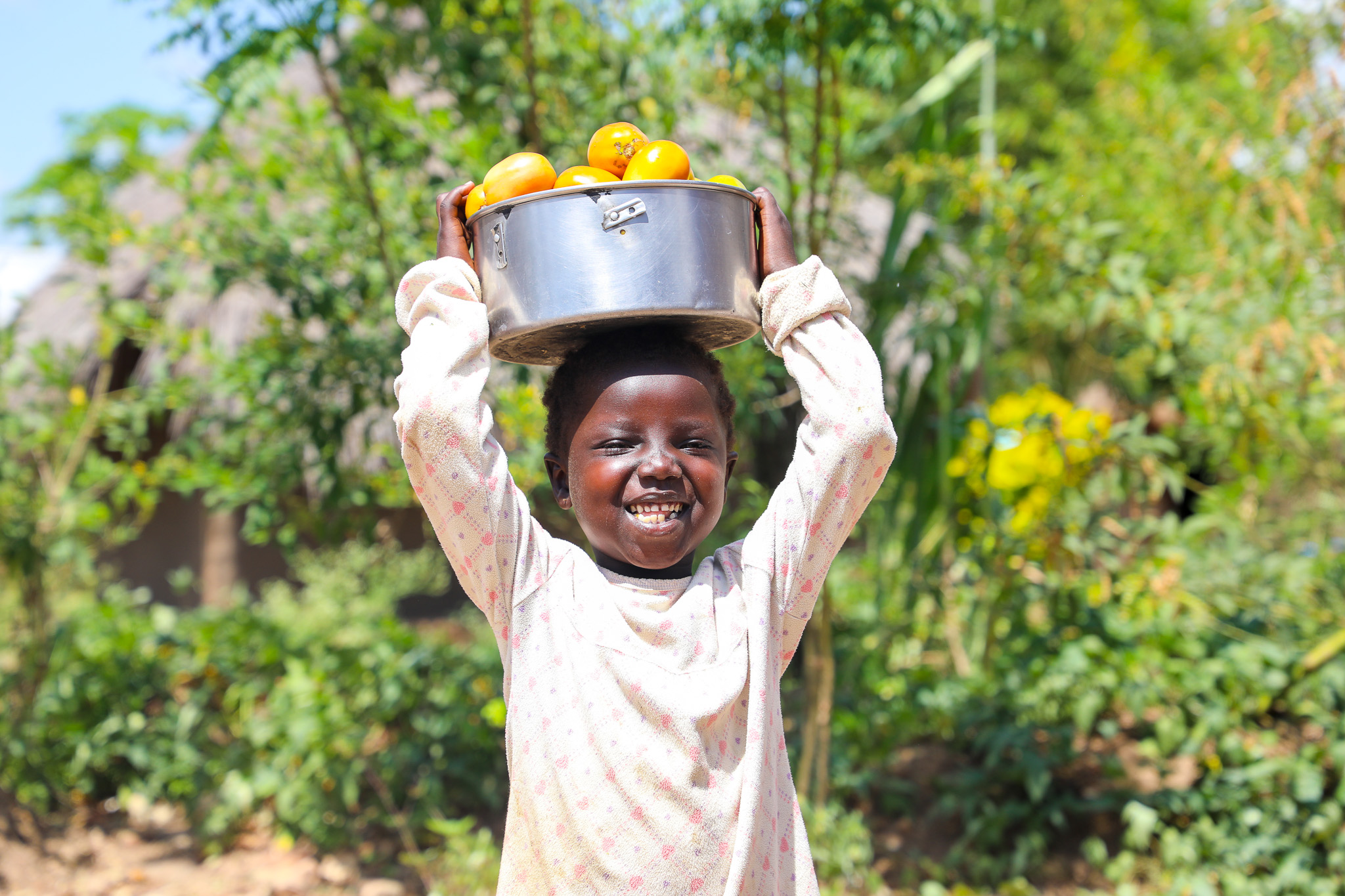
For five‑year‑old Agnes, the happiest time of year is harvest season. She delights in carrying fresh food from the garden, sometimes picking ripe tomatoes straight from the vines. For Martin’s children, the presence of food has changed everything. They can now dream beyond the challenges of displacement.
This was not always the case. When Martin and his family arrived in Bidibidi in 2016, they received 14 kilograms of food rations. But by 2018, allocations had dropped to 12 kilograms. In 2021, rations fell further to 7 kilograms, and by 2023, only 4 kilograms remained.
In 2024, refugee categorisation was introduced, classifying households based on perceived vulnerability and capacity to cope. Families like Martin’s, considered less vulnerable, received even fewer rations. While the system aimed to prioritise the most at‑risk, it left many households struggling to meet daily food needs.
To provide a lasting solution, World Vision, in partnership with the World Food Programme (WFP), launched the Self‑Reliance Model (SRM) project in 2023. The initiative has given refugees access to land for cultivation, empowering them to grow their own food and reduce dependence on dwindling rations.
“World Vision and WFP came in and started sensitising us to find lasting solutions to the hunger crisis after categorisation,” Martin recalls. “We were encouraged to form groups of 30 members, and each member was allocated an acre of land to boost our livelihoods.”
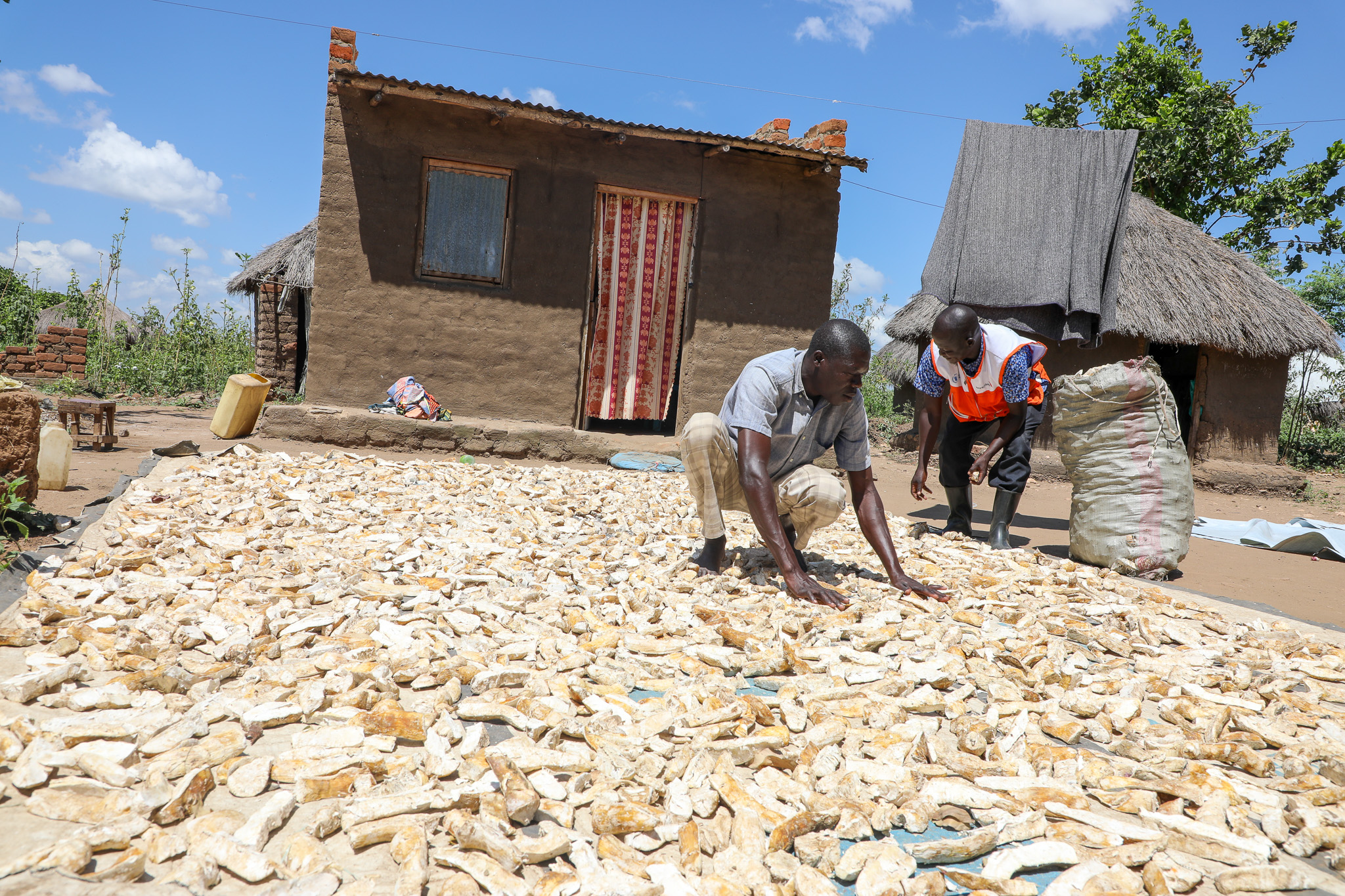
Each member received 120,000 Uganda shillings (about USD 34) to prepare the land, along with hoes, vegetable seeds for kitchen gardening, and training in agronomic practices. They were also given cassava cuttings—eight bags per acre. Together, the group cultivated 187 acres.
This initiative restored dignity and hope. Families could now feed their children, generate income from surplus harvests, and envision a future beyond survival.
A remarkable turnaround
While many refugees in Bidibidi have been forced to risk the dangerous journey back to South Sudan in search of food, Martin’s life has taken a remarkable turn. His first harvest yielded 16 bags of cassava. For the first time since arriving in the settlement, his family enjoys a balanced diet and no longer worries about going to bed hungry.
“My children eat well, they go to school, and I have made my life comfortable in the settlement,” Martin says with pride.
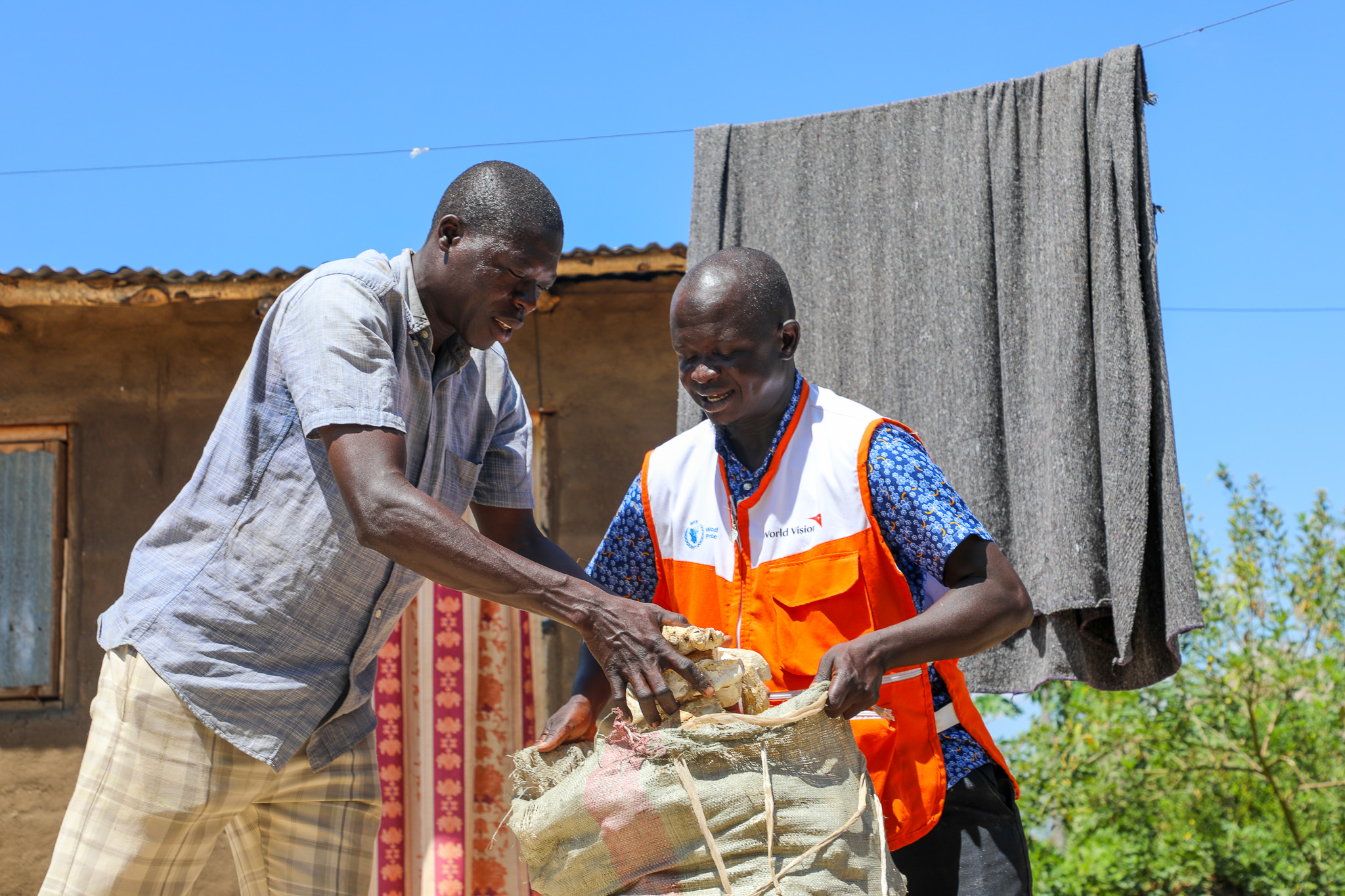
Beyond feeding his own family, Martin extends support to fellow refugees who are not part of the project. He shares farming knowledge, provides vegetable seeds and cassava cuttings, and encourages others to plant and sustain their own gardens.
“If this project hadn’t come, most of the refugees would have trekked the risky journey back to South Sudan in search of food,” Martin explains. “Almost the entire zone would be hungry, and we could have lost many children in the process. Now, people who were affected by categorisation own acres of food.”
Building resilience
According to Comfort Cynthia Achayo, Food and Cash Assistance Manager at World Vision Uganda, the project aims to bridge the funding gap WFP has faced in recent years. Designed as a graduation model, the Self‑Reliance Model (SRM) phases out after three years, at which point participants are expected to sustain themselves independently.
“Households are cultivating staple and cash crops such as cassava and vegetables, with cassava proving especially resilient as both a staple food and a reliable source of income. Off‑farm efforts focus on value addition through private sector linkages, with grinding mills and processing units enabling families to transform raw produce into market‑ready goods. These activities are further supported by business capital from unconditional cash grants of USD 2,000–3,000 for groups,” Comfort explains.
She adds; “Non‑farm activities are open pathways for vocational training in trades such as carpentry, mechanics, and salon work. Upon graduation, participants in skills development receive start‑up kits to support their livelihoods.” The project hopes to benefit 4894 people and envisions a future where refugees and host communities are secure, self‑reliant, and resilient.
By 2030, the goal is for 1 million refugees and 430,000 nationals in refugee‑hosting areas to sustainably meet their own food security, nutrition, and related needs. For Martin and his family, that vision is already becoming reality.
By: Derrick Kyatuka, Communications Manager.