
Faith as a Foundation for Education Success

World Vision Zambia believes that for a child to experience "life in all its fullness," their education must be holistic. It is not enough to focus solely on literacy and numeracy; spiritual nurture plays a pivotal role in shaping a child’s mindset and discipline.
The revival of the Scripture Union Club at Nyawa Secondary School in Southern Province serves as a powerful testament to how faith-based programmes enhance the educational journey.
When the Scripture Union Club was struggling, it wasn't just a loss for the students' spiritual lives; it was a missed opportunity for their academic engagement. By introducing child-friendly, inclusive methods of teaching Scripture, World Vision helped teachers turn a stagnant club into a vibrant learning hub.

The impact on formal education was immediate. Carol Kabunda, the Scripture Union matron, noted that the spiritual lessons directly complemented the school's academic curriculum:
“Once we began using what we learned, we saw a big improvement in attendance. More learners joined, and even those taking Religious Education performed better because they now knew how to interpret Bible parables.”

Character Development and Academic Focus
Education is often disrupted by behavioural challenges. For many students, the Scripture Union provided the moral compass needed to refocus on their studies. 13-year-old Happy, a student whose life was transformed by the club, explains how faith-based learning improved her conduct at school:
“Joining Scripture Union has been one of the best decisions I have ever made because it has really changed my life spiritually and mentally. I used to involve myself in fights at school, and I was disobedient to both my teachers and my parents. I decided to join Scripture Union last year, and even I can see the change in me.”
By addressing the "mental and spiritual" aspects of a learner, the programme creates a more conducive environment for teaching and learning.
The Power of Peer-to-Peer Learning
A key educational strategy used in the club is the peer-to-peer model. This method not only deepens the students' understanding of faith but also builds essential soft skills like public speaking, critical thinking, and collaboration.
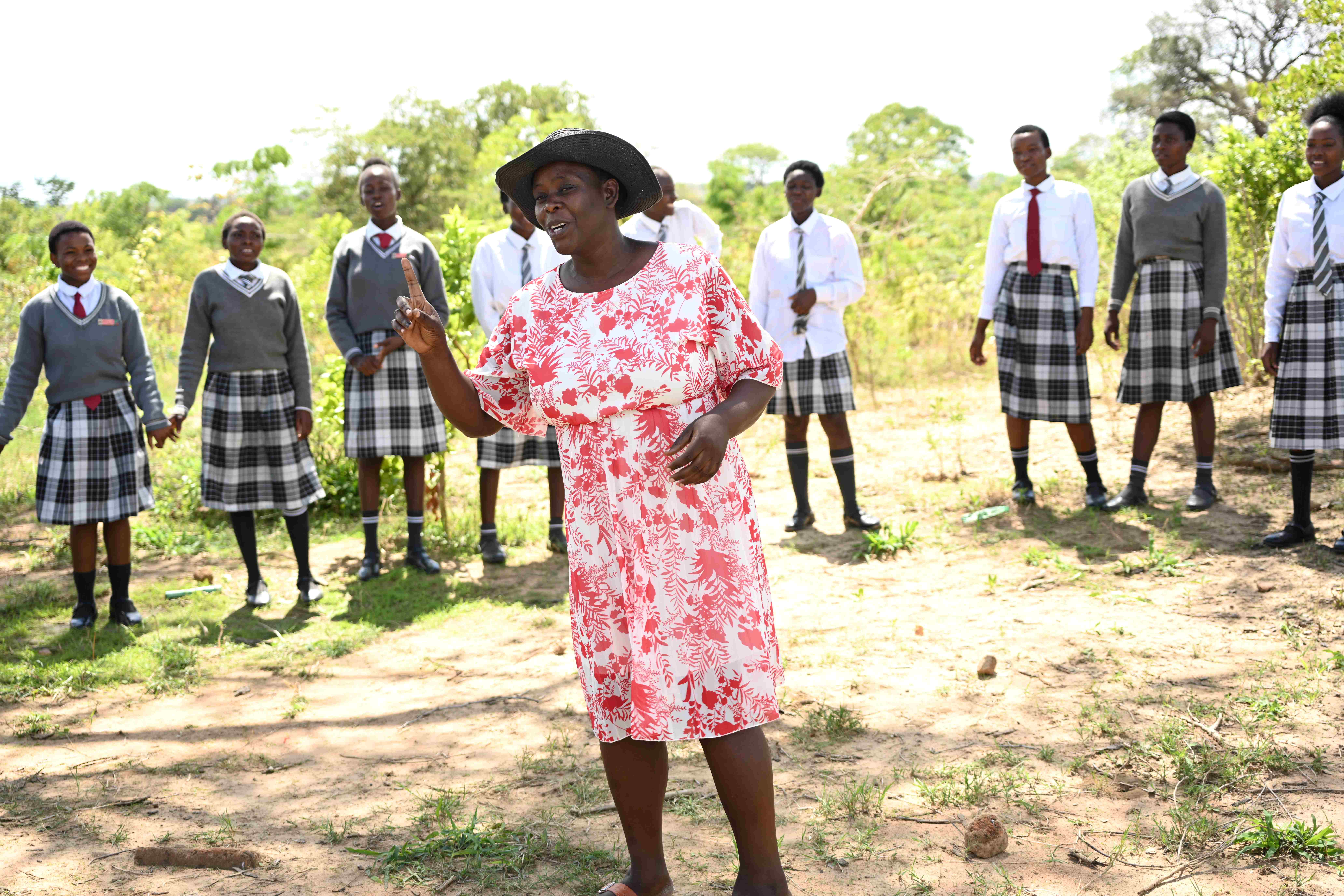
Happy highlights the effectiveness of this approach:
“I was taught how to read and interpret the Bible. Peer-to-peer teaching is good because we explain what we understand and then discuss together. It makes learning interesting.”
Inspiring a Passion for Knowledge
For students like 14-year-old Hope, the club has made the process of learning enjoyable, removing the barrier of "boredom" that often hinders educational progress.
“What encouraged me to join is that this Scripture Union is not ordinary. It’s fun and interesting. We have activities like Bible quizzes and Bible boxing. These are fun ways of learning the Bible and keeping us active.”
A Holistic Success Story
The transformation at Nyawa Secondary School proves that when faith and education walk hand-in-hand, children thrive. The Scripture Union is now a thriving, learner-centred space where spiritual growth fuels academic passion and emotional well-being.
As Carol Kabunda aptly concludes:
“World Vision, thank you for helping us bring Scripture Union back to life. You have made a real difference for our learners.”