
Rethinking Urban Bangladesh: Why Child-Friendly Cities Must Become a National Priority

I used to think the hardest part of urban development work was the scale of the problem.
I was wrong. The hardest part is how invisible it is.
When people imagine Dhaka, they picture movement, energy, ambition. Nearly 2,000 people arrive in this city every single day. That is not a statistic I read somewhere, I have watched it, reshape the settlements where I work, street by street, family by family. What those arrival numbers do not capture is what happens next. Where those families end up. What their children grow up breathing, seeing, surviving.
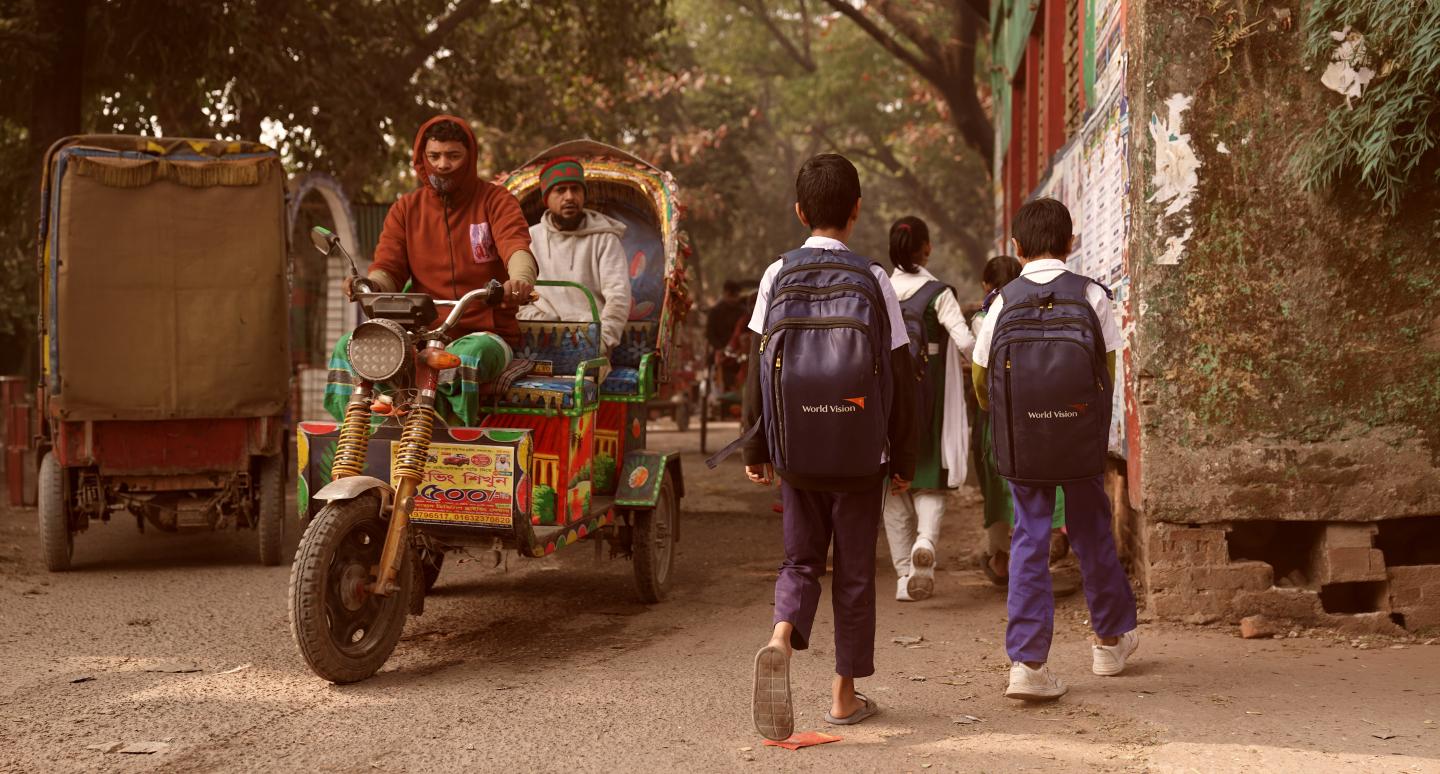
I have spent years working in urban programming across Dhaka and Gazipur, and the moment that changed how I see this work did not happen in a meeting room or a policy workshop. It happened when I sat with a mother in an informal settlement who told me, matter-of-factly, that she had pulled her daughter out of school not because she did not value education, but because the road her daughter walked to get there was not safe. That was it. One unsafe road. One daughter's future quietly redirected.
That’s what urban vulnerability really looks like, quiet, gradual, and often unseen.
We tend to talk about cities as economic systems. We rarely talk about them as childhoods.But for millions of children growing up in Bangladesh's informal settlements, the city is not a place of opportunity. It is a place of concentrated risk, unsafe water, hazardous work, no space to play, limited protection, and a near-total absence of the systems that are supposed to exist for them.
I used to believe that good programming could solve this. Design the right intervention, measure the right outcomes, move to the next phase. Early in my career, I thought in projects.
What I have learned slowly, and sometimes through failure is that you cannot project-manage your way out of a systemic problem.
When we rescued children from hazardous labour, we celebrated. Then we watched some of them return within months, because the economic pressure on their families had not changed. That was a painful lesson. Real change required working on livelihoods and child protection and education and community trust at the same time, not in sequence.
It also required admitting that we could not do it alone.
Some of the most meaningful shifts I have seen came not from our programmes, but from coalitions.
Working with city corporations, community groups, law enforcement, and other organizations to establish child-friendly spaces inside police stations spaces where vulnerable children could seek help and be heard with dignity that would not have happened through any single organization's effort. It happened because enough people agreed that it should exist.
Four Dream Parks now stand in communities where children previously had no safe space to simply be children. That sounds small. It is not. A park is not just a park when you are eight years old and every other space around you carries risk.
We also saw wards declared free of child labour and child marriage. Not through awareness campaigns, but through sustained, coordinated work livelihood support for families, re-enrollment pathways for children, life skills training for adolescent girls, and policy dialogue that kept pressure on the right people over years, not months.
What I have come to believe is this: urban transformation is not a programme. It is a long-term commitment to a place and its people.
Here is the thing nobody in development likes to say out loud.
Our cities are being shaped right now by planning decisions, by infrastructure investment, by what gets prioritized and what gets ignored and most of those decisions are not being made with children in mind.
A survey by the Bangladesh Institute of Planners found that Dhaka needs at least 2,000 parks and 4,000 playgrounds for its population. Very few of what currently exists are accessible to girls. We are building a mega-city and we are not building it for the people who will inherit it.
By 2030, nearly 80 million people will live in urban Bangladesh. The question is not whether that will happen. It is what kind of city we are choosing to build for them.
I think about the mother with the unsafe road often. Her daughter's school attendance was a child protection issue. It was also an infrastructure issue. A governance issue. A gender issue. An urban planning issue. These things are not separate we just treat them that way because it is easier to manage.
The cities Bangladesh builds in the next decade will define the generation that grows up in them.
That is not a development sector concern. It is an economic one, a civic one, and ultimately a moral one.
I do not have a tidy framework for how to fix this. What I do know is that child-friendly urban development requires the same integration it demands of us government, private sector, communities, and organizations like mine, working on the same problem from different angles, at the same time.
And it requires us to stop treating children as beneficiaries of good urban policy, and start treating them as its most honest measure.
Because a city that cannot keep a child safe on the road to school is not yet the city it claims to be.
Joanna D Rozario is Senior Manager
Urban Programming at World Vision Bangladesh.