
For Tasnuva, One Pad Became a Piece of Confidence

Every month, Tasnuva carried an extra notebook to school. Not for classwork, but to hide folded tissues and spare cloth she prayed she would not need.
In the middle of lessons, her attention often drifted from the blackboard to the clock. A slight discomfort or sudden fear was enough to make her shrink quietly into her seat. On some mornings, she stood outside the school gate wondering whether to walk in or quietly return home.
Tasnuva, a ninth-grade student in urban Dhaka, knew the routes to nearby pharmacies better than the route to the school library. When her period arrived unexpectedly, she would whisper excuses, avoid eye contact and miss classes rather than risk stains, embarrassment or teasing. By the next day, lessons had already moved ahead without her. Inside crowded classrooms, menstruation remained something girls spoke about in lowered voices. Questions stayed unasked. Emergencies were handled quietly, often alone.
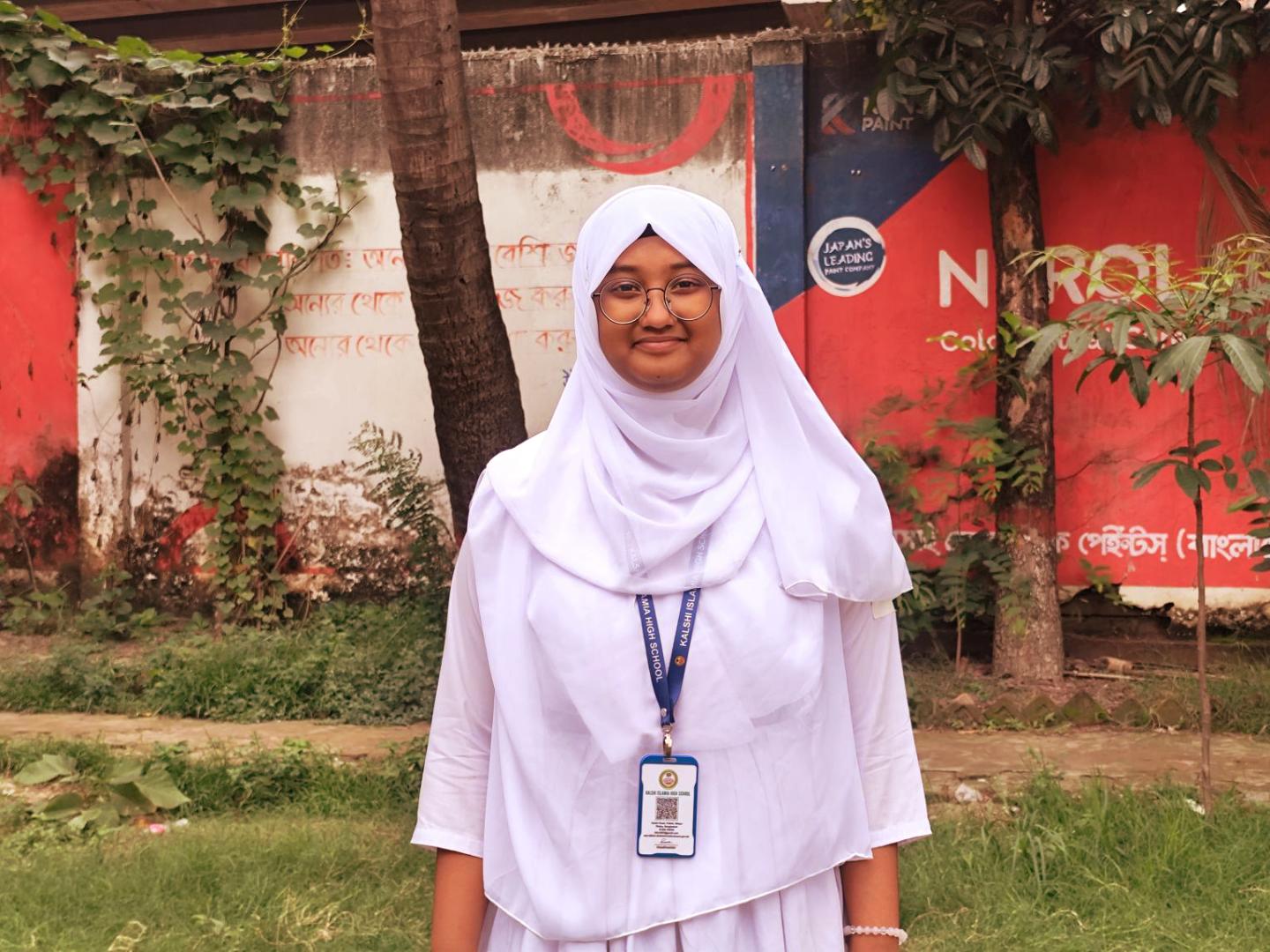
Then a small corner appeared inside the school. Shelves were stocked with sanitary pads. For the first time, girls no longer had to panic through emergencies or leave school midway through the day. Students could quietly access menstrual hygiene support without shame or hesitation.
Tasnuva remembers the first time she used the menstrual hygiene management corner supported through the GEDSI initiative by World Vision Bangladesh. She returned to class that day without fear sitting beside her.
Slowly, her days at school began to change. She stopped checking her uniform every few minutes. She stopped asking to leave early. Her attendance improved. So did her confidence.
As conversations around menstrual health became more open at school, Tasnuva slowly found her voice too, the conversations she once avoided became conversations she now leads among friends, at home, and sometimes even in classrooms.
Today, Tasnuva no longer measures her month by missed classes or anxiety-filled mornings. She measures it by something much simpler: showing up, learning freely, and walking into school without fear.