
What the Women Carried in Silence in Rohingya Camps, Cox’s Bazar

Story By, Sams Arefin, Communication Specialist, GAM, Communication & Advocacy, and Tasmiah Afroze Trisha, Communication Officer, Bangladesh Rohingya Crisis Response, World Vision Bangladesh
In the refugee camps, the paths turn slippery after rain. Water pools beside bamboo fences. Damp clothes hang beneath tarpaulin roofs, carrying the smell of smoke, mud, and monsoon air. Women walk carefully through the narrow lanes, balancing water buckets, restless children, and unspoken worries.
Some subjects are still spoken about in lowered voices. Menstruation is one of them. Humaira remembers her first period in Myanmar long before she became a refugee. One afternoon, blood appeared without warning. Nobody explained what was happening. The older women only handed her the rules.
Do not speak about it openly. Do not sit too close to others. Do not draw attention to yourself.
At night, she washed torn pieces of old cloth in secret and dried them indoors where sunlight could not reach. During the monsoon, the fabric often stayed damp for hours. She wore it anyway.
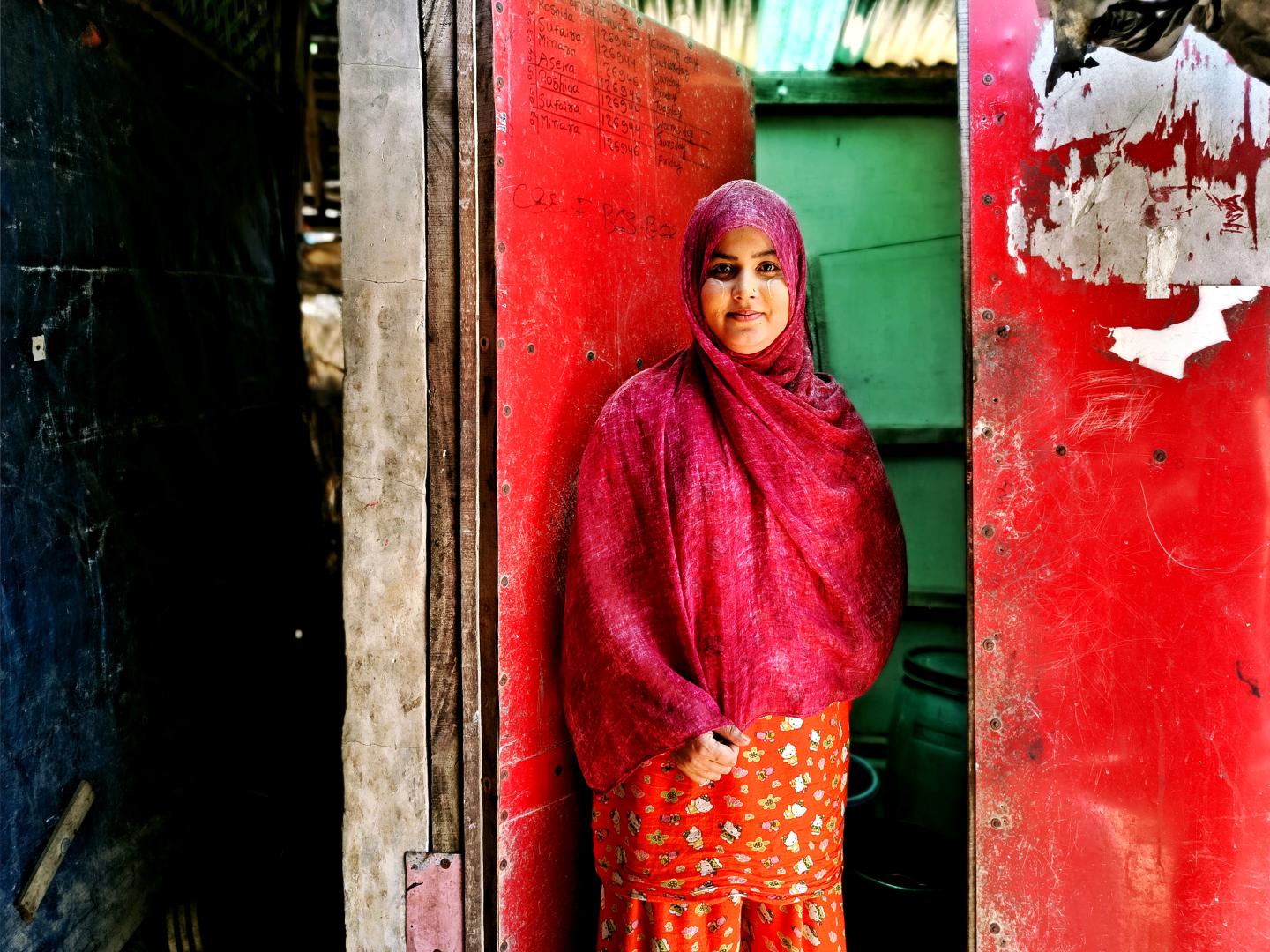
“For years we hid our pain like a secret,” says Humaira, now 33. “Now we are teaching our daughters that their bodies are not something to fear.”
When her family fled to Bangladesh during the 2017 Rohingya influx, she carried that silence with her into the camps.
But inside the camps, something slowly began to shift. Women and girls make up 52% of the Rohingya refugee population in Cox's Bazar. Since 2017, Menstrual Hygiene Management sessions in the camps have slowly challenged generations of silence and stigma around menstruation—careful work in communities already carrying deep hardship.
Under tarpaulin shelters, women gathered for Menstrual Hygiene Management (MHM) sessions. At first, Humaira only listened from the edge of the group while facilitators spoke openly about reusable pads, infections, hygiene, and dignity.
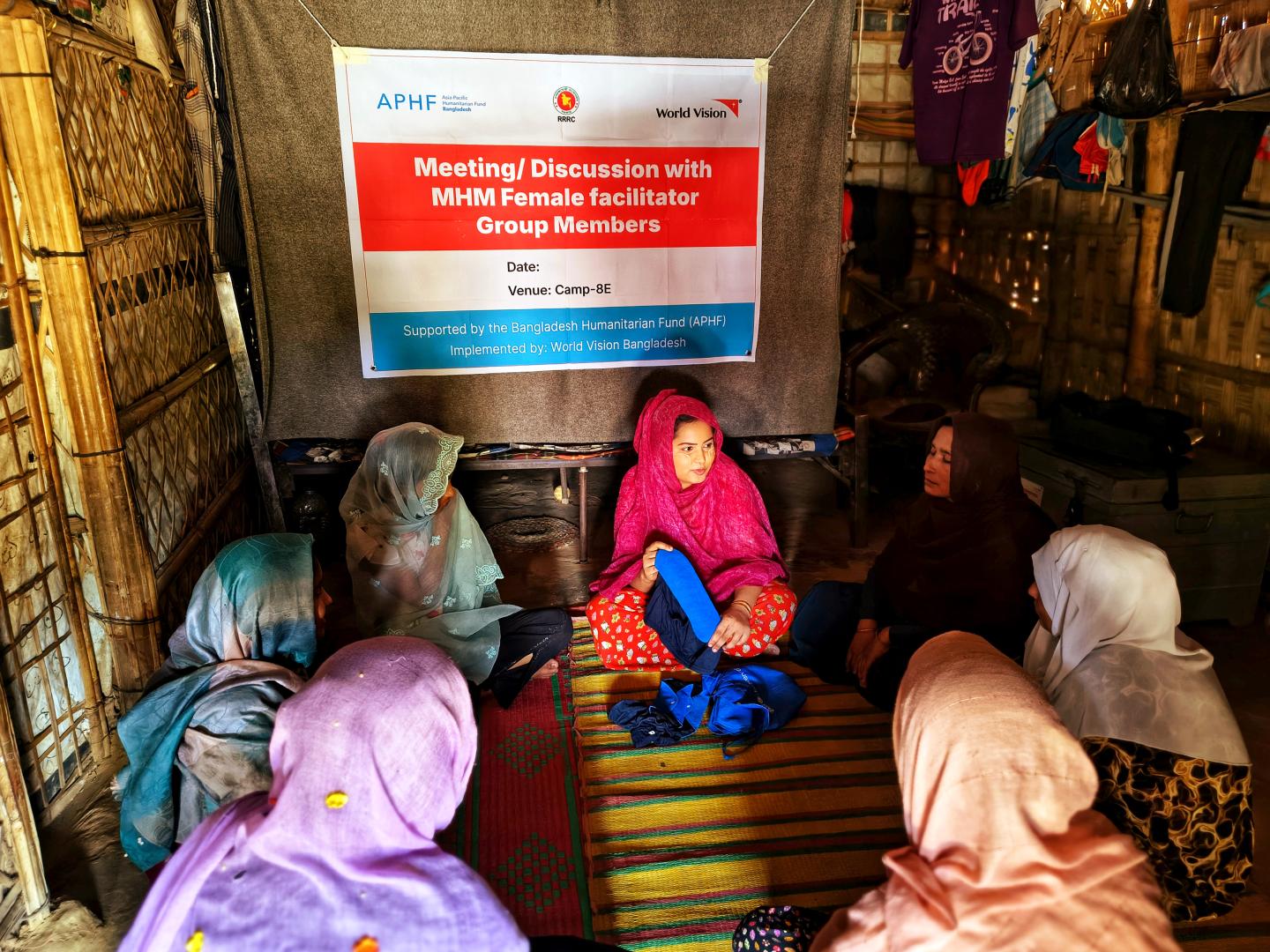
The word "dignity" felt unfamiliar beside "menstruation".
For 19-year-old Supaira, those sessions changed what her first period would become. By the time it arrived, fear was still there, but not confusion. She already knew what was happening.
“The first time I heard women speak openly about menstruation, I felt shocked,” she says. “Now I speak about it without shame.” Sixteen-year-old Shahnaj now walks door to door as one of the youngest female MHM facilitators in these communities, speaking not only with girls but with parents and boys.
“Menstruation is not the problem,” she says. “Shame is.”
In April 2026 alone, 60 community sessions led by male and female facilitators reached 428 participants across the area. Through household monitoring, another 1,439 families were engaged, with over 2,500 women and girls of reproductive age included in the outreach. Supported by the Asia-Pacific Humanitarian Fund (APHF), the programme continues to keep conversations alive in communities where silence once felt permanent.
Today, small changes quietly mark these communities.
A mother answers her daughter’s questions without whispering.
A girl dries reusable pads in sunlight for the first time.
A husband brings home soap without embarrassment.
Humaira still remembers receiving her first dignity kit.“For many women here,” she says softly, “it is the first time someone acknowledged that our discomfort matters.”
And in these communities, that recognition is changing more than hygiene practices. It is changing inheritance itself, replacing fear with understanding, one generation at a time.