
Childhood on the run: Sakada’s story

Sakada, a seven-year-old sponsored child, and his older brother, aged nine, look remarkably alike. On the morning of 8 December, the two brothers were at home with their grandmother while their parents worked in the rice fields. The harvest was meant to feed their family of five for the entire year.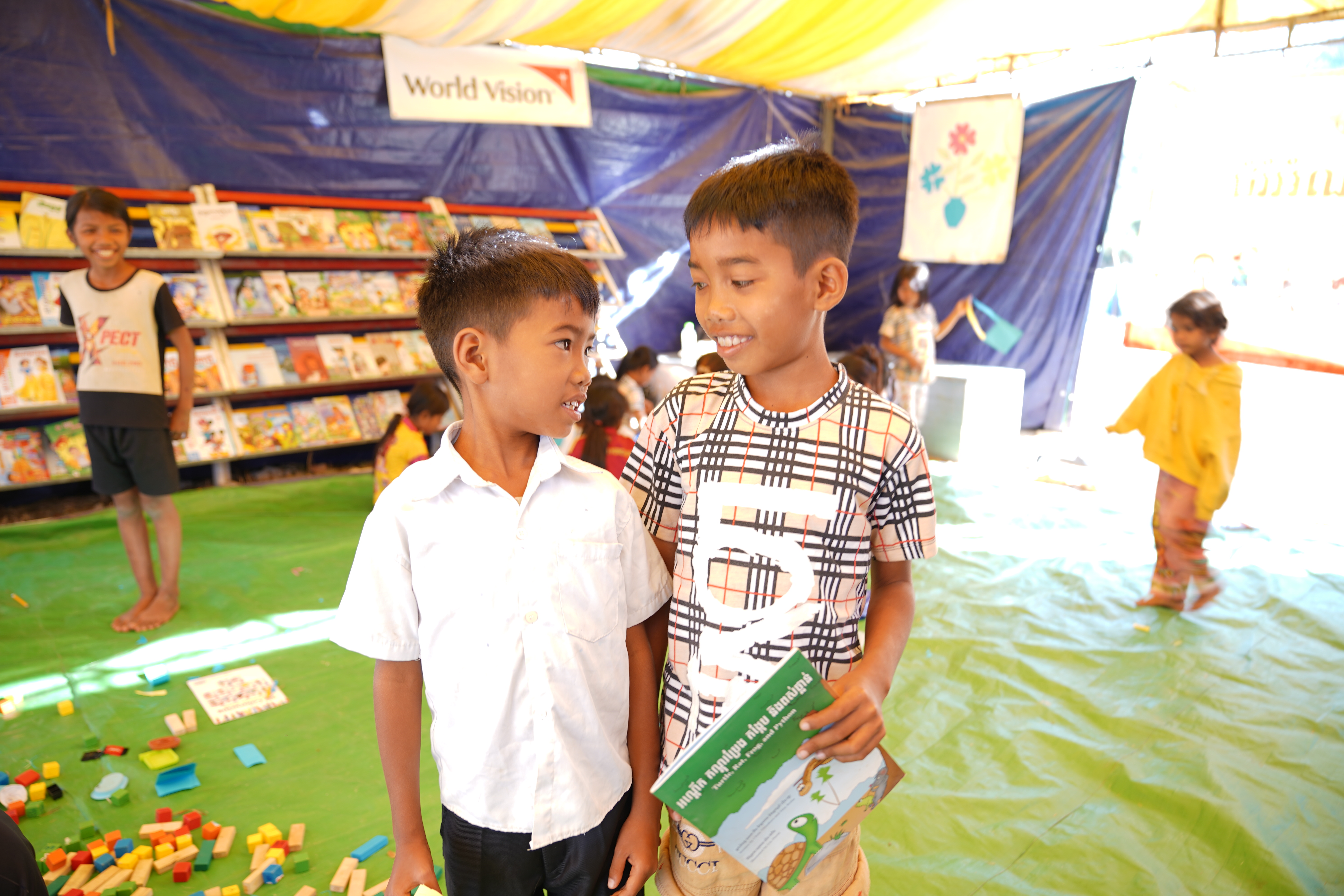
But that hope was shattered by the sudden sound of “boom, boom” echoing through Choam Ksan district in Preah Vihear province.
As heavy weapon fire rang out, fear spread quickly. The children ran to a bunker built during the first outbreak of conflict on 24 July, which had remained unused for months after the ceasefire agreement on 28 July 2025. Dusty and infested with insects, it was the only shelter available during the blasts. Sakada and his brother huddled inside the fragile structure near their home.
Meanwhile, their parents fled the fields, using their handmade tractor—the family’s only means of transport—to reunite with their sons.
“I was so scared by the sounds,” Sakada recalled. “We hid there for hours, waiting for our parents to come home from the rice field.”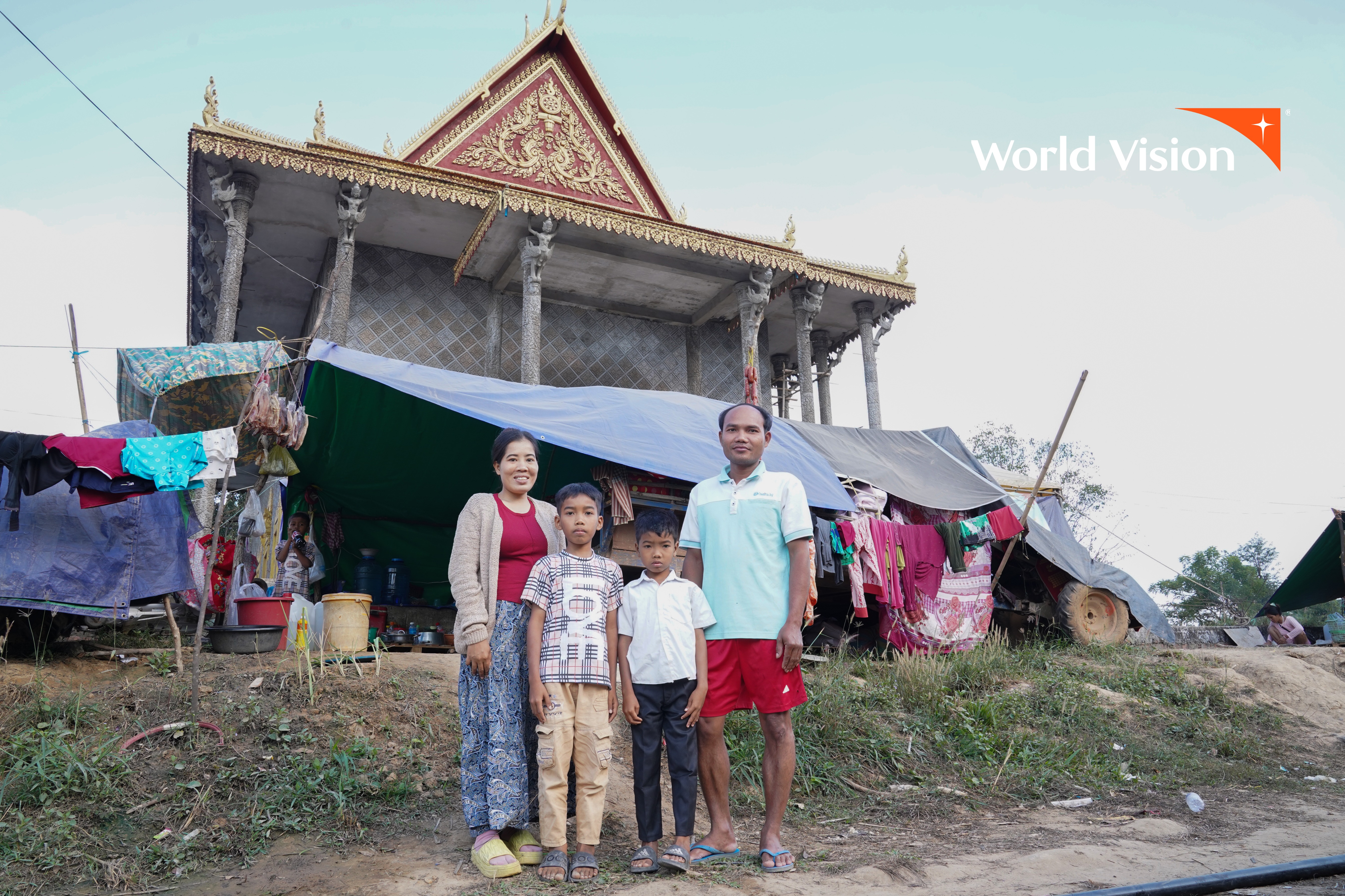
When they finally arrived, the family did not wait. They gathered the boys and their grandmother and fled over 100 kilometres to a safer area. Along the way, the brothers witnessed entire villages evacuating. People fled on motorbikes, scooters, cars, and handmade tractors, carrying only what they could manage.
For more than a month, Sakada’s family has been living in a displacement site, far from the home they love. They escaped with only basic clothes and a few cooking utensils, traveling on their handmade tractor, their most valuable possession. Today, they live under temporary shelters made from green and blue tarpaulin, sleeping on mats and hammocks.
Although a ceasefire has been in place since 27 December 2025, the family has not returned home. Their village, just several kilometres from the border, remains unsafe. Sakada’s mother is pregnant with their third child, making the journey even more challenging.
“She could endure hard work in the rice fields under the sun and rain,” Sakada’s father said quietly. “But she cannot endure running again, afraid of bullets.”
Sakada’s mother expressed another fear: “We cannot return to collect our rice harvest. The fields may be contaminated with unexploded ordnance. That rice could have fed us for the whole year.”
Despite his young age, Sakada’s older brother speaks with remarkable maturity. “I miss my home,” he said softly. “Even though there was nothing special there.” After a pause, he added, “I miss our cat. We had to leave her behind.”
Sakada’s story is not unique. Many children affected by the border conflict have faced fear and displacement far beyond what any child should experience—memories that may stay with them for life, at an age when they should be learning, playing, and feeling safe.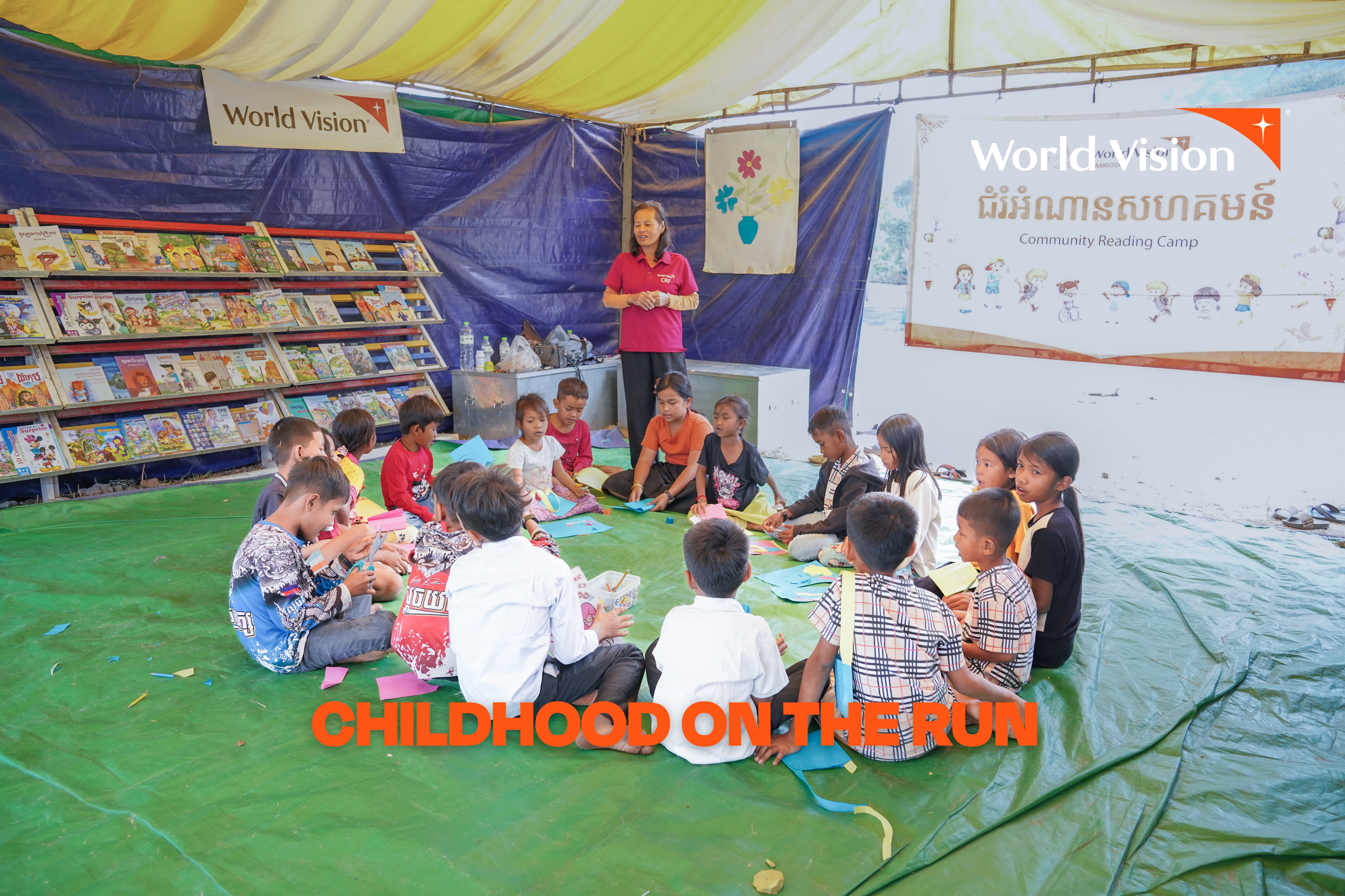
In the displacement sites, Sakada and other children now attend temporary learning classrooms established to help them resume education. These classrooms cater to children from early childhood through Grade 6 while their regular schools remain closed due to safety concerns, including the presence of unexploded ordnance.
Sakada is in Grade 1, while his older brother is in Grade 4. After half-day classes, the children gather in child-friendly spaces for play, learning, and recreational activities. These spaces are led by trained community facilitators, many of whom are also displaced from the same communities.
Through these efforts, children like Sakada are beginning to regain a sense of normalcy, safety, and hope—small but vital steps toward healing from a childhood interrupted by conflict.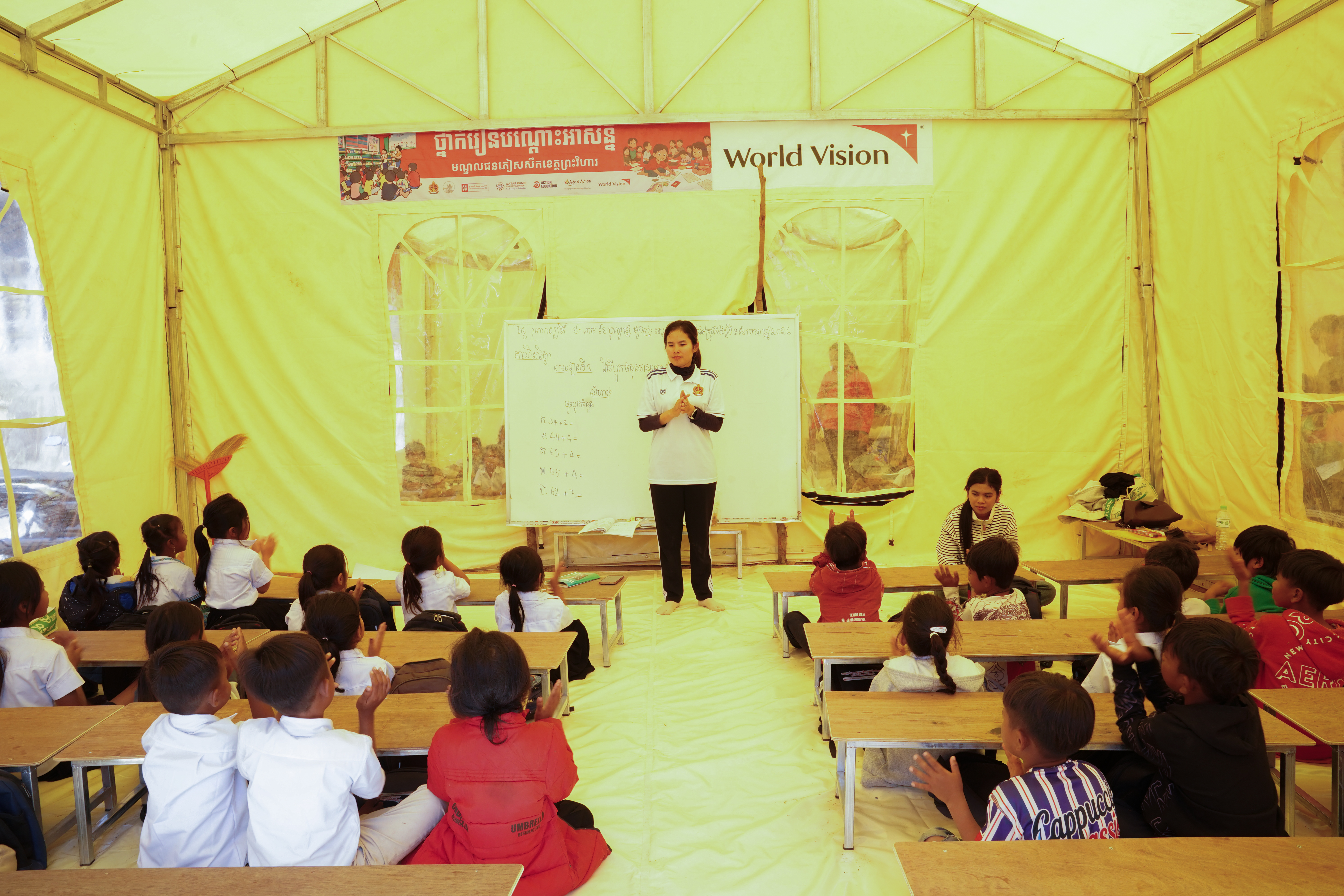
A rapid Psychological Safety Assessment by World Vision Cambodia (30–31 July 2025) found that displaced communities in three provinces experienced widespread fear, anxiety, anger, and disrupted sleep, with only 35% knowing where to seek help. Children most wanted education and play materials, while adults prioritized food, shelter, and medical care.
While conditions show early signs of stabilisation following the ceasefire agreed on 27 December 2025, the situation remains fragile. Ongoing humanitarian needs persist due to displacement, disrupted services, and damage to homes, schools, health facilities, and critical infrastructure—particularly affecting children and other vulnerable groups, including the elderly and pregnant women.
World Vision International in Cambodia has been delivering multi-sectoral humanitarian assistance to displaced children and families across education; food security and livelihoods; health and nutrition; protection and psychosocial support; shelter and non-food items; and water, sanitation, and hygiene (WASH) in Banteay Meanchey, Preah Vihear, Siem Reap, Battambang, and Oddar Meanchey provinces. Between 11 December 2025 and 9 January 2026, World Vision reached 125,988 displaced people—including 37,759 children, over 1,000 people with disabilities, and over 1,800 pregnant and lactating women—through food assistance, learning materials, child-friendly spaces, hygiene and sanitation facilities, nutrition support, shelter items, and psychosocial services.
Additionally, 54 temporary learning spaces have been established for displaced children to continue their education with the support of World Vision.
Story by : Korng Sikim and Ratana Lay
Photo by: Vanndeth Um