
Finding friends, missing home: Lita’s story

At just seven years old, Lita already knows how to make people feel welcome.
With a bright smile and a confident voice, the Grade 1 student greets visitors at the displacement site in Preah Vihear province with cheerful words she has picked up from social media: “Ni hao, ni hao ma.” She pairs her foreign-language greeting with a traditional Khmer sampeah, pressing her palms together respectfully—never forgetting her culture, even in unfamiliar surroundings.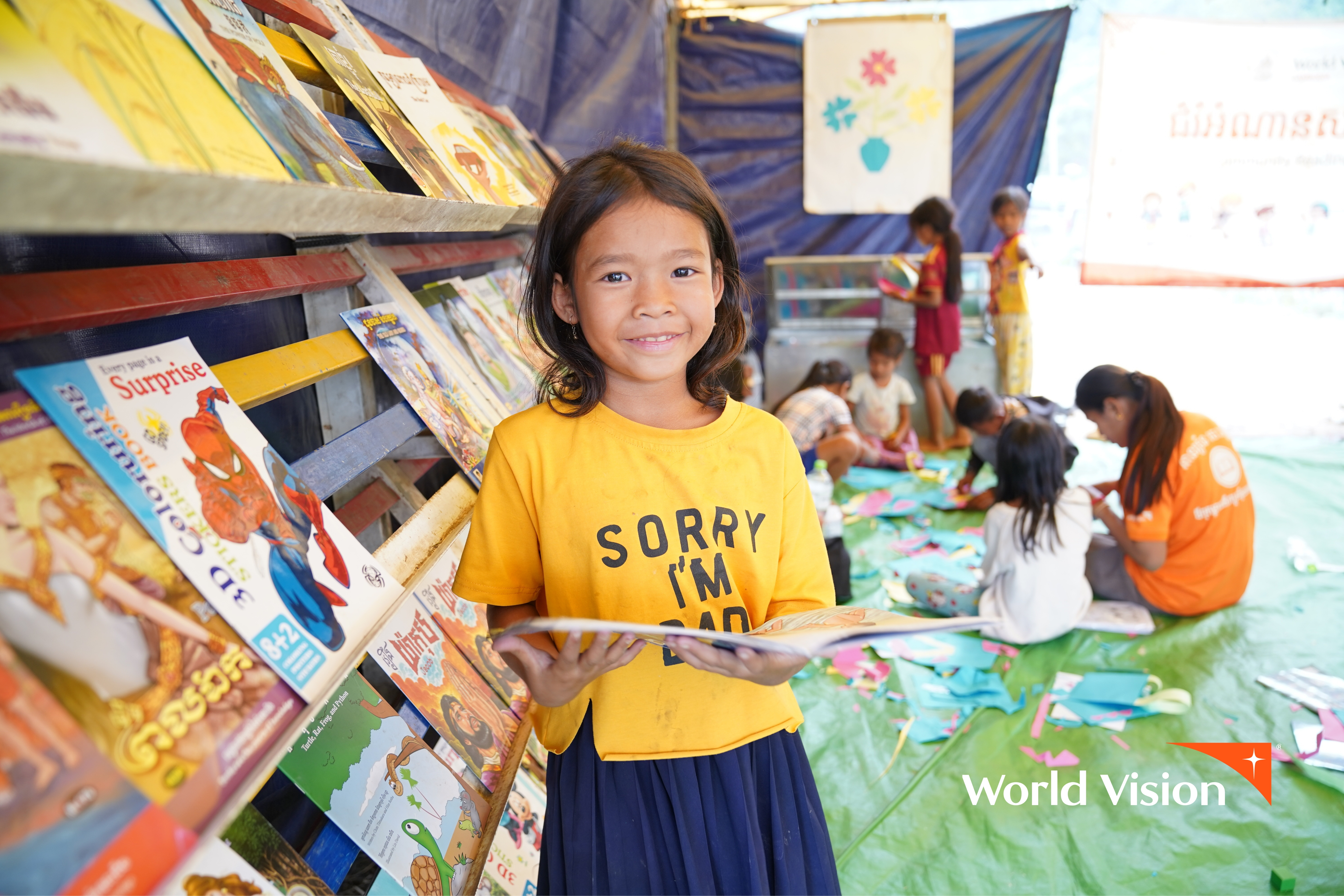
Lita is naturally friendly and curious. She enjoys meeting new people and often greets visitors alongside children her own age, proudly showing what she has learned. Her openness makes her stand out in the busy displacement site, where families have gathered after leaving their villages in search of safety.
“I want to grow vegetables. I want to be a nurse,” Lita says without hesitation when asked about her dreams. She loves vegetables and hopes one day to become a gardener. Caring for others also inspires her dream of becoming a nurse—an ambition that reflects both her kindness and resilience.
Lita is the eldest of two sisters. Her younger siblings are just three years old and two months old. Together with her family, she had to leave their home village and move to a displacement site for safety. During the sudden evacuation, Lita ran with her neighbour, while her mother stayed behind with her scooter, carrying Lita’s youngest sister, who is just two months old, along with other extended relatives.
Despite the upheaval, Lita has adapted quickly. Surrounded by extended relatives and children her own age, she has made new friends and found comfort in familiar faces. Her playful and energetic nature is evident, and it seems to give her moments of relief from the distress of being away from home. In contrast, when asked what she wishes for most, her answer is simple and clear: “I want to return home,” says Lita.
At the site, Lita attends temporary classes and regularly visits the child-friendly space—a safe area set up for learning, play, and creative activities. Here, children paint, play games, and take part in activities that help restore a sense of normalcy to their daily lives.
Lita has also received a school uniform, milk, snacks, and learning materials. When handed a piece of paper and a pencil, she eagerly begins to draw—sketching pictures and practising letters that children in Kindergarten and Grade 1 are learning to write.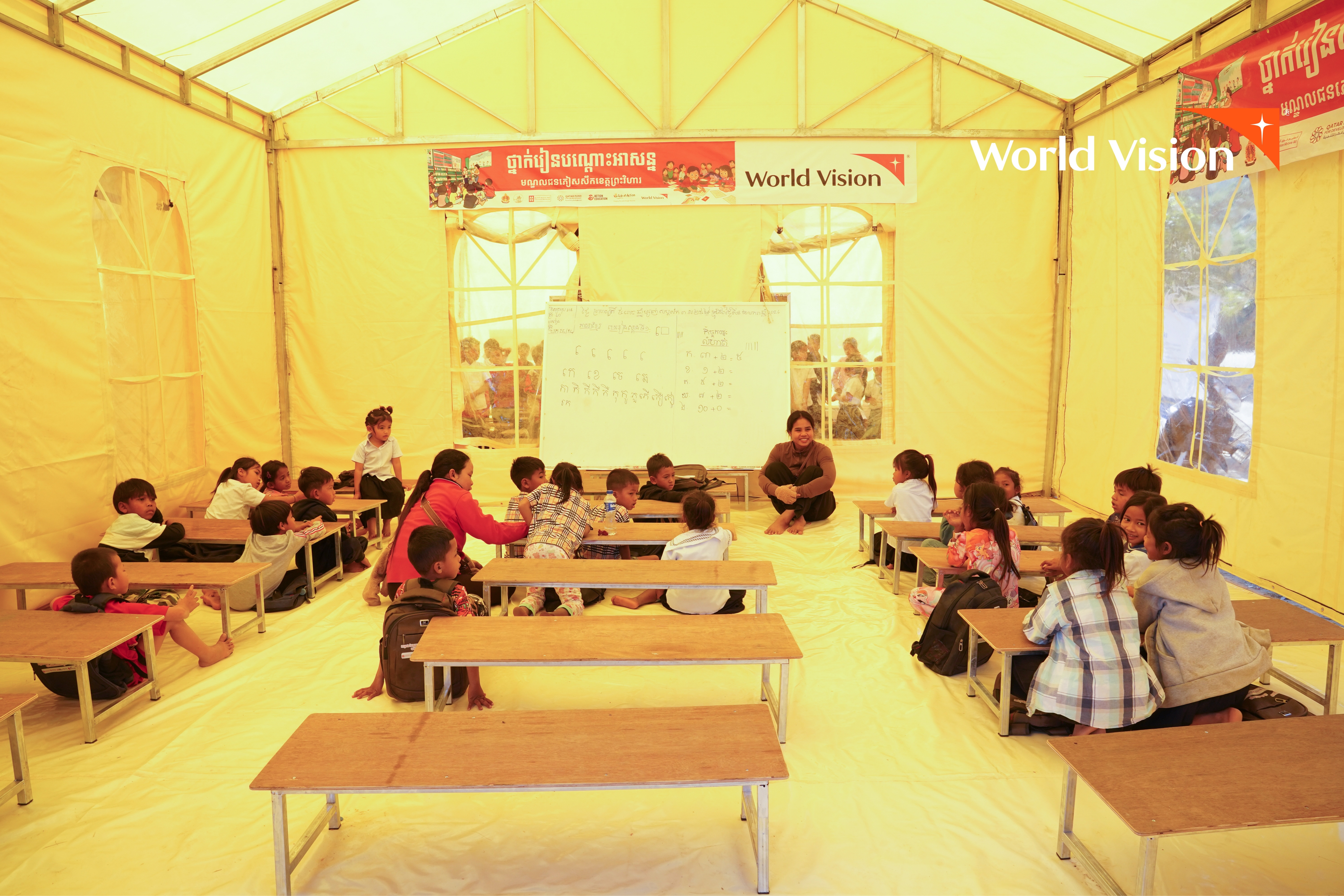
Like Lita, many children at the displacement site continue to learn, play, and dream, even as they wait for the day they can safely return to their communities. Through education, child-friendly spaces, and support services, these children are being given not just assistance—but hope for the future.
A rapid Psychological Safety Assessment by World Vision Cambodia (30–31 July 2025) found that displaced communities in three provinces experienced widespread fear, anxiety, anger, and disrupted sleep, with only 35% knowing where to seek help. Children most wanted education and play materials, while adults prioritized food, shelter, and medical care.
While conditions show early signs of stabilisation following the ceasefire agreed on 27 December 2025, the situation remains fragile. Ongoing humanitarian needs persist due to displacement, disrupted services, and damage to homes, schools, health facilities, and critical infrastructure—particularly affecting children and other vulnerable groups, including the elderly and pregnant women.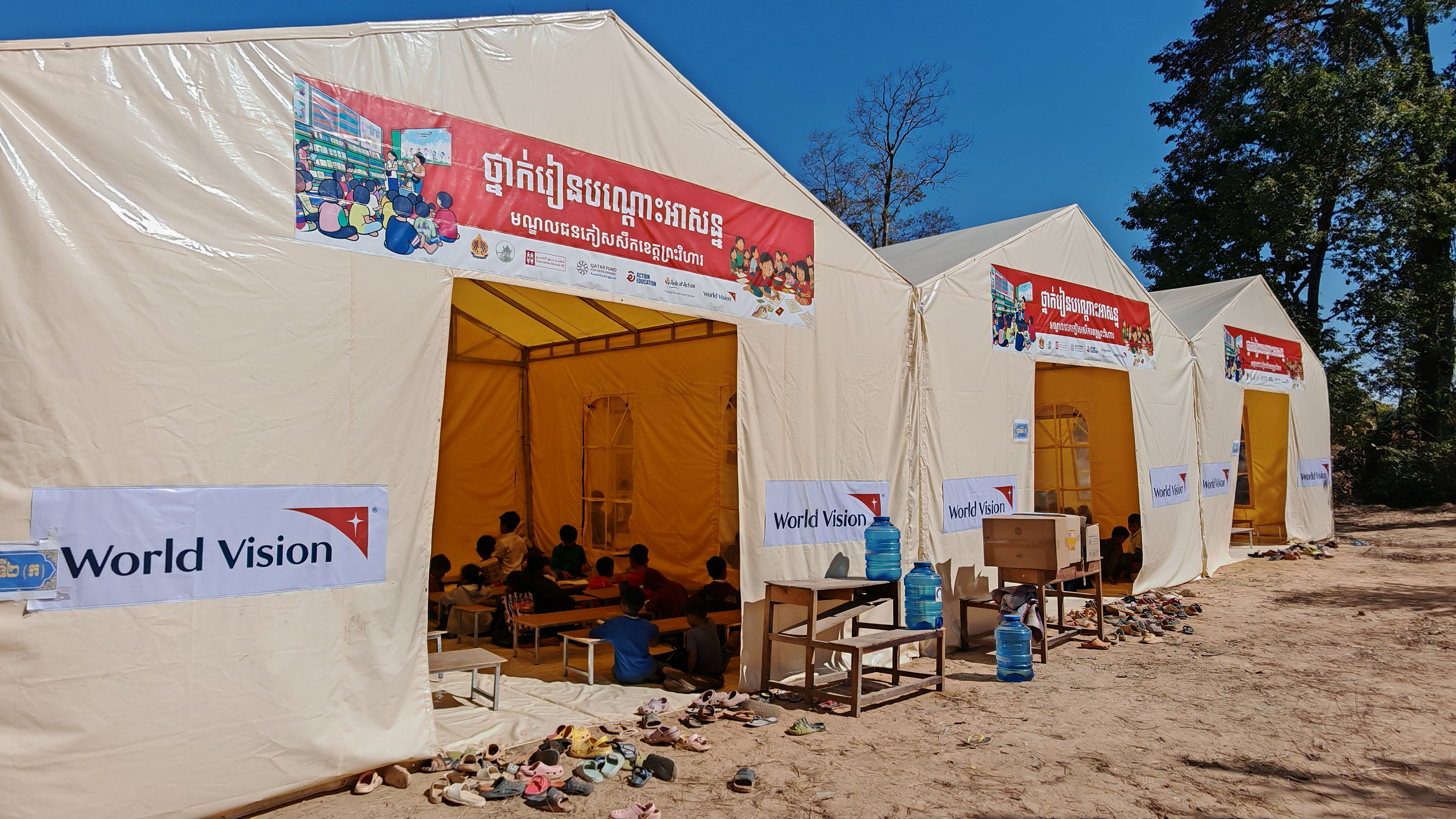
World Vision International in Cambodia has been delivering multi-sectoral humanitarian assistance to displaced children and families across education; food security and livelihoods; health and nutrition; protection and psychosocial support; shelter and non-food items; and water, sanitation, and hygiene (WASH) in Banteay Meanchey, Preah Vihear, Siem Reap, Battambang, and Oddar Meanchey provinces. Between 11 December 2025 and 9 January 2026, World Vision reached 125,988 displaced people—including 37,759 children, over 1,000 people with disabilities, and over 1,800 pregnant and lactating women—through food assistance, learning materials, child-friendly spaces, hygiene and sanitation facilities, nutrition support, shelter items, and psychosocial services.
Additionally, 54 temporary learning spaces have been established for displaced children to continue their education with the support of World Vision.
Story by: Korng Sikim and Ratana Lay
Photo by: Vanndeth Um