
Seeds of Change: How Climate-Smart Farming Helped Salam Build a Better Future

A life rooted in the land
Before the first light breaks over the marshlands of Al-Chibayish in Thiqar, 43-year-old Salam is already at work.
For as long as he can remember, farming has been his way of life. As the sole provider for his wife, five children, and elderly mother, Salam has always relied on the land to feed his family. He grows seasonal vegetables, cares for trees and livestock, and works tirelessly to make ends meet.
But farming has never been easy.
Growing up in a rural community with limited financial resources, Salam was unable to complete his education and turned to agriculture at a young age. Over the years, the challenges only grew. Water shortages, rising production costs, and the increasing effects of climate change made each farming season more uncertain than the last.
"My life was difficult because of weak agricultural production and low income, which made it hard to meet my family's needs," Salam recalls.
Despite spending long days in the fields, his harvests were often too small to provide a stable income.
"Sometimes, the crops didn't even cover the cost of farming," he says. "It was frustrating and made me less hopeful about the future."
Learning new ways to farm
Salam's turning point came when he joined the Nexus Accelerator Fund (NAF) project, a three-year project under the umbrella of Recovery and Resilient Pathways for Iraq programme, supervised by World Vision Canada. The project supports vulnerable communities in Iraq by strengthening resilience, promoting sustainable livelihoods, and addressing the impacts of climate change through integrated and climate-resilient solutions. implemented by World Vision Iraq in collaboration with the Directorate of Agriculture in Thiqar.
Through the project, Salam participated in a five-day training programme held in Al-Chibayish and Nasiriyah, alongside 47 other farmers. The training equipped participants with practical knowledge and skills in climate-smart and sustainable agriculture.
For Salam, it opened the door to a different way of farming. He learned how to manage and conserve water more effectively, harvest and recycle water, grow drought-tolerant crops, and better understand the impact of climate change on agriculture and livestock.
Practical sessions introduced Salam to smart irrigation methods, compost production, and preparing sprouted barley as nutritious animal feed.
"When I received the support, I learned new agricultural methods and became able to use resources more efficiently," Salam says.
While adopting new techniques required patience and practice, the guidance provided through the project helped him build confidence and apply what he had learned on his own farm.
Harvesting hope
The results were visible within a single growing season.
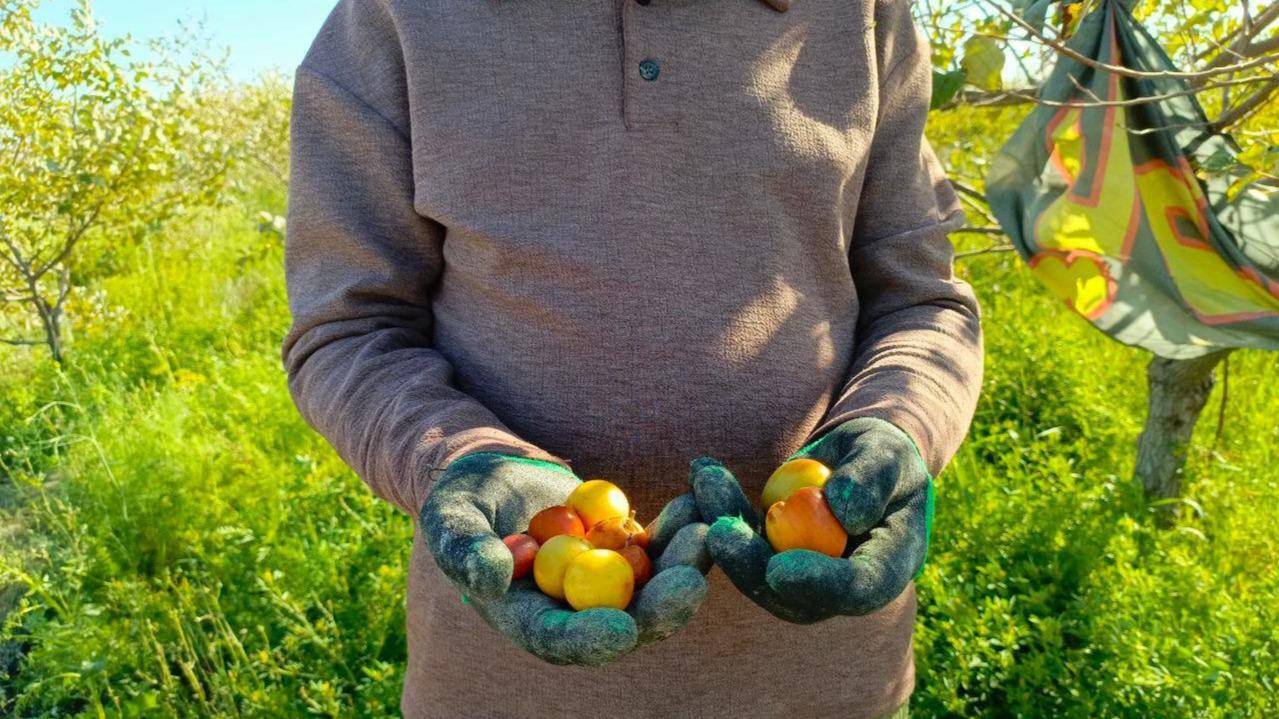
By applying the new farming practices, Salam significantly increased his vegetable production. For the first time in years, his harvest not only covered his farming costs but also generated a profit.
"In one season, I managed to produce a larger quantity of vegetables and sell them in the local market," he says with a smile.
The increased income brought much-needed stability to his household, allowing him to better provide for his family and plan for the future with greater confidence.
"Now I feel more confident and hopeful about the future," he says.
Growing stronger together
Salam's success has reached beyond his own fields.
As neighbouring farmers noticed the improvements in his crops, many became interested in learning the same techniques. Salam has been eager to share his knowledge, encouraging others to adopt more sustainable farming practices that can help them cope with the changing climate.
"The knowledge I gained, I shared with others," he says. "It benefits everyone and helps develop our agricultural community."
Today, although water scarcity and climate change continue to affect farming in Thiqar, Salam feels better equipped to face these challenges. By using efficient irrigation methods and choosing crops suited to harsh environmental conditions, he is building a more resilient livelihood for his family.
Looking ahead, he hopes to expand his farmland and ensure his children have opportunities that were beyond his own reach, especially the chance to complete their education.
From challenges to opportunity
Salam's story shows how practical knowledge, combined with the right support, can transform lives and strengthen communities.
"With simple support and new knowledge, a farmer can change his future," Salam says.
What began as a struggle to keep his family afloat has become a story of resilience, learning, and renewed hope, proving that even small changes can plant the seeds for lasting transformation.