
From Barren Land to Shared Prosperity: Sharon's Journey of Restoring Land and Lives

At just 25, Sharon, a mother of three from IlMarba village in Kajiado County, once struggled to make sense of her five acres of land. The farm was overgrown and inaccessible, offering little hope of food or income.
“Our land was so bushy that we could not even access it. I did not know anything about FMNR,” Sharon recalls.
That was before World Vision introduced the Farmer Managed Natural Regeneration (FMNR) approach and Savings for Transformation (S4T) training in Kajiado County through the Greater Regeneration for Evergreen Environment (GREEN) Project. Everything began to change when Sharon received her first training.
Like many families in her community, Sharon relied primarily on her husband's income. Saving money was not part of their daily life, and opportunities to improve their situation felt out of reach. She was trained to care for her trees, prune them correctly, and save the income she earned.
“After the training, I was motivated to practise FMNR and that is when my journey started. I learned how to prune trees in the right way, and I started to see change on my farm,” she says.
Slowly, her land began to recover. Trees regrew, grass returned, and her farm became productive again. With better planning, she could now support her livestock even during the dry season.
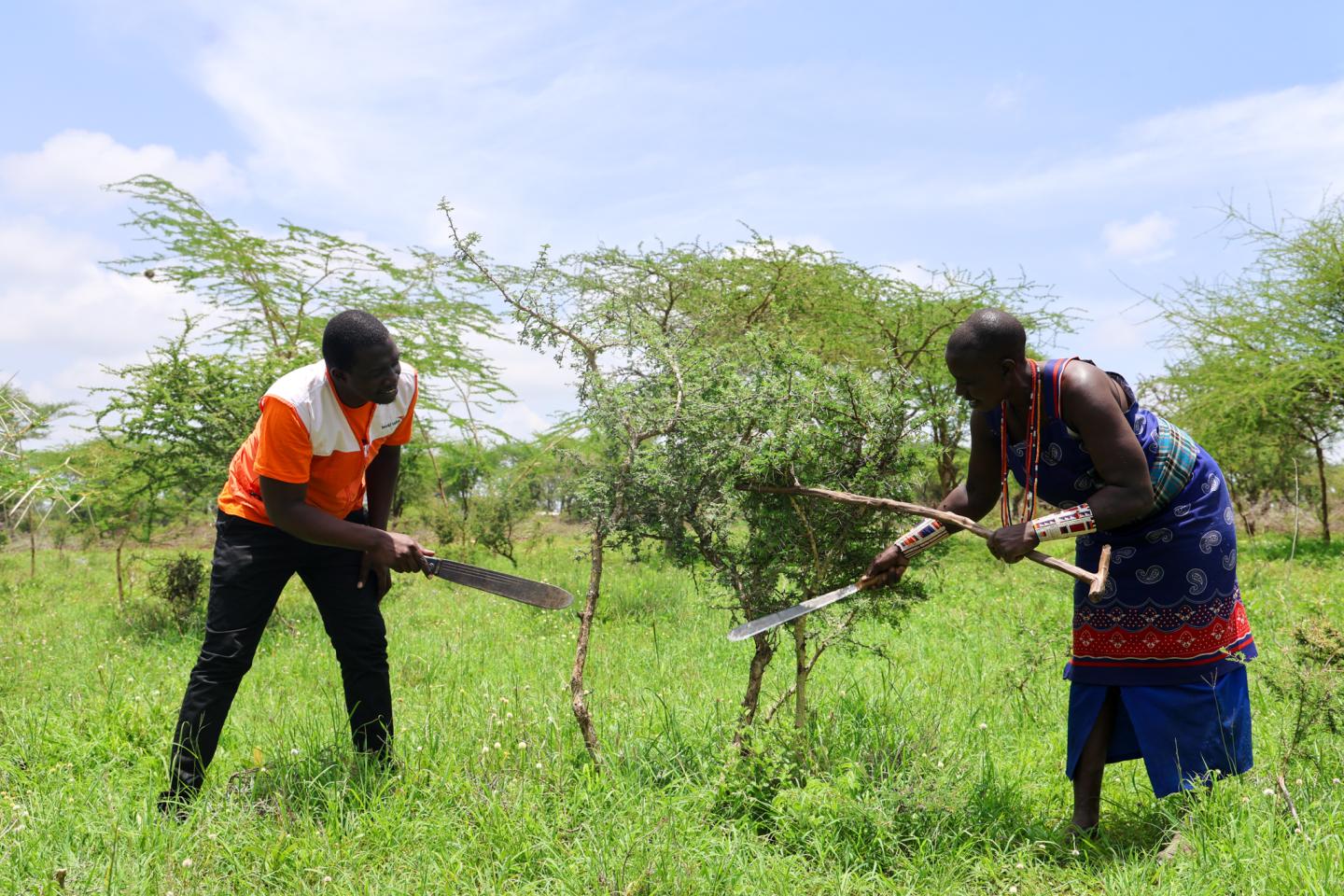
But the transformation did not stop with her land.
Sharon also joined a savings group and began contributing weekly.
“Saving was something I never did. I had no income, and we were living hand to mouth on my husband's earnings. Today I save KES 100 every week and I can contribute to my family's income, not just depend on my husband,” she explains.
This shift brought a new sense of unity in her home.
“My husband was the one making decisions in our family, and I had no say. Today we make decisions together and support each other,” she says.
Inspired by her progress, Sharon stepped into a leadership role. She trained seven people in her community and established a demonstration farm for others to learn.
“I made a demonstration site and invited people to come and learn. I also trained my husband and my brother in law. Now they are also teaching others,” she says.
Her efforts led to the formation of a savings group of 17 members. Together, they farm, save, and support one another.
“We help each other on our farms and in our lives. We are united,” Sharon explains.
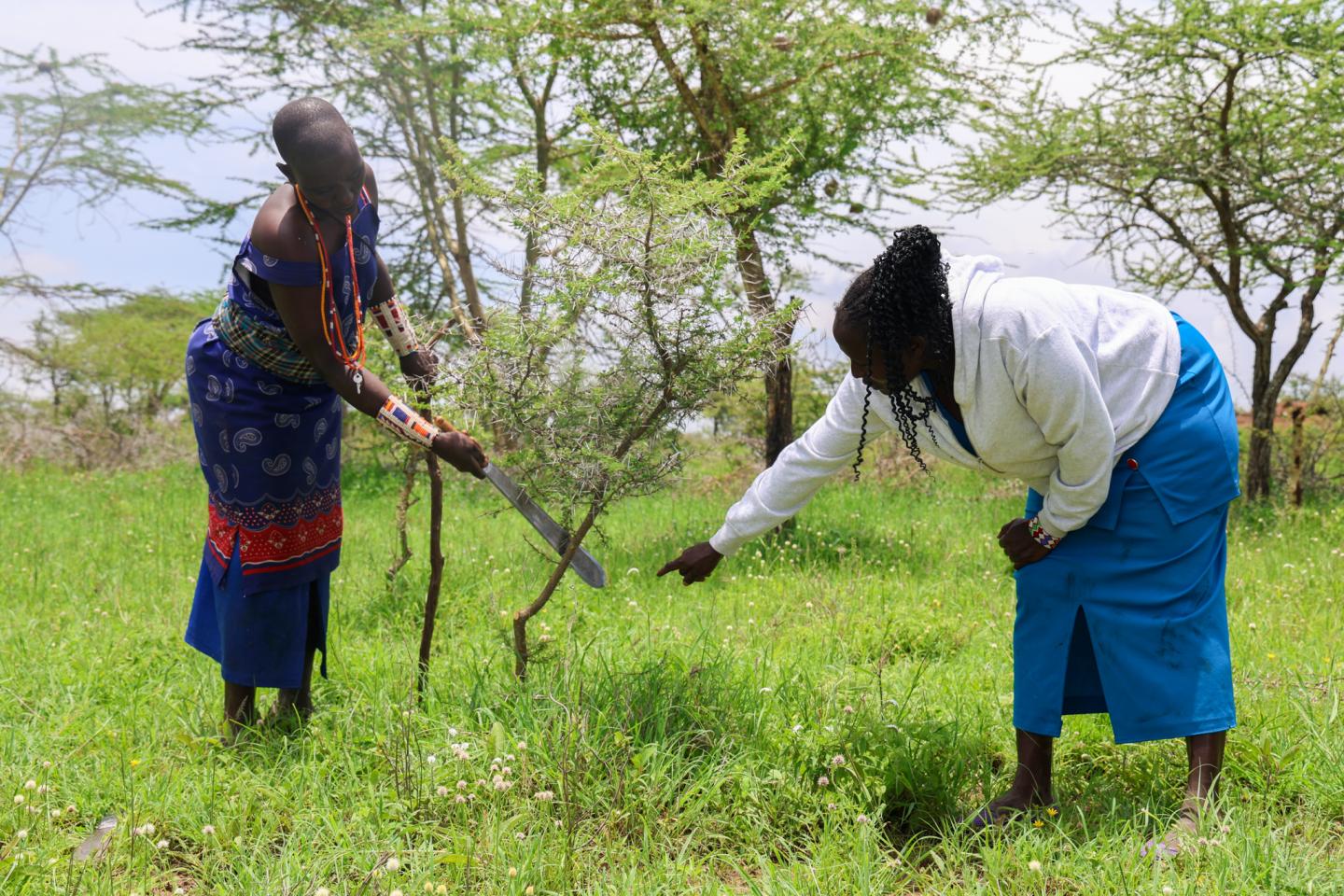
Among those she has trained is Pine, a friend and a member of the savings group, who has seen the change first hand.
“My farm was very bushy and I did not know what to do. When I visited Sharon, I was impressed. She taught me how to fence, how to prune and how to take care of my land,” Pine says.
Today, Pine's land is recovering.
“Now grass is growing and trees are coming back. We protect our farms, and this has brought us together as a community,” she says.
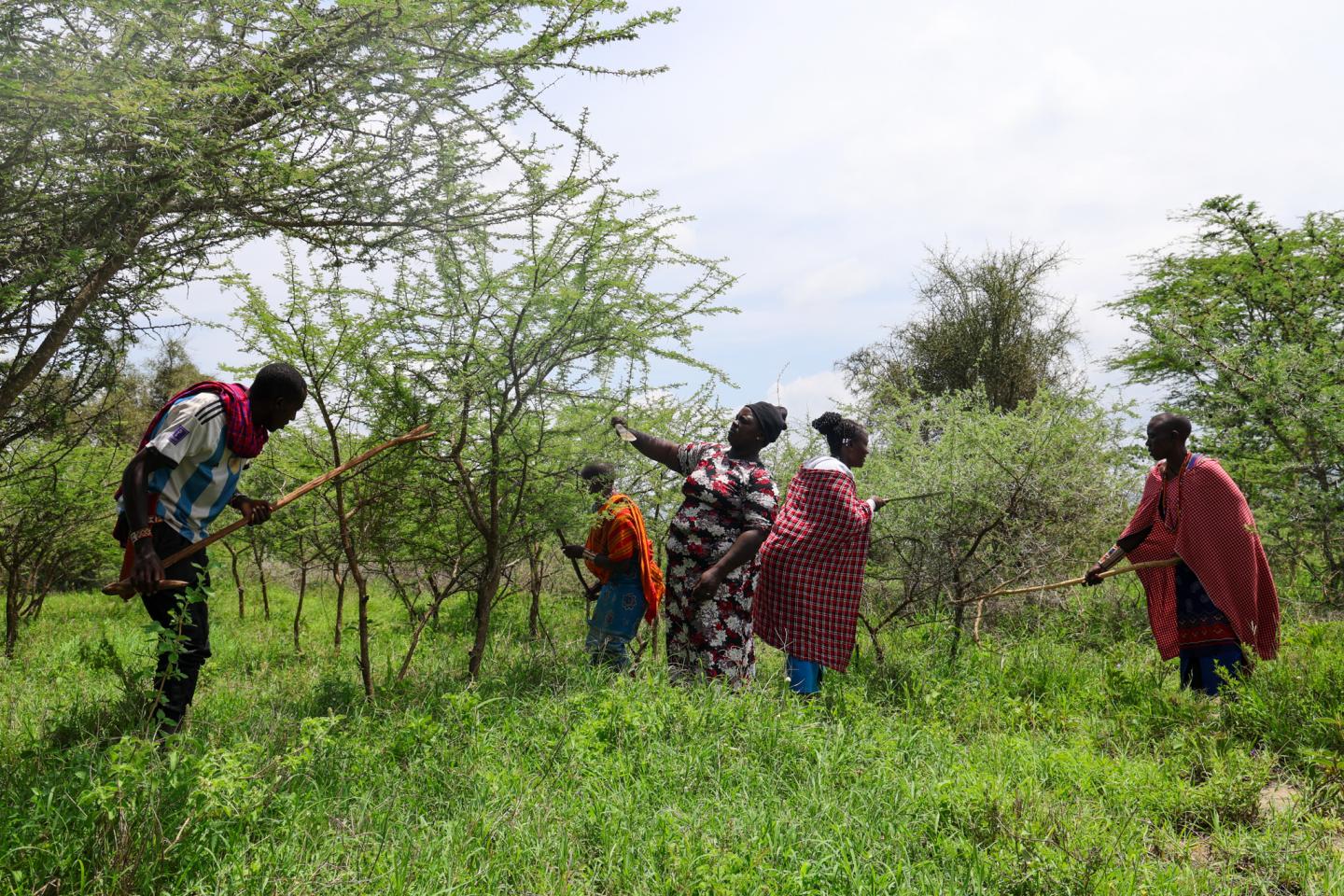
Emily, another member of the group and a mother of twelve, has also experienced transformation.
“Before, I had no money. Through FMNR and selling milk, I have been able to be disciplined with my finances and ensure I save KES 100 weekly. I was even able to buy a matrimonial bed,” Emily shares.
Emily is now supporting her family and teaching others.
“My family now has what they need. I am training other women and even my children, so they grow up knowing how to care for trees,” she says.
The impact of FMNR and savings training has gone beyond income. It has strengthened relationships, built trust, and created a shared vision for the future.
“My mission is to train more people. Together, we can address climate challenges and improve our lives,” Sharon says.
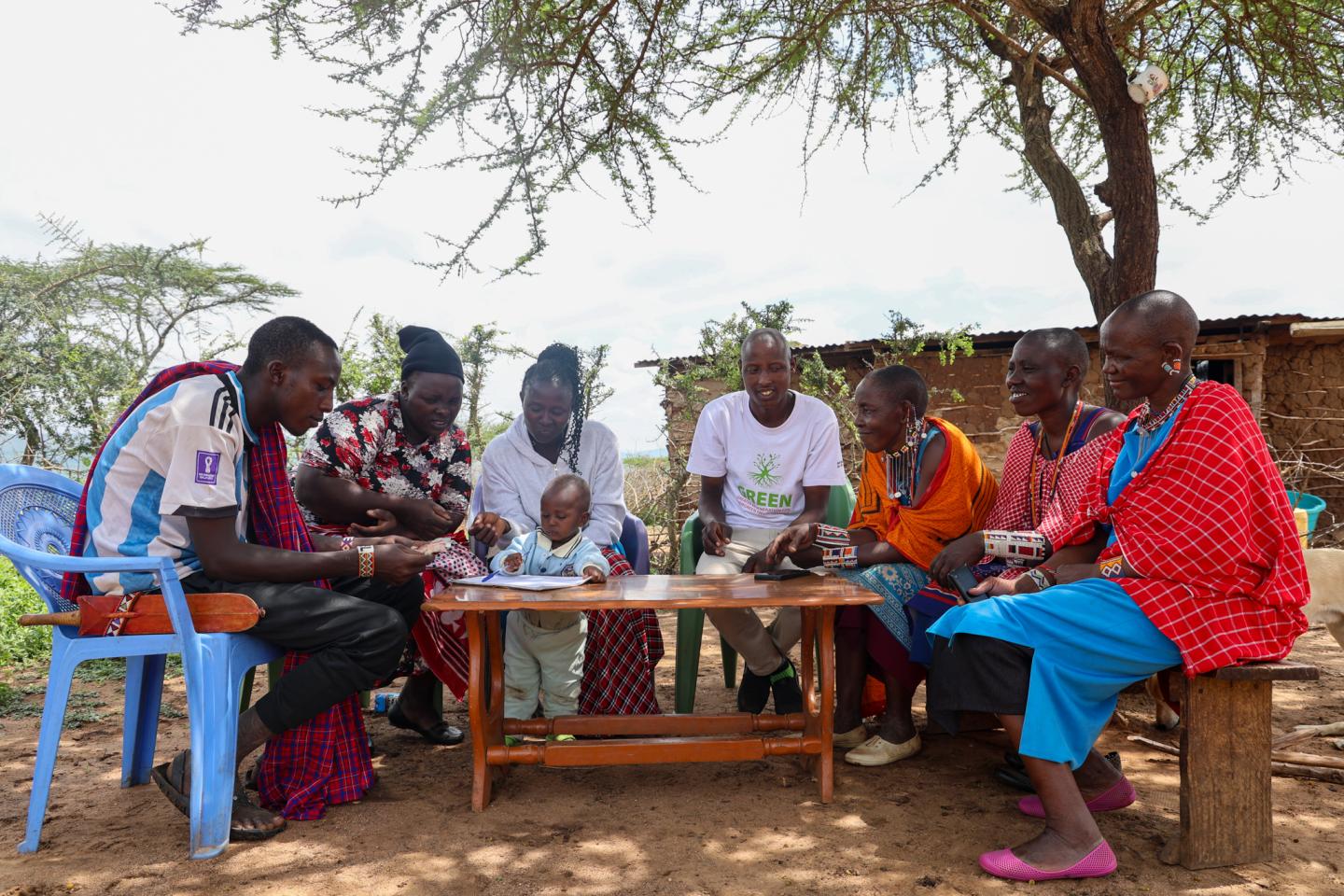
With gratitude, the community reflects on the journey. “Thank you for teaching us,” they say. “Now we are united, our land is improving, and our families are stronger.”
The GREEN Project, funded by the Australian NGO Cooperation Program (ANCP), aims to restore 225,000 hectares of degraded land across Kajiado, Narok and Makueni counties in Kenya by 2028. Through this initiative, 55,000 agro-pastoral farming households trained on FMNR will become more resilient to the impacts of climate change.
By Teresia Mwaura, Communications Officer, World Vision Kenya