
Building Abundance Through Farming: Irene Kiptoo’s Journey

At 52 years old, Irene Kiptoo stands on her farm in Kipkechir village, Elgeyo Marakwet County, surrounded by thriving crops, trees and livestock that tell a story of resilience and renewal. A mother of seven and a grandmother, she is now a confident farmer producing enough food for her family, earning a steady income, and empowering others in her community.
For more than 20 years, Irene believed her 21-acre farm was useless. The land was rocky and bare, scorched by the sun and devoid of grass. Livestock had no pasture, crops could not survive, and rain would disappear for months.
Like many farmers in her community, Irene assumed crops such as maize and groundnuts could never grow on her land, simply because that is what she had heard over the years. Instead, she leased infertile land elsewhere, spending at least 16,000 Kshs (123 USD) each season to grow groundnuts that produced poor yields of only 15 bags per acre. Selling groundnuts, her main source of income at the time, barely sustained her household, and there were days when her family slept hungry because there was no money to buy food.
“We were living from hand to mouth,” she recalls. “Everything, from maize to vegetables, we had to buy.”
Irene’s turning point came when she was selected during a chief’s baraza to participate in Farmer Managed Natural Regeneration (FMNR) training under the Central Rift FMNR Scale-Up Project (CRIFSUP), implemented by World Vision with funding from the Australian Government.
“I had heard about FMNR before, but this time I was determined to practice it,” she says.
Through the training, World Vision equipped Irene with practical knowledge and skills to restore her land and improve her farming practices. She learned how to prune and manage existing trees instead of cutting them down, how to balance shade and sunlight for crops, how to protect land to allow indigenous grass to regenerate and how to use organic manure and certified seeds to improve soil fertility and crop yields.
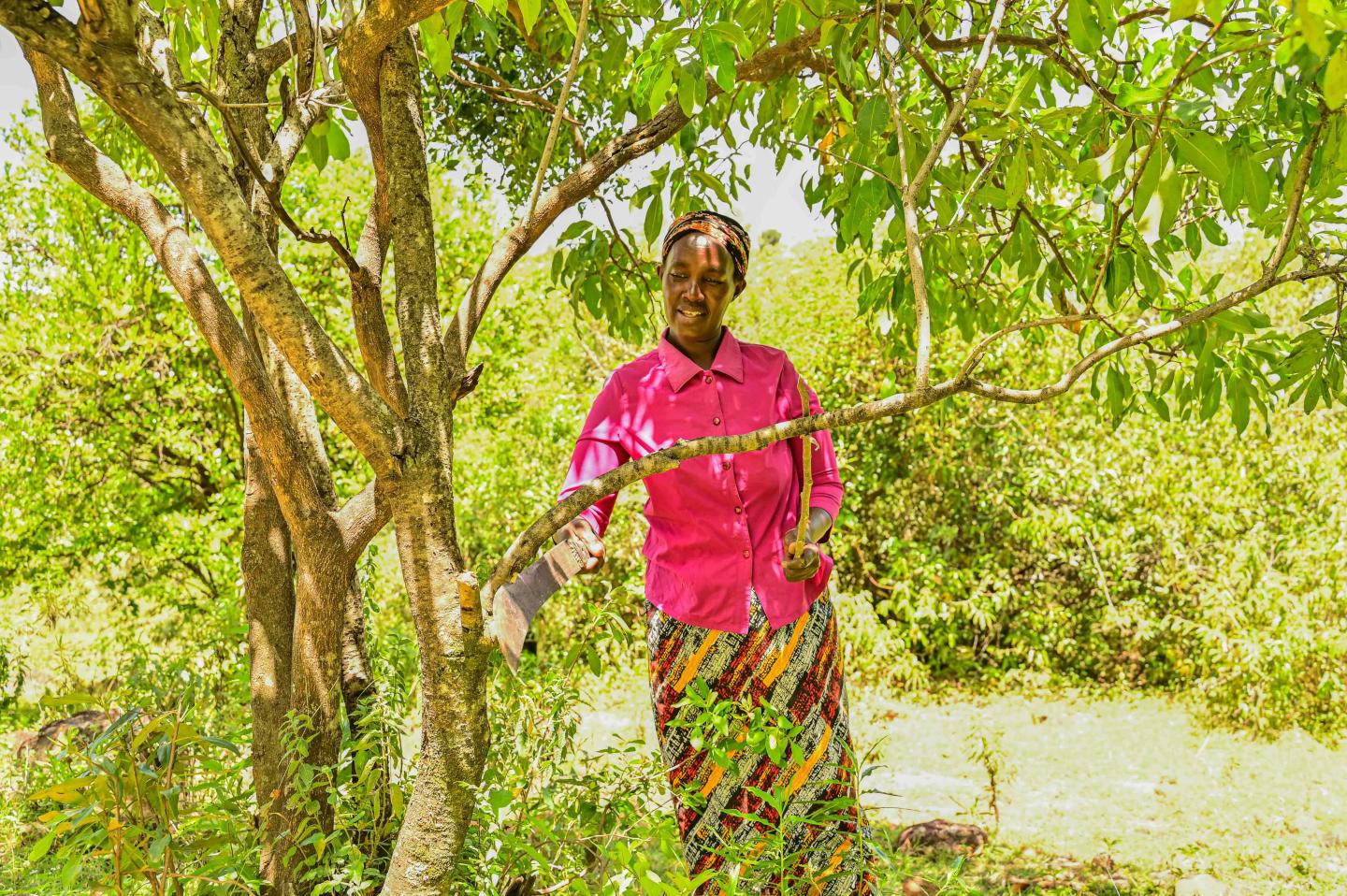
“We were taught to leave enough trees for shade, but also prune to allow sunlight for crops. That knowledge changed everything,” she explains.
In 2022, Irene put this knowledge into practice. She began applying FMNR on eight acres of her farm, fencing the land to protect regenerating shrubs, pruning trees to allow crops to grow and using manure from her livestock to enrich the soil.
“For the first time, I came back home and planted on my own land instead of leasing,” she says. “I realized my farm could also be productive.”
She diversified her farming, planting maize, millet, beans, pumpkins, vegetables and groundnuts, crops she had previously believed could not thrive on her land. With support from World Vision, she also received a 2,300-litre water tank, enabling her to harvest rainwater and irrigate her fruit trees during dry periods, as well as an energy-saving cookstove that has significantly reduced firewood use and indoor smoke.
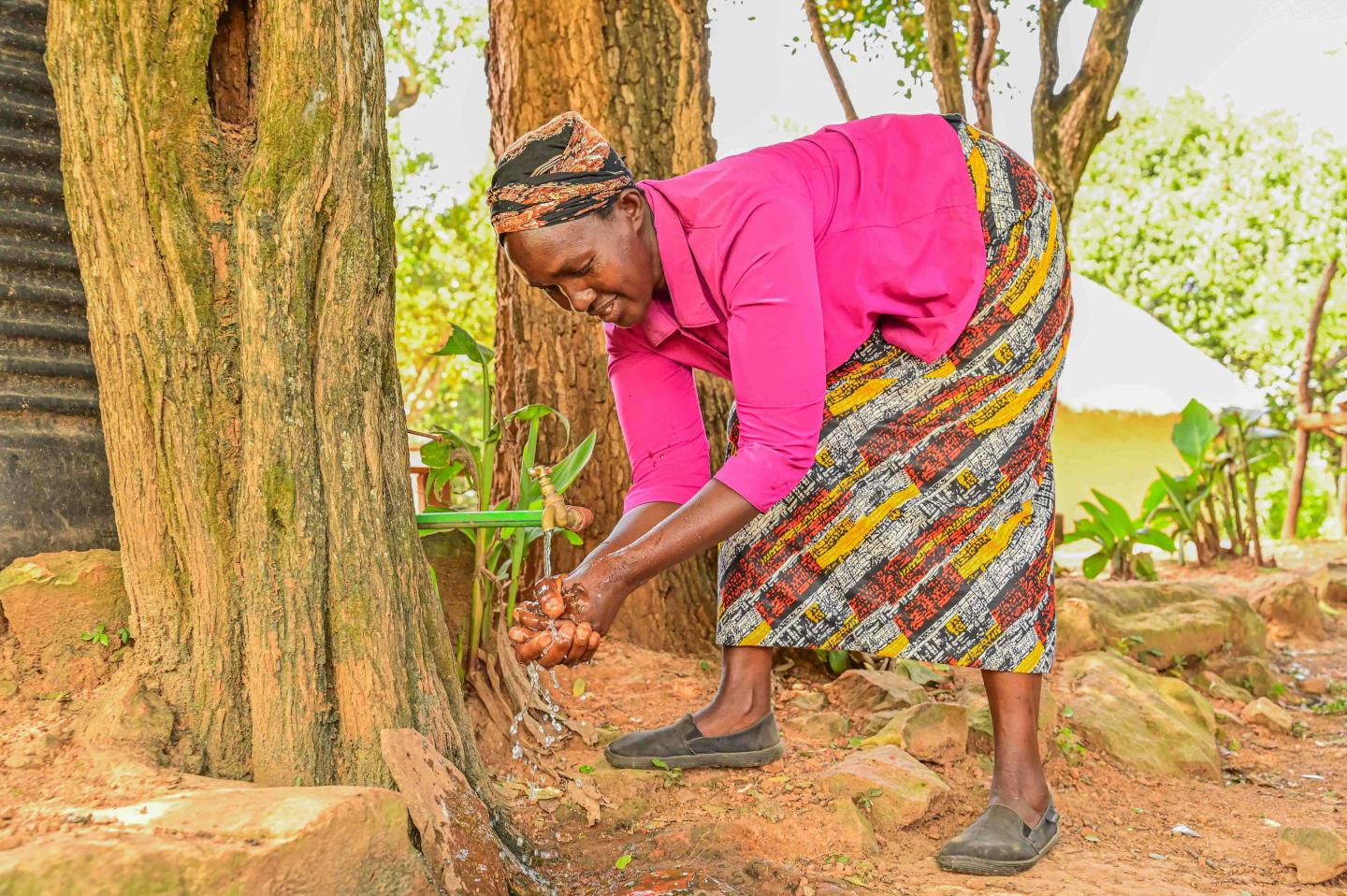
The results have been life-changing. Irene now harvests between 10 and 12 bags of maize every year, enough to feed her family and sell the surplus.
“I used to buy maize every year,” she says. “But now, I grow enough to feed my family for the whole year. I no longer have to buy.”
In 2025 alone, she earned 24,000 Kshs (184 USD) from selling maize and 30,000 Kshs (231 USD) from groundnuts grown on her own farm, eliminating the cost of leasing land.
“Now I am able to save money, something I was never able to do before,” she says.
Her farm has become a reliable source of both food and income. She grows a variety of crops, keeps livestock and earns additional income from vegetables, milk and eggs, enabling her to pay school fees and meet her family’s needs. Irene is now assured of earning at least 9,000 Kshs (69 USD) monthly from these combined sources.
“When it comes to food, I am now in a good place, growing enough for my family and having surplus to sell,” she says. “I am getting food straight from my farm instead of buying.”
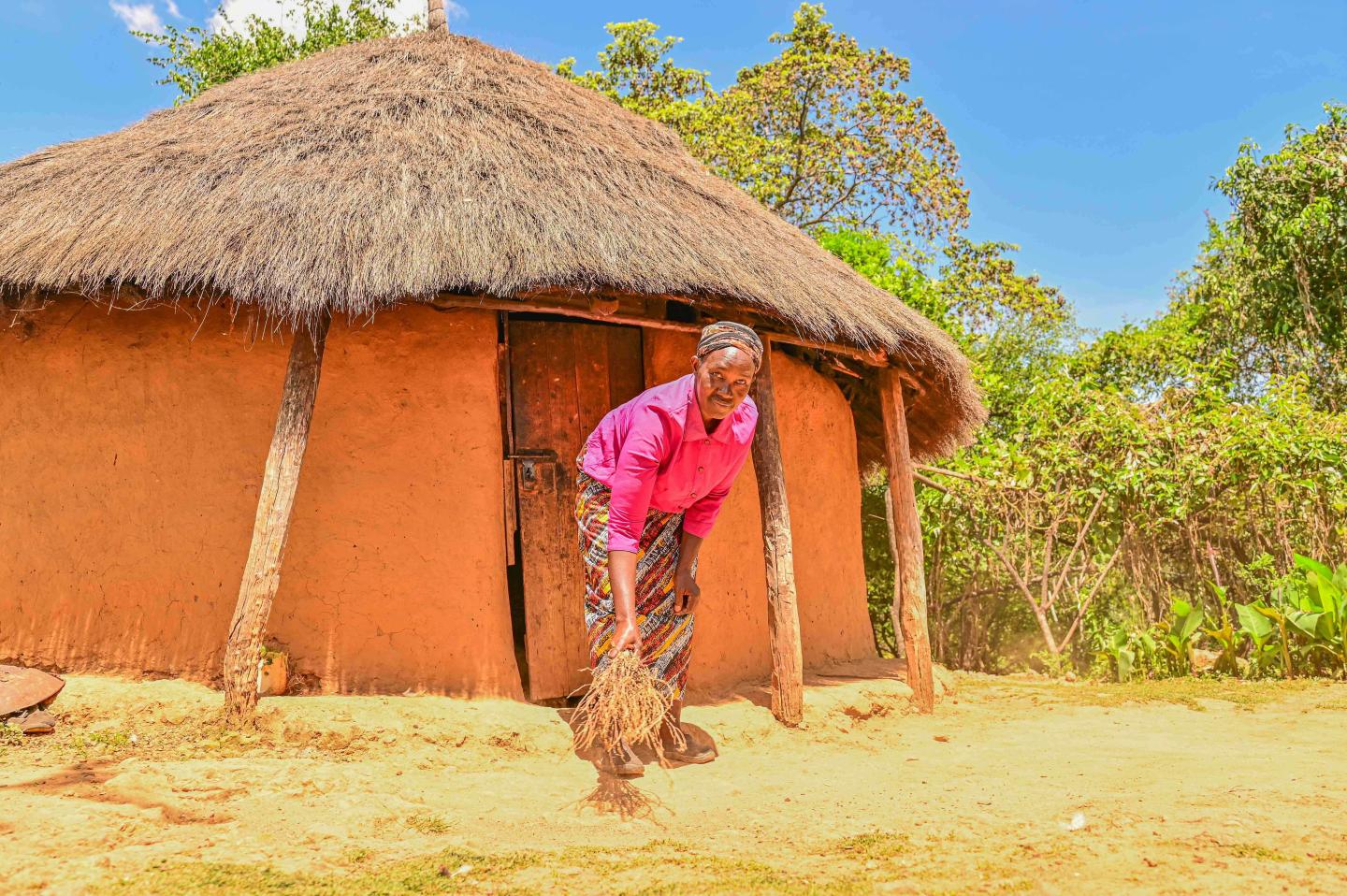
FMNR has also restored her environment. Indigenous grass has regenerated, reducing soil erosion and providing pasture for livestock, while trees have improved air quality and contributed to more reliable rainfall.
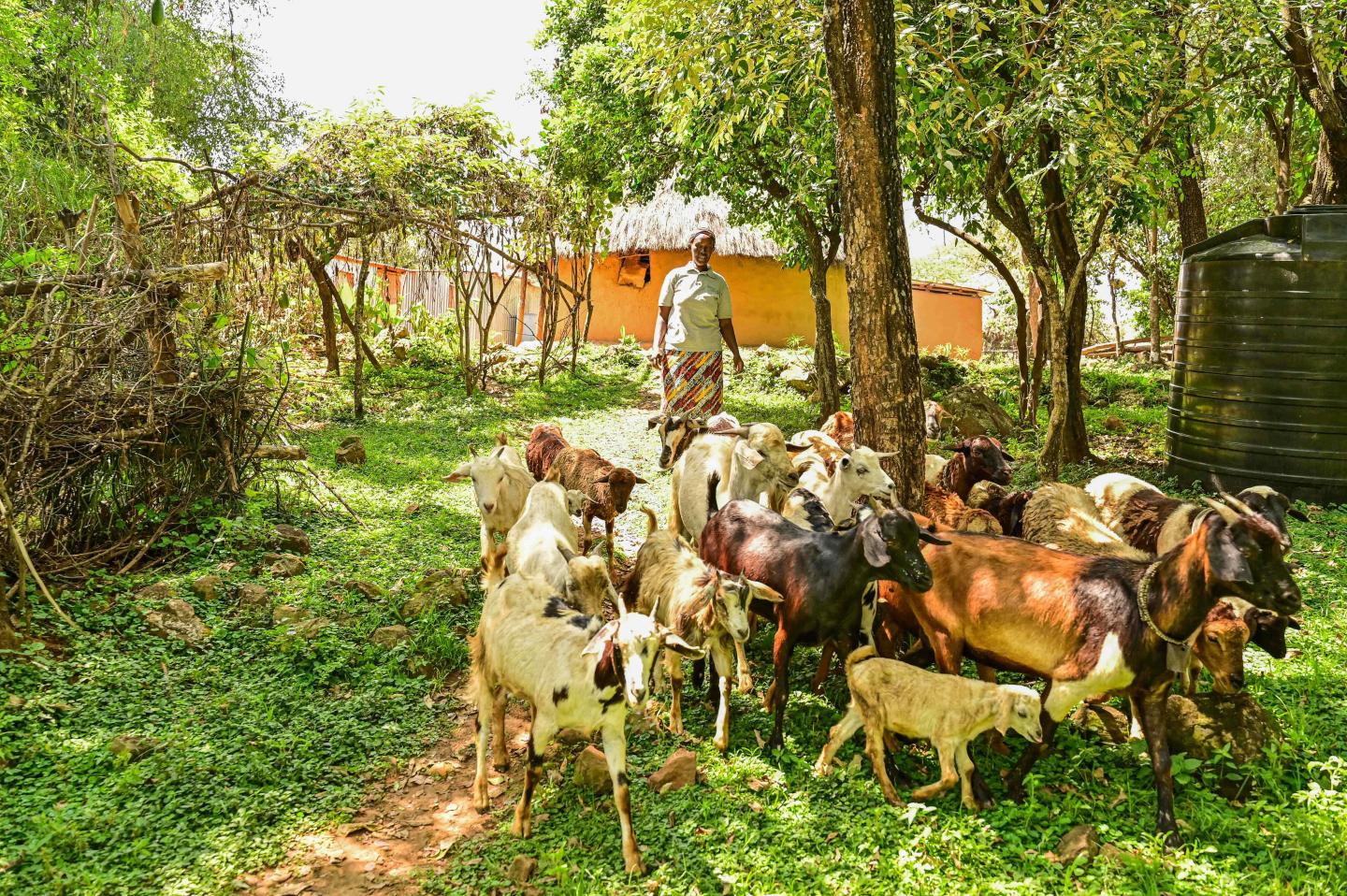
“Our animals are healthier now because they have enough to eat nearby,” she explains. “They no longer walk long distances of nearly 20 kilometers in search of pasture.”
Instead of cutting down trees for charcoal, Irene now practices sustainable pruning to meet her household energy needs while preserving the environment.
“We get firewood without destroying trees,” she says. “The trees continue to grow and support us.”
Beyond the visible changes on her farm, Irene’s greatest transformation has been internal.
“The biggest change for me is empowerment,” she says. “I am more informed, more confident and I know my land can work for me.”
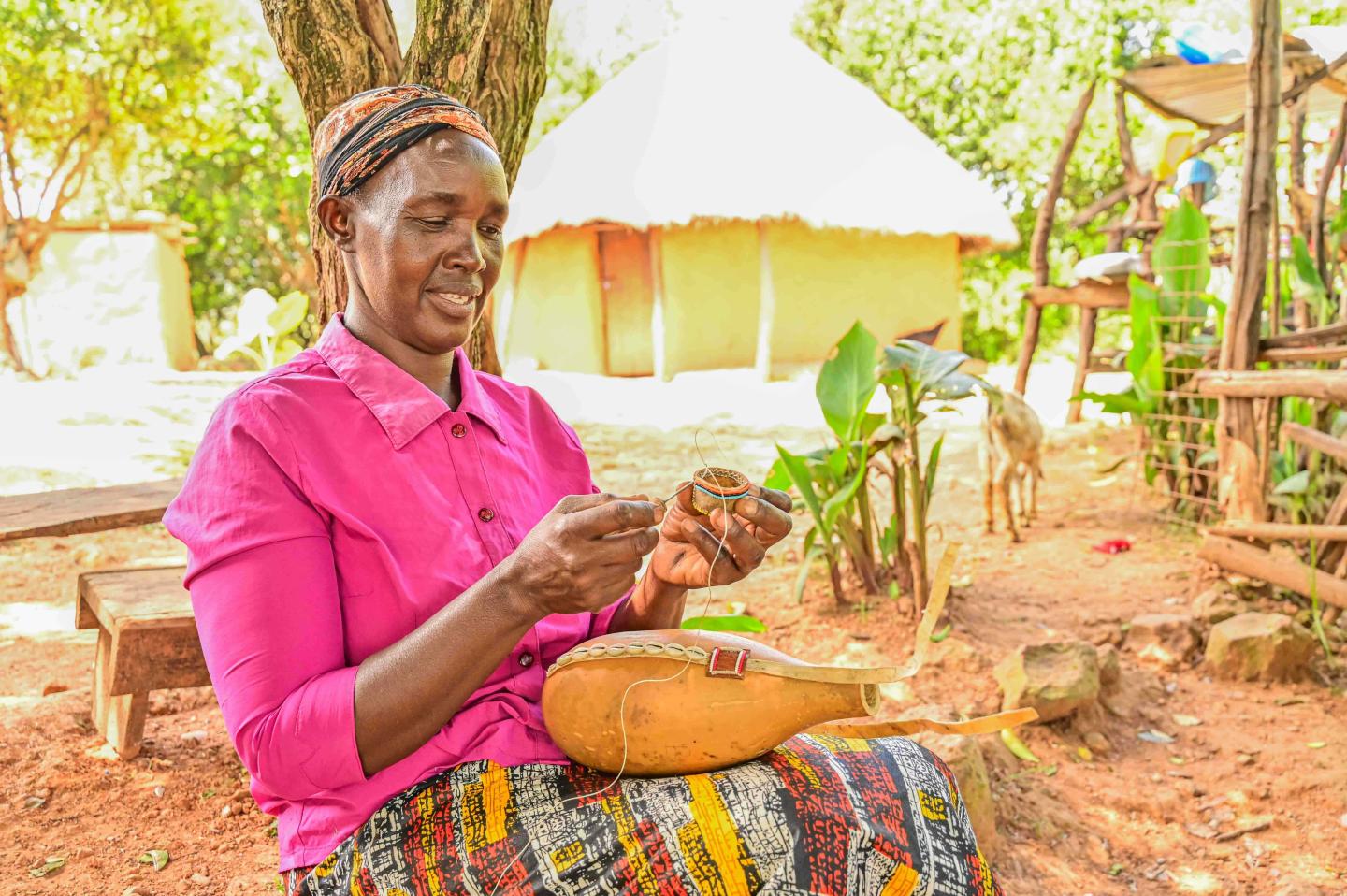
Today, she shares her knowledge as a lead farmer, training 12 neighbours and encouraging others, especially women, to adopt sustainable farming and income-generating activities. She also saves money through a local Savings for Transformation (S4T) group and invests her time more productively, working on her farm and making beaded crafts for sale.
“We teach each other and grow together as a community,” she says.
Irene’s thriving farm highlights the transformation FMNR has brought to the lives of over 1,000 smallholder farmers across Baringo, Nakuru, Elgeyo Marakwet and Nakuru Counties by restoring land, diversifying livelihoods and strengthening climate resilience.
“I am grateful because my life has changed,” she says. “I have food, I have income, and I am able to support my family.”
By Hellen Owuor, Communications Specialist (CRIFSUP), World Vision Kenya