
How clean water is helping girls in Barambate, Marsabit County stay in school and dream bigger

Before the sun rises over Barambate village in Marsabit County, eight-year-old Sabdio is getting ready for school, washing her face, picking up her books, and hurrying to class with the other children.
A few years ago, for many girls in this village, mornings looked very different.
They began not with lessons, but with the search for water.
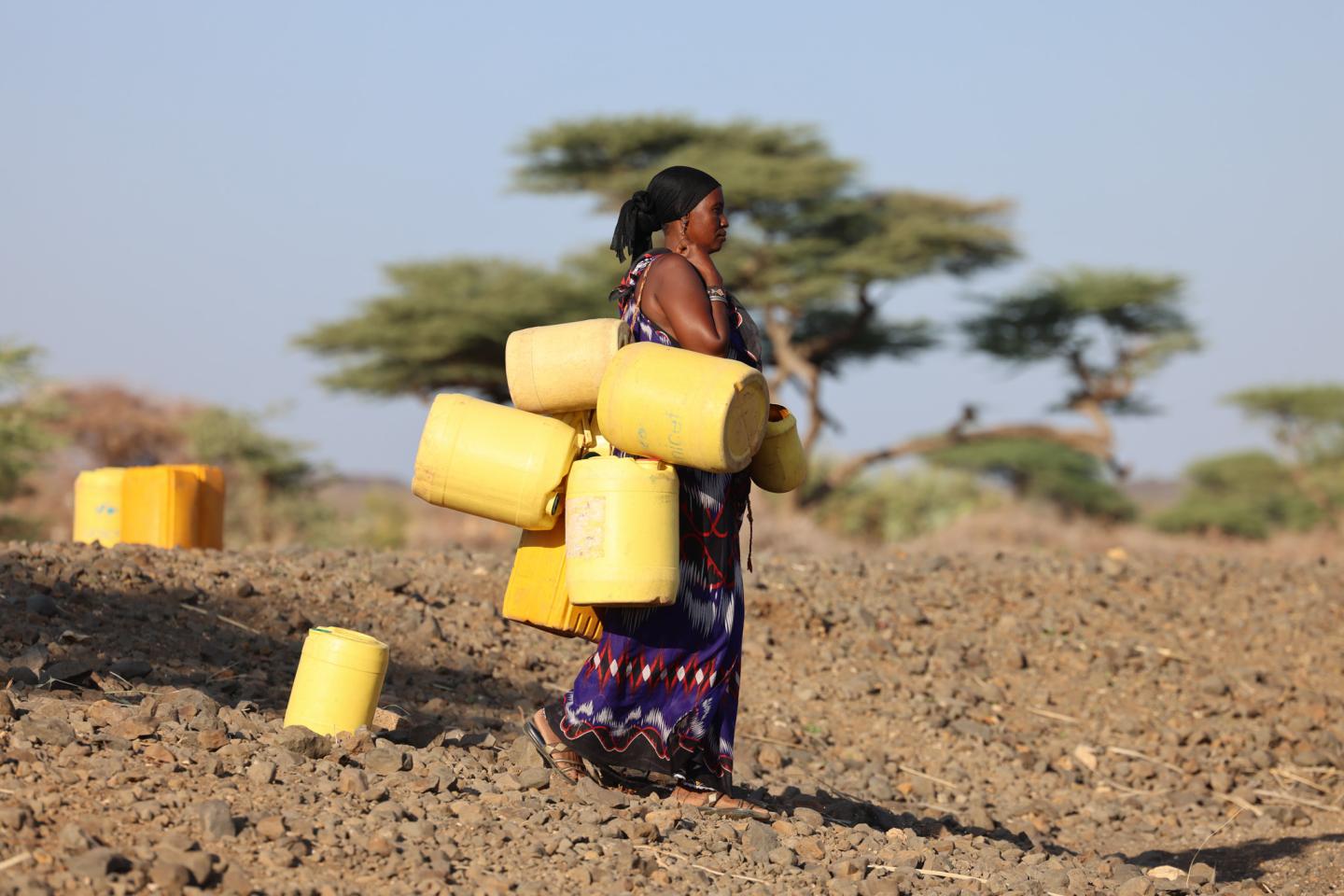
For generations, families in Barambate, a village in North Horr inhabited by the Gabra community, depended on distant salty wells. Finding water meant walking for kilometres across dry land, waiting in long queues, and carrying heavy jerrycans back home. It was exhausting work, and it fell mostly on women and girls.
For girls, that burden came at a cost.
At 22, Adho Boru remembers that life clearly because she lived it.
“As I was growing up, we used to walk three to five kilometres to look for water,” she says. “Then we would queue for hours at the salty wells just to fill one 20-litre jerrycan.”
By the time she got back home, much of the day, and much of her energy, was already gone. School was still there, but it had to compete with tiredness, chores and the daily demands of survival.
Adho was one of the few girls in Barambate who managed to keep going. She completed secondary school despite the odds and today volunteers in her village as a facilitator for some of World Vision’s community training models. But many of the girls she grew up with never got that same chance.
“Most of my agemates dropped out of school while still children and got married,” she says quietly. “Lack of water was one of the reasons. We spent so much time looking for water instead of being in school.”
That is why the childhood Sabdio is experiencing today feels so significant.
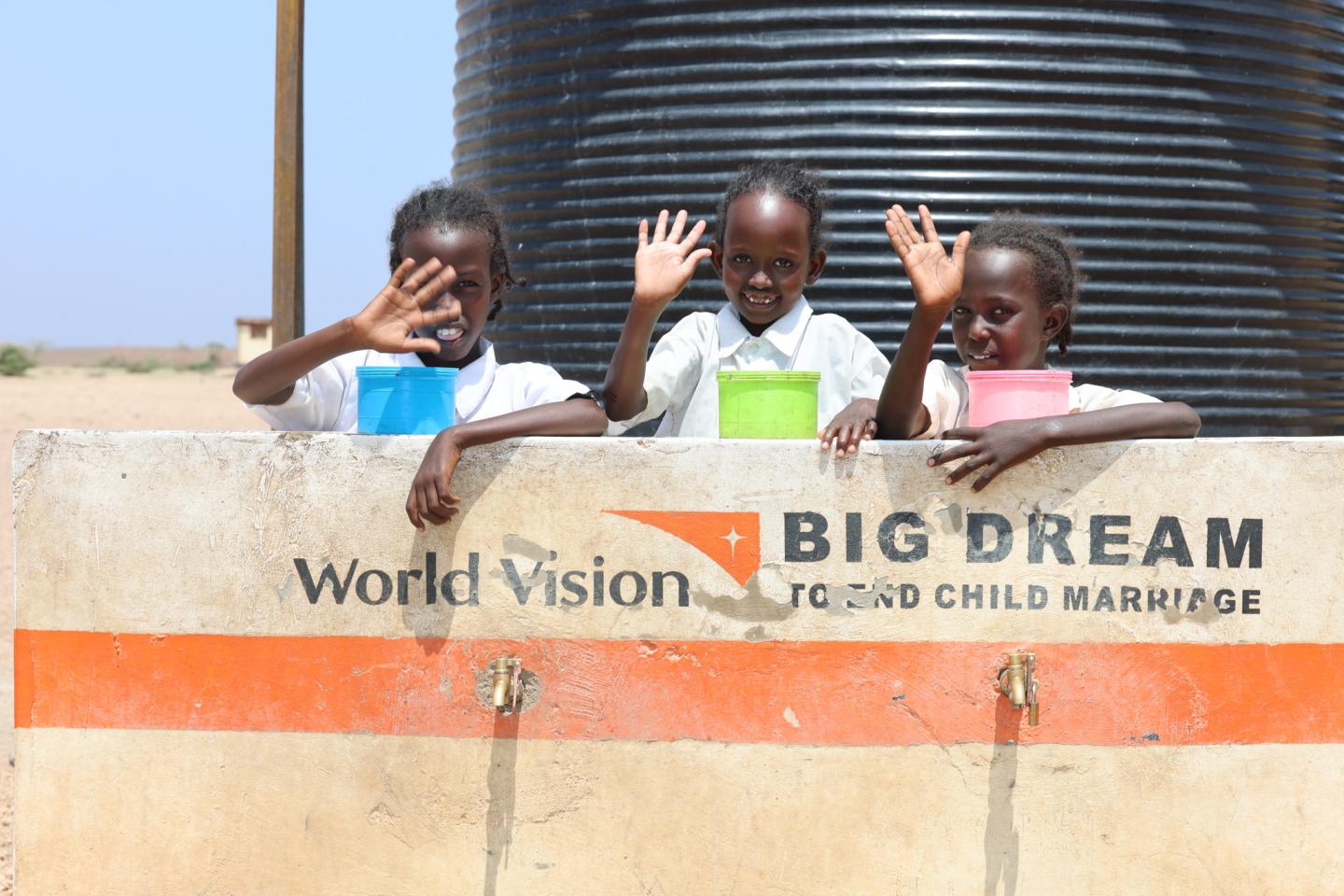
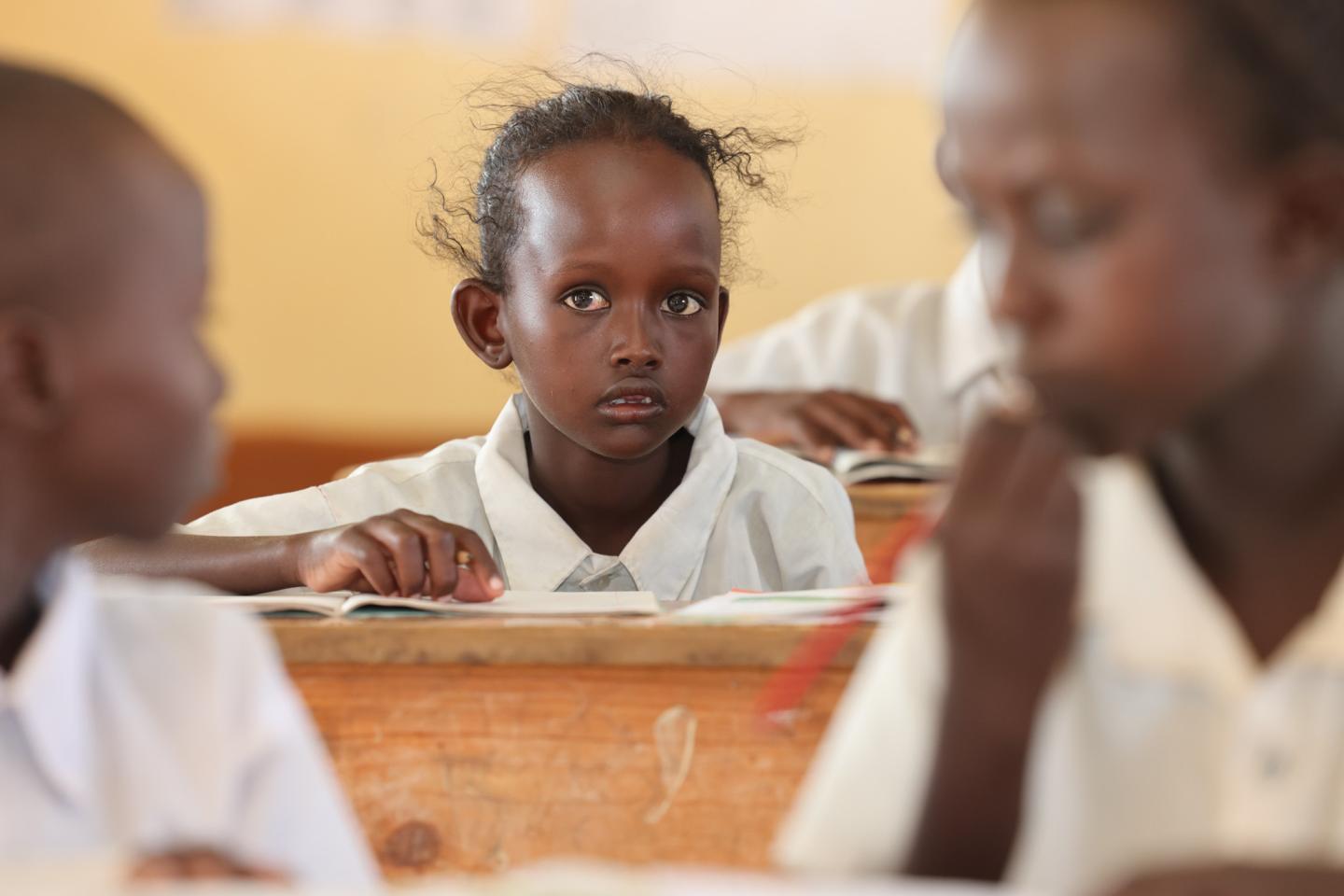
Sabdio is in Grade 3 at Barambate Primary School. She is growing up in the same village, among the same harsh climate conditions, but with one life-changing difference: water is now much closer to home.
“We are happy to have water in our school and at home,” she says with a shy smile.
It sounds simple. But in Barambate, water has changed the rhythm of a girl’s day.
Instead of spending hours helping to search for water, Sabdio has more time to be in class, more time to study, more time to play, and more time to simply be a child. For her mother, Suna, that difference is impossible to overstate.
“Fetching water is no longer something I need to plan my whole day around,” she says. “I just walk a few metres from my house and I have clean water.”
For Suna, the relief is practical. For her daughter, it could be life-defining.
In places where water is scarce, it is often girls who pay the highest price. When water sources are far away, girls are the ones most likely to miss school to help their mothers. They fall behind in class, attend irregularly, or drop out altogether. In communities where child marriage remains a risk, leaving school can narrow a girl’s future even further.
In Barambate, that pattern had become painfully familiar.
“The role of fetching water has always been left to women and girls,” says village elder Wario Abudu. “They would spend the whole day looking for water, and we accepted it because that is how life had always been.”
But “how life had always been” was denying girls a fair chance at childhood and education.
When Mr. Bante Ayano became head teacher at Barambate Primary School in 2024, he saw the impact immediately. There were only 36 learners in the primary section, just 10 of them girls, and the school did not have an Early Childhood Development centre.
“Girls were very few, and their attendance was inconsistent,” he says. “The main reason was lack of water. Many girls used to accompany their mothers to look for it.”
In 2025, World Vision Kenya’s Big Dream to End Child Marriage programme carried out a water needs assessment across villages in North Horr Area Programme. Barambate emerged as one of the communities most in need of urgent support.
But the response was not just about drilling a borehole. It was about helping to remove one of the everyday barriers standing between girls and their futures.
Before construction began, World Vision worked with community members to hold conversations about the water crisis and form a water management committee so that the project would belong to the community from the start.
“We wanted the community to be part of the journey from the beginning so that they would own and sustain the project,” says Julius Lentawa, Project Manager for the Big Dream to End Child Marriage programme in Marsabit.
A borehole with a yield of 16m³ was drilled in the village and fitted with a solar-powered pump, an elevated steel tank and a distribution line connecting households and the school. Seven water points were installed, bringing clean and safe water much closer to families.
Today, the system serves around 1,800 people, including 438 children, across 300 households.
The results are already visible.
At Barambate Primary School, enrolment in the primary section has risen from 36 to 60 learners, including 28 girls. The village now also has an ECD centre with 70 children. More children are attending school consistently, and teachers now have enough water to prepare meals and ensure children can drink water while at school.
“There are more children attending school consistently, especially girls, after the installation of water in the village,” says Mr. Bante.
For Adho, the significance of those numbers is deeply personal. They represent a break from the life her own generation knew, a sign that girls in Barambate may no longer have to choose between helping their families survive and getting an education.
And the impact has stretched beyond water alone.
As trust grew through the project, World Vision and community leaders also began having deeper conversations around child marriage and female genital mutilation, harmful practices that have shaped the lives of girls in this area for years.
“When we started talking about bringing clean water to the village, we also engaged elders on issues our programme addresses, such as child marriage and FGM,” Julius explains. “After seeing the impact of the water project, they became more open to those discussions.”
For elder Wario, those conversations have prompted reflection.
“When we saw the change brought by the water project, we were happy,” he says. “As we continued talking with the programme, we realised we had denied girls their rights by marrying them while they were still children. Our commitment now is to take our girls to school and end child marriage.”
That commitment matters because in Barambate, water is no longer only about thirst.
It is about what happens when girls have time. Time to sit in class instead of walking for hours under the heat. Time to learn, to grow, to imagine a future beyond survival. Time to remain children for a little longer.
For Sabdio, it means she can go to school with her books instead of a jerrycan.
For Adho, it means the girls growing up behind her may not have to lose what her generation lost.
And for Barambate, it is a sign that when clean water comes closer, opportunity does too.
By David Nderitu, Communications Specialist, Big Dream to End Child Marriage, World Vision Kenya