
A New Thread of Hope: Sophia’s Transformation Through Enterprise

The Samburu plains stretch wide and golden, but for Sophia Lempei, childhood was cut short long before she could dream beyond her village.
“I don’t know the exact age when I was married off,” Sophia says. “I had never been to school. Looking at my agemates, I must have been around 10 or 12 years old at the time.”
Her uncle arranged the marriage. Her husband was much older, and a heavy drinker. “He beat me. He didn’t care for the children,” Sophia recalls, her voice heavy with emotion. At an age when most girls should be learning to read, Sophia was learning to survive.
Eventually, the pain became unbearable. She ran back to her parents’ home with her children. But life there was no easier. “We were poor. I had to find a way to feed my children,” she says.
Sophia turned to brewing and selling illicit alcohol to make ends meet. The money came quickly, but so did the weight of what it was doing to her community. “I saw how it was destroying families, even my own community,” she says. She eventually walked away from the trade and began selling groceries once a week at Opiroi Market. To supplement her income, she also made simple beaded bracelets, earning only a few extra coins.
But even with all that, it still wasn’t enough. Between school fees, food, clothing and other household needs, the demands kept piling up.
That changed in 2022 when World Vision’s Kenya Big Dream programme (now the Big Dream to End Child Marriage programme) introduced Savings for Transformation (S4T) groups in her village.
“I joined the very first group,” Sophia says proudly. “We were trained on how to save with a purpose.” Using her savings, she took out a small loan and invested it in her grocery business. For the first time in a long while, Sophia began to feel that her future was back in her hands.
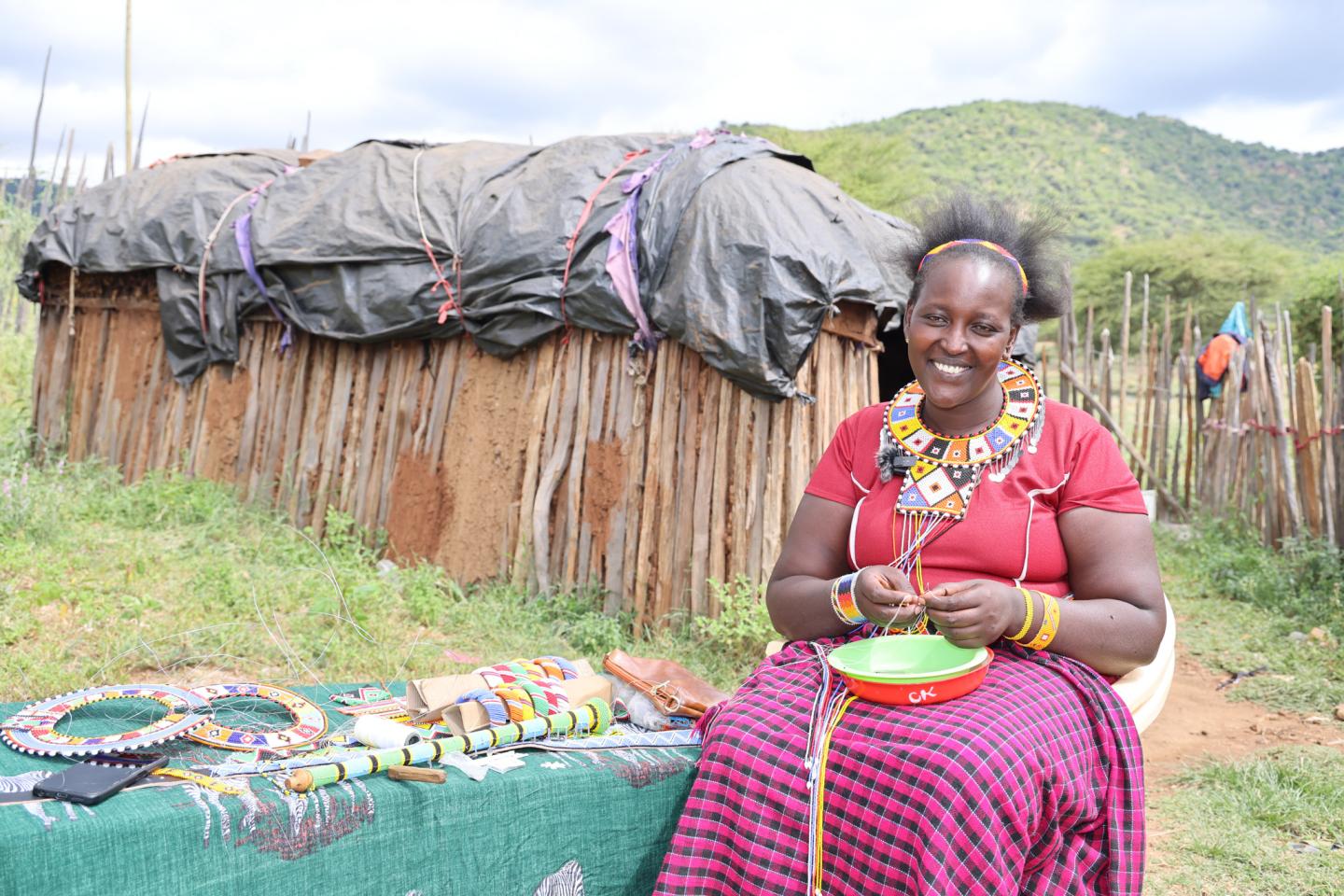
Later, the programme introduced beadwork training, equipping women with skills in modern design, pricing and marketing. Sophia did not hesitate to join.
“What I once saw as a hobby became a business,” she says, her eyes lighting up. “I learned how to make quality products that people actually want to buy.”
Today, beadwork has become Sophia’s main source of income, earning her up to 20,000 Kshs (154 USD) a week. Her colourful necklaces and bracelets are no longer sold only within her village; they now reach wider markets and exhibitions beyond her community.
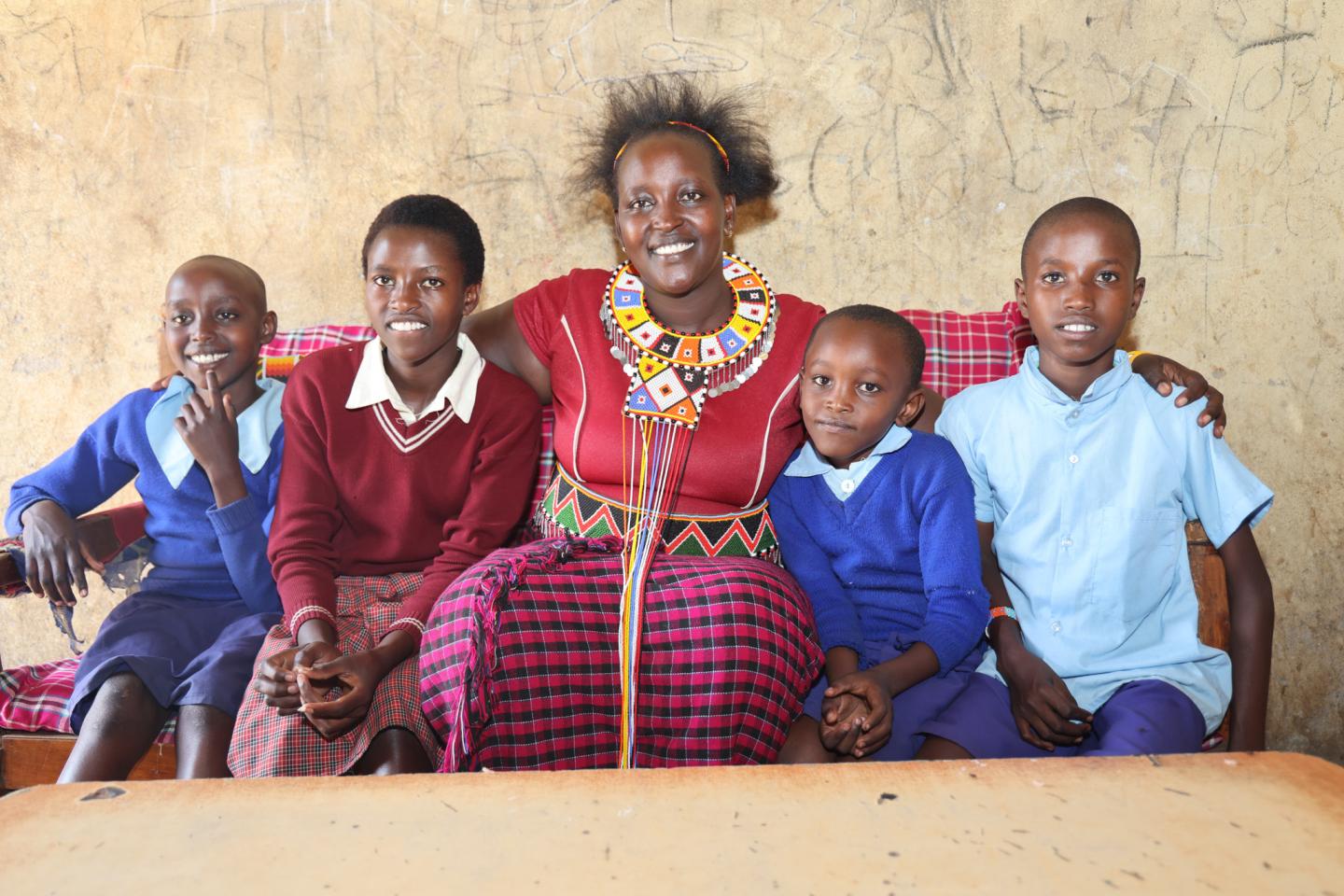
With this income, Sophia has steadily transformed life for her family. Her four children, two girls and two boys, are now in good schools, and she is also able to support her younger brother.
“I want my daughters to finish school and marry only when they are ready, and to men of their own choice,” she says firmly. “And my sons, I want them educated so they never become men who force girls into child marriage.”
Sophia has since become a strong advocate for children’s rights and now serves as the chairperson of her local church. Her voice carries weight in community meetings, where she speaks out against child marriage and other harmful practices.
Sophia’s story is a powerful reminder that economic empowerment is central to ending child marriage. When families are able to meet their needs without relying on dowry, girls are given the freedom to stay in school, dream bigger, and choose their own futures.
“Beadwork gave me dignity,” Sophia says, holding up a necklace that glimmers in the sun. “It gave me a future. And it gave my children a chance I never had.”
By David Nderitu, Communications Specialist, Big Dream to End Child Marriage, World Vision Kenya