
From Scarcity to Abundance: How the FMNR model Transformed Gladys’ Farm

Two hours. That is how long Gladys Cheboiywo and her family used to walk in search of firewood.
“After walking for that long, you would come back home already tired,” she recalls. “There was no energy left to do anything else on the farm.”
Today, that exhausting routine is part of the past. On her farm in Cheptiot village, Elgeyo Marakwet County, the 47-year-old mother of three has witnessed a remarkable transformation that has improved her family’s livelihood, strengthened her children’s wellbeing, and inspired other farmers in her community.
Gladys is a farmer who grows crops and keeps livestock, while also participating in a women’s group that runs an income-generating activity renting tents. She was selected by her community during a baraza to serve as a lead farmer, helping promote the Farmer Managed Natural Regeneration (FMNR) approach. However, before learning about FMNR, farming was never as successful as it is today.
“I never expected FMNR to bring the massive transformation it has brought,” Gladys says.
Although there were trees on her land, they were not properly managed and offered little benefit. Grass rarely grew, leaving livestock without enough pasture, and the family often had to spend money buying animal feed and firewood.
Everything began to change when Gladys participated in training provided by World Vision through the Central Rift Farmer Managed Natural Regeneration Scale-Up Project (CRIFSUP), funded by the Australian Government. During the training, she learned that FMNR was not complicated but rather a simple technique that relied on managing the trees already growing on the farm.
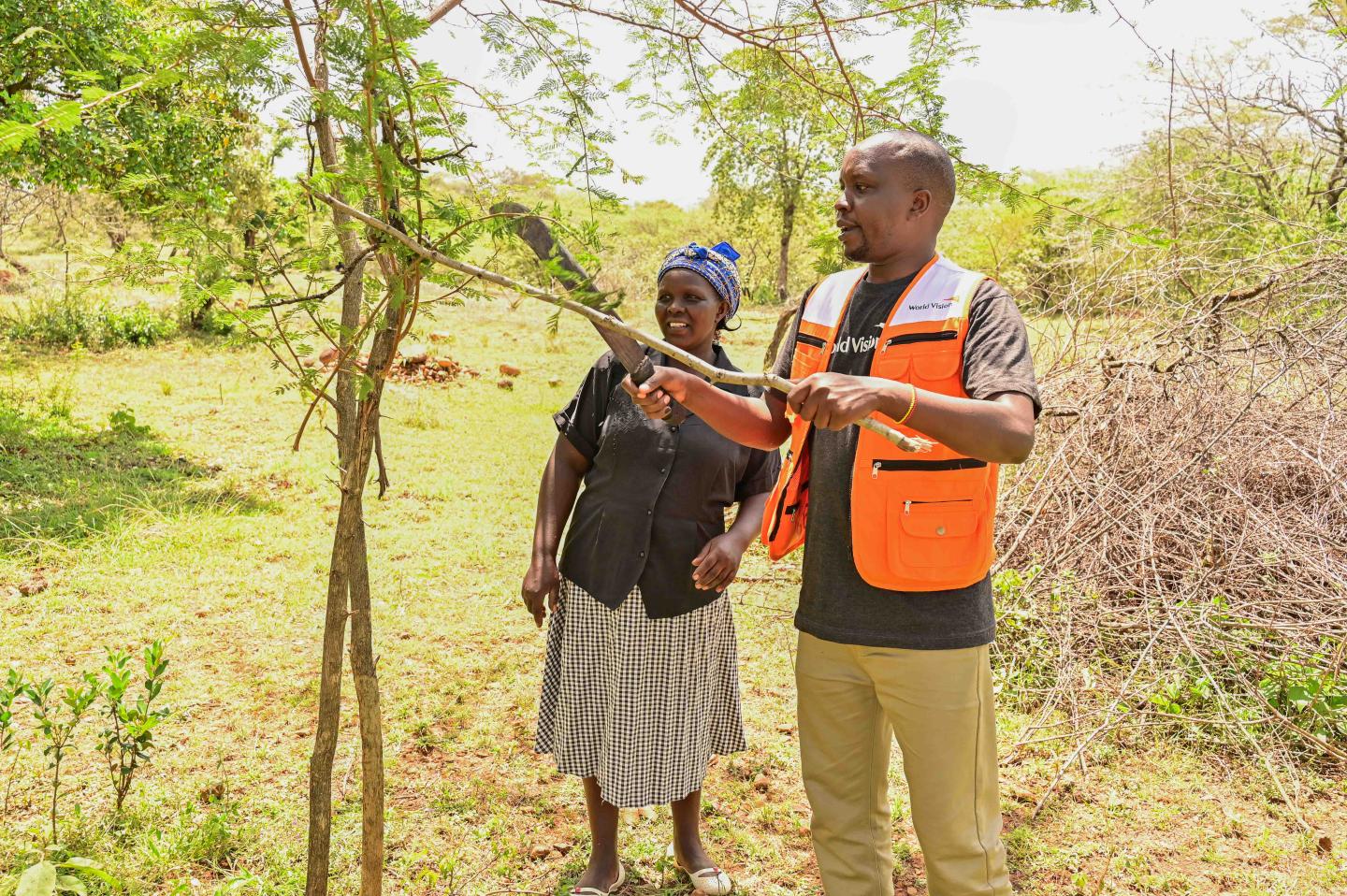
“After training by World Vision, I realised that FMNR was a simple technique where we could use our locally available resources,” she explains.
Using the knowledge she gained, Gladys began carefully selecting beneficial tree species and thinning excess shrubs to allow the strongest trees to grow. Soon, the land started to recover.
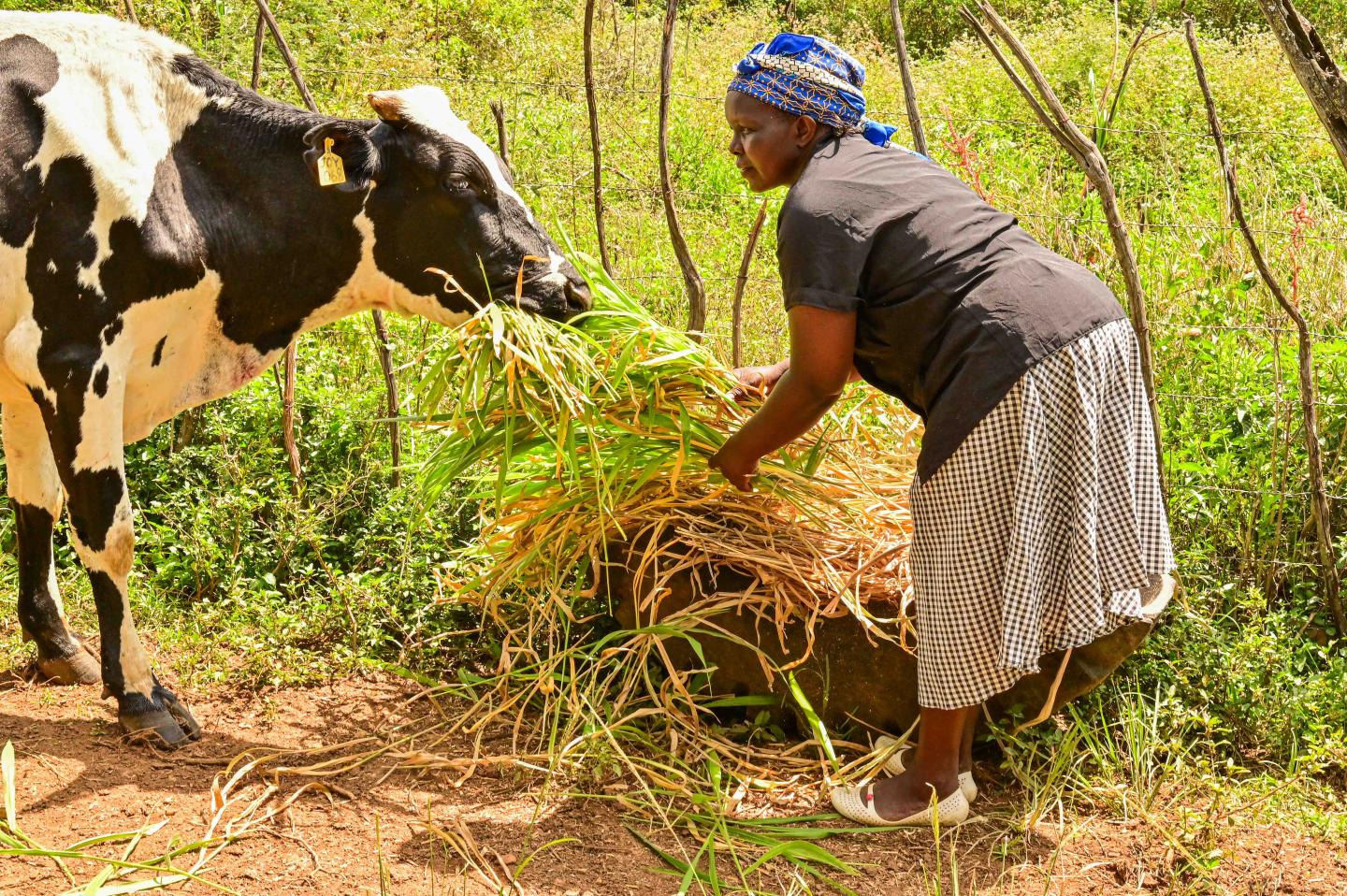
“After thinning and pruning, indigenous grass started growing in the spaces that were left,” she says. “Now our cattle can get sufficient grass to feed on, unlike before when the farm was impassable. We even get surplus pasture to store.”
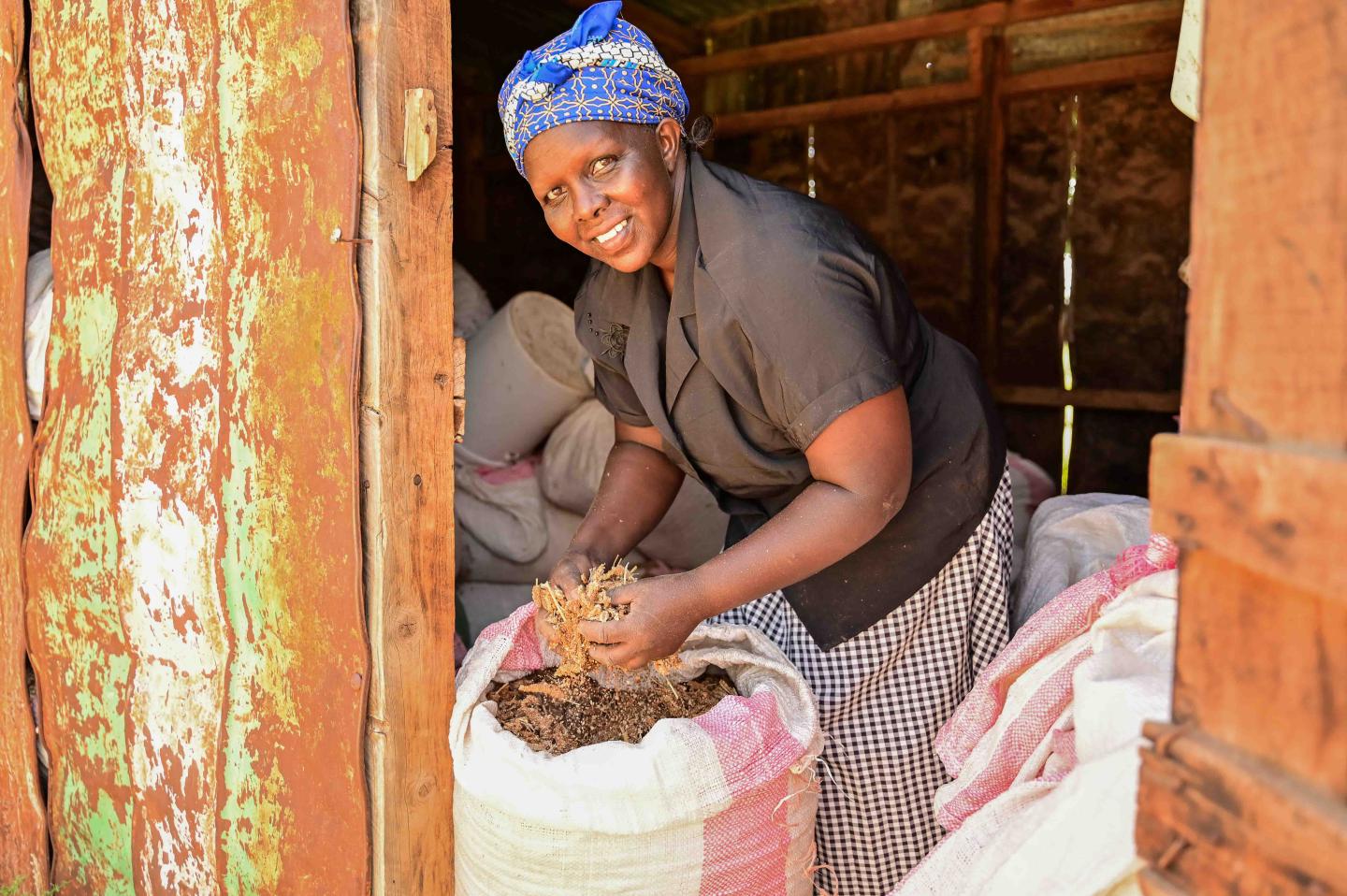
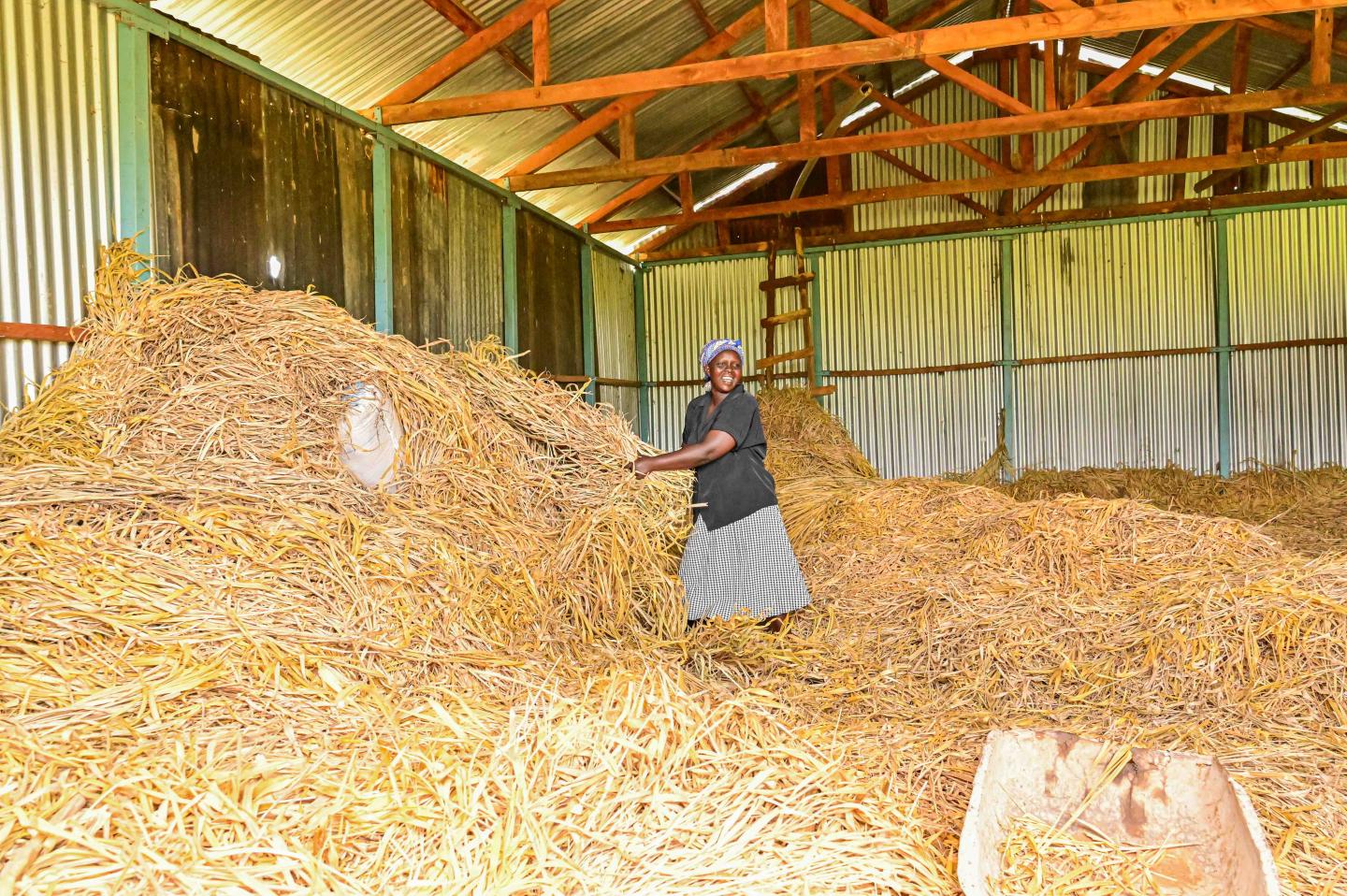
After being trained on holistic pasture management, Gladys constructed larger pasture stores where she now keeps enough fodder to last up to three years.
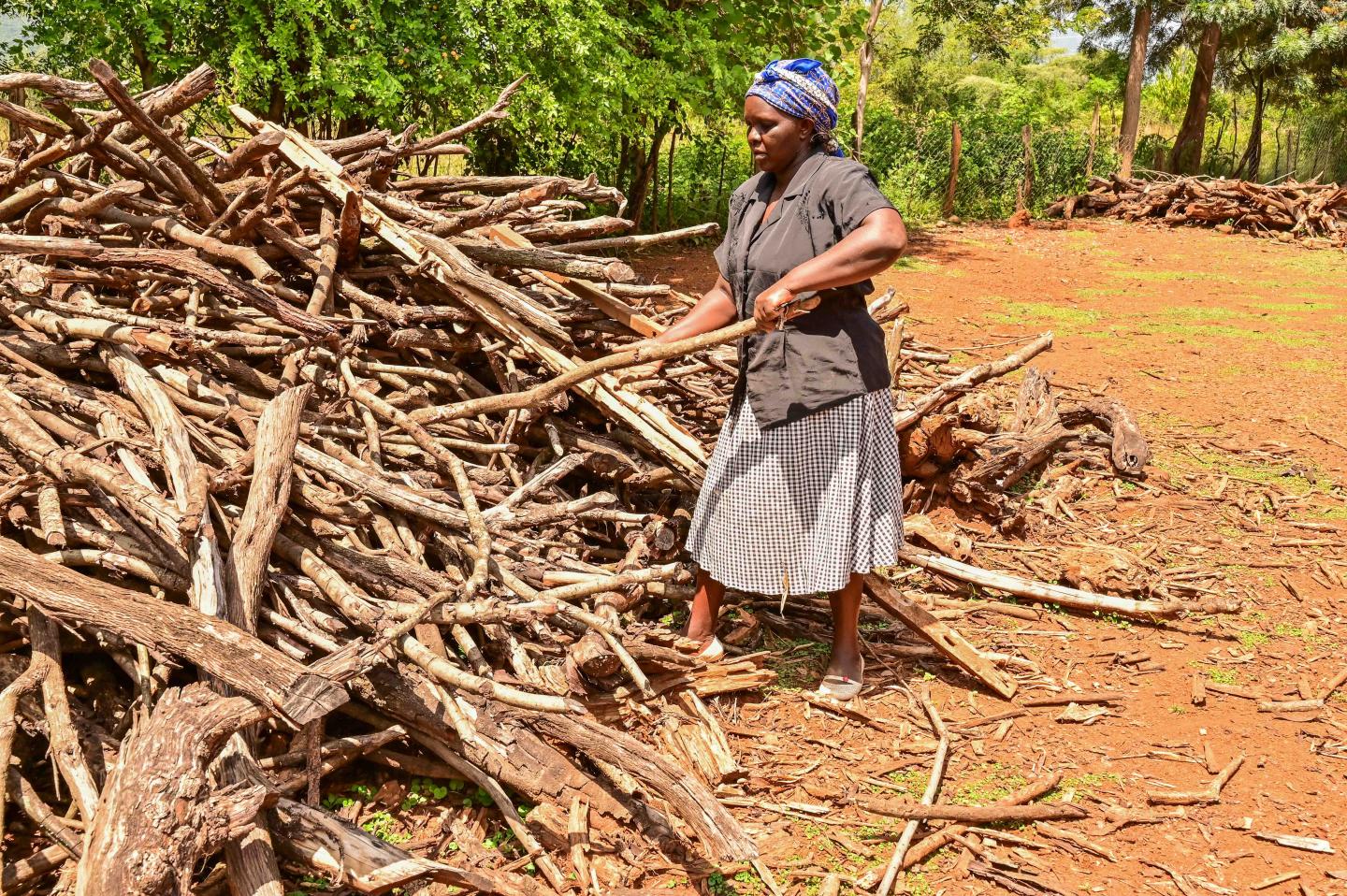
Instead of cutting down entire trees for fuelwood, Gladys now prunes branches and allows them to dry for cooking. Firewood is readily available, giving her more time to focus on other farm activities. With improved soil health and better farming practices learned through training, Gladys soon began to see a significant increase in crop production.
“I used to harvest 20 bags of maize, but now I get at least 50 bags from the same portion of land,” she says proudly.
Her farm now produces a wide variety of crops, including maize, beans, groundnuts, millet, sorghum, cassava, bananas, vegetables, and coffee. She has also planted fruit trees such as pixies, mangoes, guavas, oranges, and pawpaws, which provide both food and income.
The benefits extend beyond crops. Gladys keeps 27 cows, 12 sheep, and more than 80 hens, producing milk, eggs, and livestock for sale. She has also gained knowledge on identifying early signs of illness in her animals, allowing for timely veterinary care and reducing livestock losses.
Her children are also experiencing the change.
“In terms of nutrition, my children are healthier because they now get fruits, vegetables, eggs, and cereals,” she explains. “They also have more time to study since we no longer send them to collect firewood.”
Today, Gladys has dedicated 20 acres of her 40-acre farm to FMNR and is actively sharing her knowledge with others. She has already trained 10 neighbouring farmers, seven of whom are now practicing the technique.
Gladys’ 20-acre portion is among the more than 12,100 hectares of land currently under restoration through FMNR across the four counties of Baringo, Nakuru, West Pokot, and Elgeyo Marakwet, where the CRIFSUP project is being implemented.
“After the trainings, we came back and trained our neighbours,” she says. “Now we are experiencing the benefits together, and no one is left behind.”
Seeing others succeed gives her immense satisfaction. Gladys now saves more than 10,000 Kenyan Shillings (77.31 USD) every month that she previously spent on buying firewood and pasture. She also generates over 100,000 KES ( 773.10 USD) annually from selling farm produce, including crops, livestock, milk, and honey.
Together with her husband, she carefully budgets the income, using it mainly to pay school fees for their children, meet household needs, and invest in their farm.
“When I harvest my fruits,” Gladys says with a smile, “I know my neighbour is also harvesting theirs because I taught them the techniques I learnt.”
She adds: “I am grateful for all the benefits FMNR has brought to our lives, especially the knowledge we gained about better farming practices that have increased our harvests. Through the training, I also learnt that I can reach out to an Agricultural Extension Officer whenever I need support.”
For Gladys, the changes brought by FMNR go beyond improved harvests or income.
“They mean a better future for my children, family, and our community,” she says.
By Hellen Owuor, Communications Specialist (CRIFSUP), World Vision Kenya