
Bleating through Dzud: Mongolia’s shared winter

Reflections by Tsengelbayar Tsasanshuurga, after her mission to support herder households affected by dzud in Arkhangai Province in March 2024.
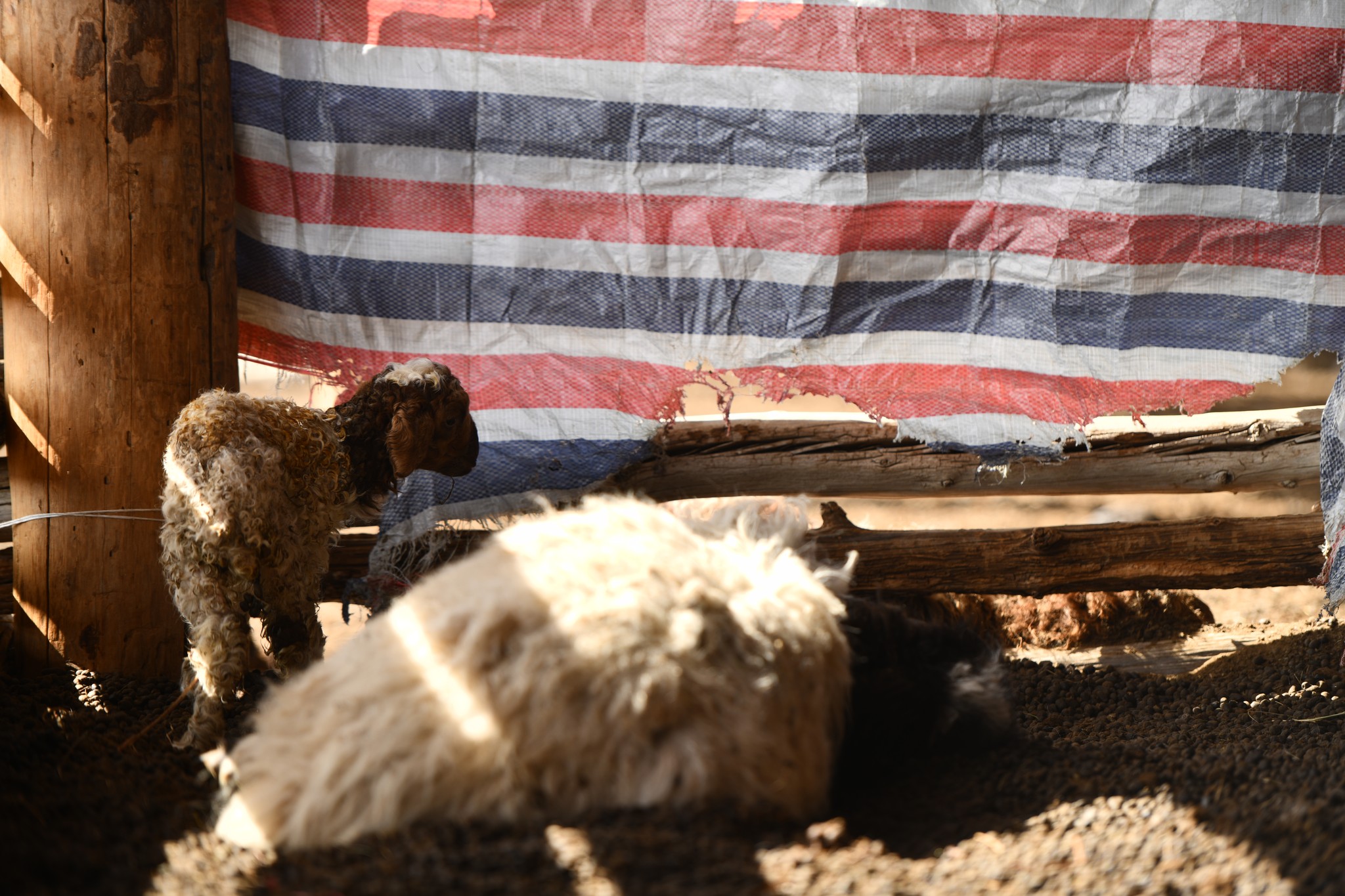
A weak ewe struggles through the bitter days of winter, surviving on nothing, yet still carrying her unborn lamb to term. When the lamb is finally born, the mother has no strength left to nurse it. “We tried everything, hoping even a few drops of milk might come,” the herder sighed. A newborn lamb is no different from a human infant. Frail, trembling, searching for warmth, it cries with a thin voice that seems to break your heart.
Once, the sound of a lamb bleating would bring joy and soften the spirit.
But not this spring.
Looking at the tiny creature, I could not help thinking how many hurdles it must overcome to grow into a strong animal, especially in such a merciless season. The family had bought factory-packaged milk from the nearest town, six thousand tugriks for a bottle just to keep the little one alive. I remembered the single bottle of milk I had brought from the city two days earlier and rushed outside to give it to the herder’s wife. As I handed it over, I felt a strange mix of hope and sadness, silently praying that this small act might help the newborn survive. Its mother had died moments after giving birth, unable to withstand the harsh winter, and a flood of emotions like sorrow, helplessness, and compassion rose all at once.
Over these past four days, I have come to admire herders and their families more deeply than ever. Their strength, resilience, and love for their animals run deeper than most people can imagine. Even children here grow up wise beyond their years, tending livestock with a tenderness and understanding rarely seen elsewhere.
This winter’s heavy snow has frozen and thawed again and again, forming layers of hard ice, a true dzud. Herders, local authorities, and aid organisations are doing everything they can, but nature has been relentless. Many herders, exhausted by loss, seem to have accepted that they cannot stand against such overwhelming force. They know now that a dzud is not simply a disaster of three winter months; it lingers in every aspect of their lives.
To city dwellers, livestock may seem like mere commodities. But for herders, losing their animals, the wealth equal to a car or a small apartment, is like losing the foundation of their entire livelihood, their history, their identity. I wonder how their hearts must feel after losing animals they have tended with such devotion. What gives them comfort now? Their minds must be full of worries: children’s needs, household needs, animal feed, debts, and loans. Where do they go from here? Move to the city? And if they do, will there be opportunities, jobs, or warm acceptance waiting for them?
Even for us in the city, one cannot help but think of what this means for the future - the availability of meat and animal products, their prices, and our connection to the countryside.
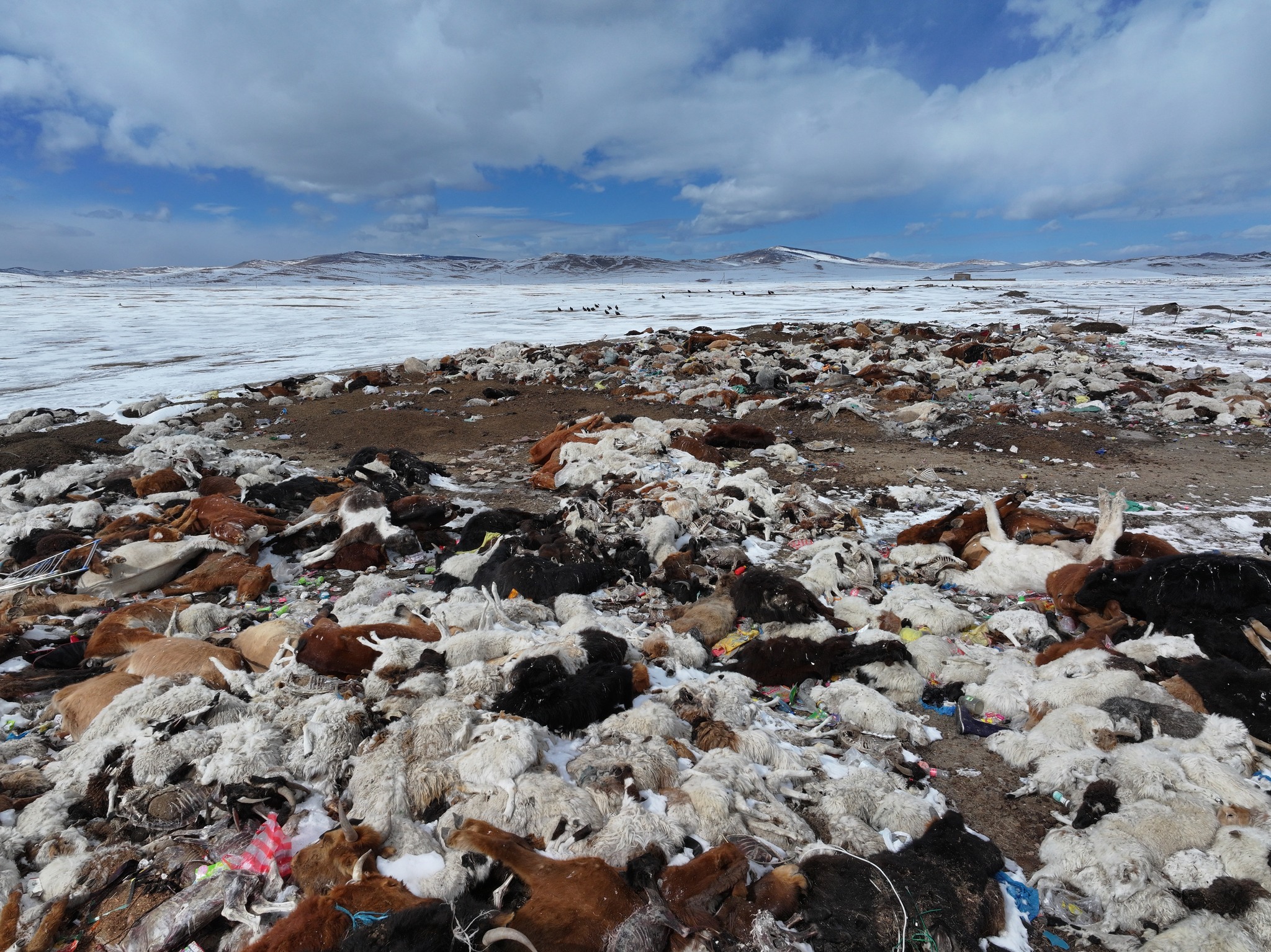
Though temperatures have begun to rise and the snow is shrinking in some areas, there is still almost no place where animals can graze. Many surviving animals are emaciated, and newborn lambs and kids remain at constant risk. Dead livestock scattered across the steppe are haunting reminders of what herders have endured. Sometimes a single animal skull on the ground would once make me uneasy, but these days I see entire piles of carcasses, flayed skins, and red flesh exposed to the wind. It is heartbreaking.
And yet another worry follows: how will all these carcasses be disposed of? When the weather warms, the stench will rise, the soil and water may be contaminated, and outbreaks of disease could follow. I fear for the people living here, especially the children. Proper disposal requires large budgets and careful planning. Do provinces have the resources they need?
City or countryside, herder or official, the truth is clear: all of Mongolia faces this challenge together.
This reflection from 2024 remains painfully relevant. Dzuds are no longer rare, once-in-a-generation disasters. Driven by climate change and increasingly volatile weather patterns, these recurring shocks erode herders’ resilience year after year. What is needed now is not only emergency relief after losses have mounted, but coordinated anticipatory action: stronger early warning systems, pre-positioned fodder and veterinary support, climate-adaptive livelihood strategies, and aligned government and humanitarian planning that protects both animals and families before the next winter tightens its grip.