
Beyond the Finish Line: World Vision Zambia's Flow Fund Campaign at the Kansanshi Marathon

Every month, quietly and without fanfare, thousands of girls across Zambia make a difficult choice. Not whether to study or play, not which subject to focus on, but whether to go to school at all. For girls without access to sanitary products, menstruation is not simply a biological reality. It is a monthly interruption to their education, their confidence, and their sense of belonging in the classroom.
These are not statistics. They are daughters, classmates, and future nurses, teachers, and leaders whose potential is being deferred one school day at a time.
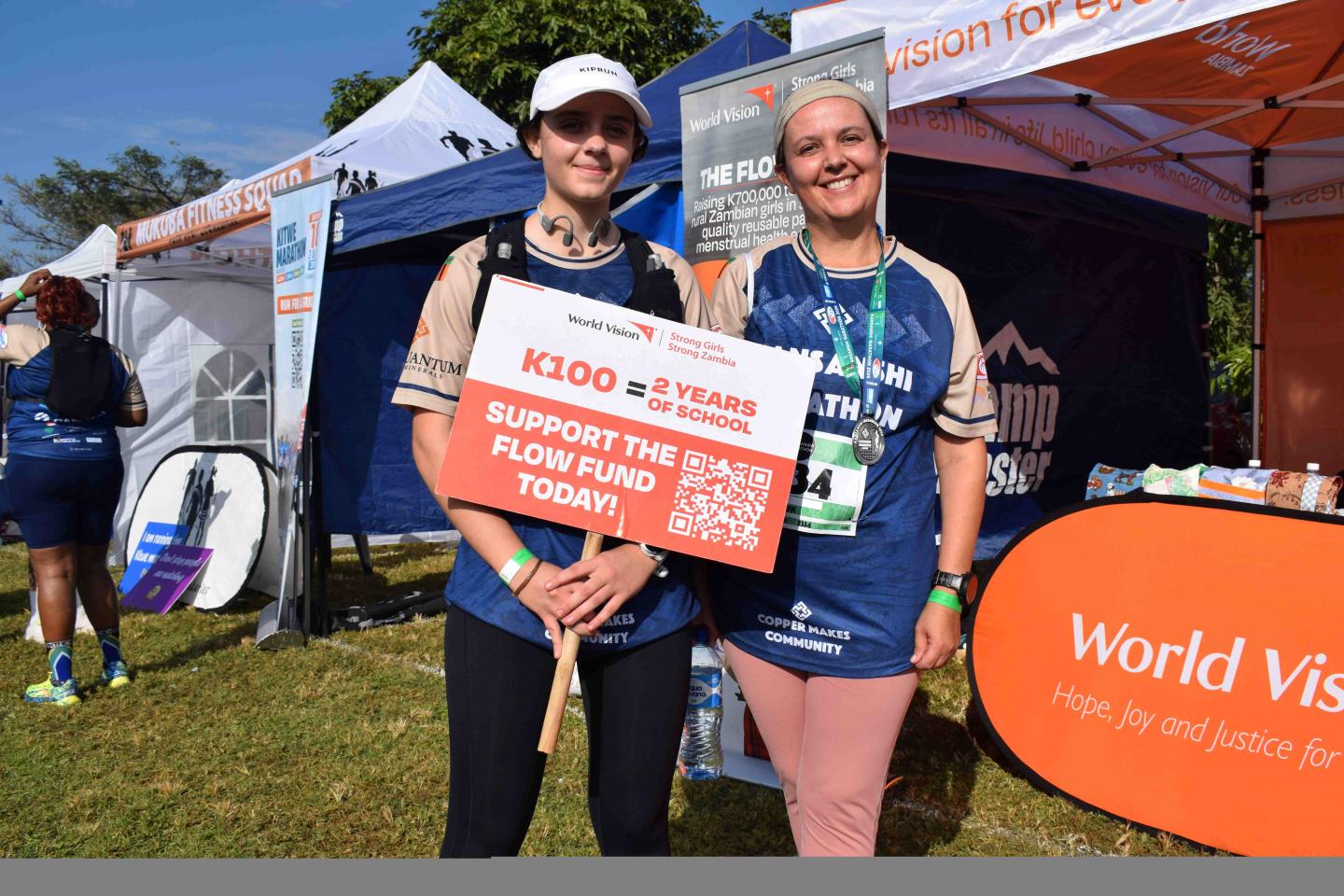
On 9 May 2026, the grounds of Trident College in Solwezi were filled with more than 2,300 runners, corporate teams, and families gathered for the Kansanshi Marathon. Amid the energy of competition and community, World Vision Zambia opened a conversation that does not always find its way into public spaces. Through the generous support of First Quantum Minerals, a dedicated Flow Fund advocacy stand brought the realities of period poverty into one of Zambia's most visible sporting events.
Runners who had spent the morning testing their own endurance paused to hear about a different kind of barrier. Families who had come to cheer learned what it means for a girl to dread the start of a school week. Corporate teams who understood investment in financial terms were invited to consider what investment in a girl's education looks like at ground level. Many of them chose to act.
The Flow Fund campaign is built on a simple conviction: that every girl deserves to learn without interruption. Through the provision of quality reusable sanitary pads, menstrual health education for both girls and boys, and the strengthening of school and community support systems, the campaign addresses period poverty not as a women's issue kept behind closed doors, but as an education issue that belongs in the open.
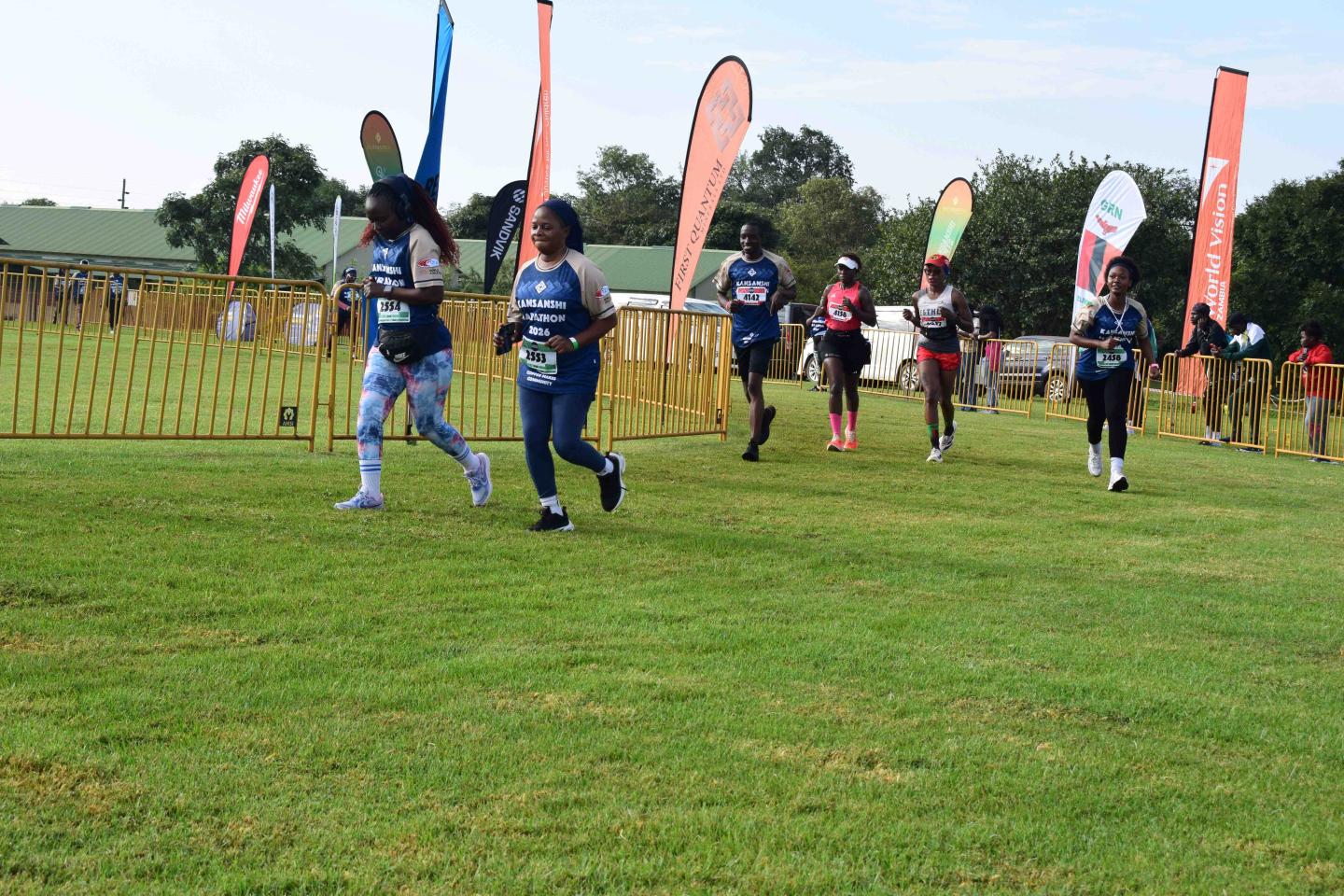
World Vision Zambia Local Fundraising Manager, Kangwa Chokolo, said the event presented an opportunity for participants to appreciate the challenges young girls face during their menses.
"What happened at the Kansanshi Marathon was not just fundraising. It was a community choosing to see a problem that is easy to ignore and deciding to do something about it," says Ms. Chokolo. "Donations and pledges made on the day will reach girls in vulnerable communities across Zambia, not as charity, but as the kind of practical support that allows a child to simply show up, sit down, and learn."
First Quantum Minerals made that platform possible. Their partnership reflects what World Vision believes about how change is built: not through single actors working in isolation, but through relationships between communities, governments, and the private sector that are grounded in shared responsibility for the children growing up among them.
The marathon ended. The commitment it carried forward did not.
For every girl who will receive a reusable sanitary pad, sit in a safer and better-equipped classroom, or benefit from a teacher trained to support her health and dignity, the work that began in Solwezi on a cool May morning is still running.