

Malaria Programming
Although eliminated in parts of the world decades ago, malaria continues to pose a serious public health threat, putting nearly half of the global population at risk. In 2024, there were an estimated 282 million malaria cases worldwide, resulting in approximately 610,000 deaths (WHO). The African Region bears the greatest burden, accounting for 94% of cases and 95% of deaths.
The availability of simple, cost-effective interventions to prevent and treat the disease, including insecticide-treated mosquito nets, has led to a 60% decrease in malaria mortality rates since 2000, but progress in recent years has stalled, with the number of cases worldwide remained virtually unchanged over the past five years.
Malaria disproportionately affects the poor and most marginalised communities - those with the least access to effective prevention and treatment services. Children under 5, pregnant women, and people living with HIV are particularly vulnerable due to weakened immune systems.
In 2024, children under 5 years accounted for nearly 75% of all malaria deaths worldwide.
What is malaria? Read the facts, symptoms and what World Vision is doing.
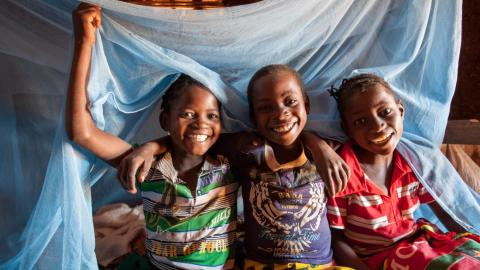
World Vision is committed to fighting malaria until it is defeated. Prevention and treatment are central to our global health strategy, with a focus on reaching the most vulnerable children and families.
We work to strengthen health systems to ensure families have access to timely diagnosis, treatment and care, including through Integrated Community Case Management (iCCM).
Our approach also includes a range of proven interventions, such as:
- Promoting intermittent preventive treatment for pregnant women
- Supporting the use of insecticide-treated mosquito nets
- Implementing indoor residual spraying (IRS) of insecticides (IRS)
- Improving environmental health by addressing sanitation conditions that create mosquito breeding sites
Together, these efforts help reduce malaria transmission and save lives.
In October 2021, the World Health Organization recommended the RTS,S malaria vaccine for children living in areas with moderate to high malaria transmission. World Vision supports the rollout of this vaccine as a safe, effective, and practical additional tool for malaria prevention.
The vaccine began rolling out in endemic countries in 2024, including Cameroon, marking an important milestone in the fight against malaria.
THE MALARIA VACCINE
Malaria vaccines are a major breakthrough in the fight against one of the world’s deadliest diseases. In 2021, the World Health Organization (WHO) recommended the RTS,S vaccine for children living in areas with moderate to high malaria transmission. In 2023, WHO expanded its recommendation to include a second vaccine, R21/Matrix-M, increasing supply and accelerating global rollout.
Since large-scale introduction began in 2024, malaria vaccines have been rolled out across more than 20 African countries, reaching millions of children in high-burden settings. These vaccines have been shown to significantly reduce malaria cases and save lives, particularly when used alongside other proven interventions such as bed nets, preventive treatment, and timely diagnosis.
World Vision supports the scale-up of malaria vaccines as a safe, effective, and complementary tool in malaria prevention. Continued investment and equitable access will be critical to ensuring that children most at risk are reached and protected.
World Vision's Investments through The Global Fund in 2024
10.4 million
1.07 million
23 million


