
Nearly 24,000 Palestinian Children, Teachers and Caregivers Reclaim Safe Learning in the West Bank

World Vision has restored safe access to education and psychosocial support for nearly 24,000 children, teachers and caregivers across the West Bank. Today, the organisation marks the end of a two-year project that made this happen: ‘Safe Access to Inclusive and Dignified Education and Protection Services for Children in Crisis’.
Since October 2023, escalating violence, movement restrictions and a deepening economic crisis have disrupted schooling for hundreds of thousands of Palestinian children. More than 2,000 education-related incidents, including violence and detentions, affected students in or around West Bank schools during the 2024–25 academic year. A recent survey found that 70% of Palestinian children in the West Bank show moderate to very severe symptoms of post-traumatic stress disorder.
Over 24 months and with €2.7 million in European Union funding, the project, in partnership with the Teacher Creativity Center (TCC) and the Palestinian Ministry of Education, and with funding from the European Union, reached close to 24,000 direct beneficiaries. This includes almost 17,00 children, more than 1,000 teachers and counsellors, close to 6,000 caregivers and 61 school principals.
265 teachers were trained to deliver Catch-Up classes, reaching close to 7,000 children. A further 65 teachers and 14 supervisors were trained as Social and Emotional Learning (SEL) facilitators, reaching 2,280 students, while roughly 1,900 children received structured psychosocial support.
An independent assessment (DAPA) found that students demonstrated a 24% increase in literacy and numeracy skills after receiving World Vision's Catch-Up Programme, which was recognised as the most effective remedial education programme among those run by international and national NGOs in the West Bank. The Ministry of Education has welcomed the integrated CUP-SEL model and intends to develop a policy to extend it to regular classrooms.
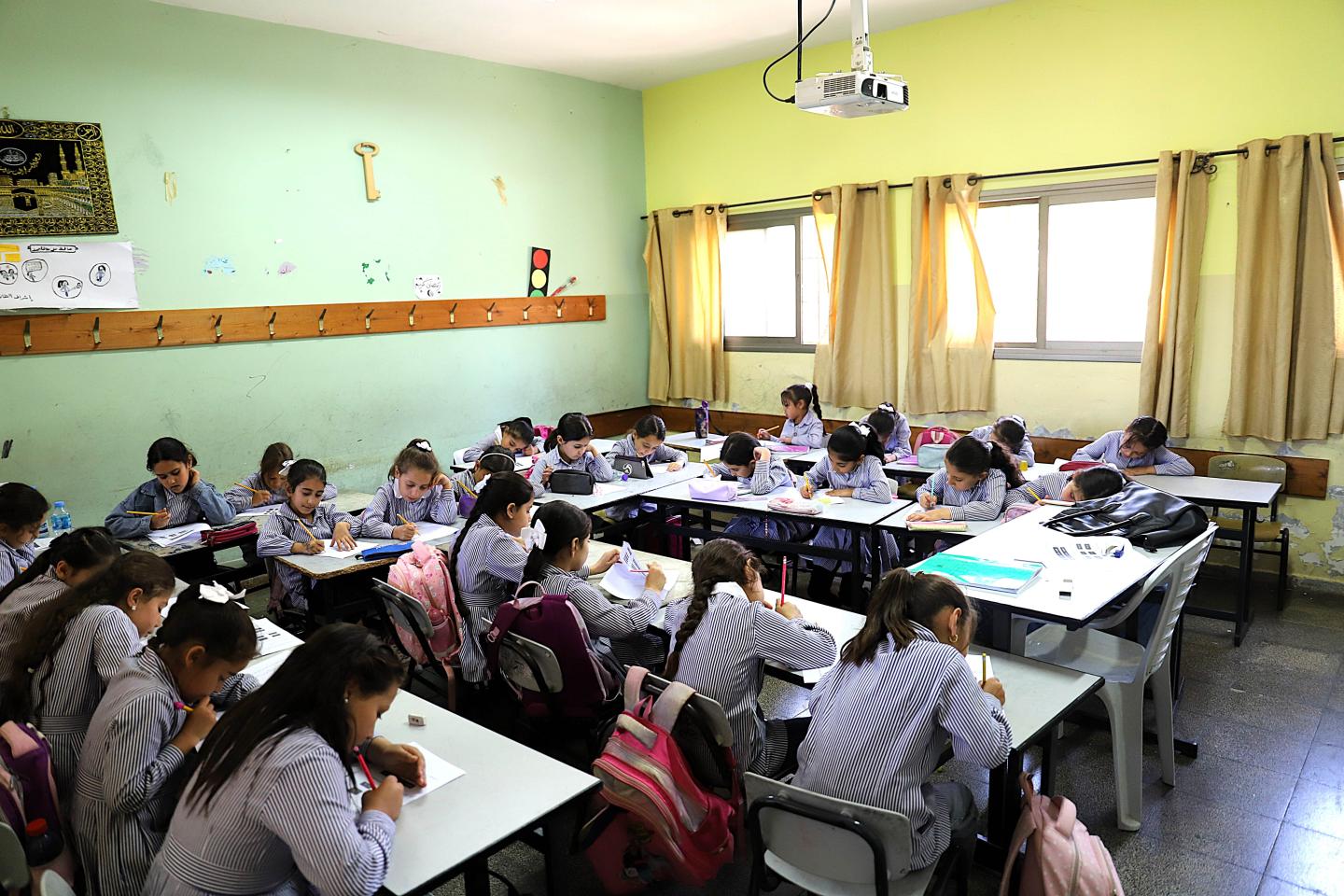
In Jenin, Tulkarem and the northern West Bank, where military operations displaced an estimated 40,000 people from January 2025, catch-up classes gave displaced children a route back into school. “The catch-up classes have allowed our school to help displaced students resume their education in the best possible conditions in these very difficult times,” said Mr Ahmad Alyat, headmaster of Deir Abu Daif Primary School for Boys.
Teacher Naimi Ahmad Saleh Mansour described the approach: “Given the violence and trauma faced by families and children in Jenin, it was essential not only to support students academically but also emotionally. In the catch-up classes, we use fun, engaging methods to help children reconnect with learning and regain their enthusiasm for school.”
In Tulkarem, SEL sessions helped children like eleven-year-old Saeda, forced to move between three homes in a matter of weeks, rebuild a sense of stability. “In Tulkarem, children carry invisible wounds — grief, fear, and instability,” said Ahlam, TCC's Project Coordinator. “Through activities such as art, games, storytelling, and physical activities, we help them express their feelings, ease anxiety, and restore a sense of normalcy. SEL isn't just a classroom activity — it's a lifeline for children who've lost their sense of safety. And it's working.”
Saeda's teacher, Ms Sondos Qwzah, saw the shift first-hand: “By the third session, we started to see a real change — she began to smile, participate, socialise and even laugh.”
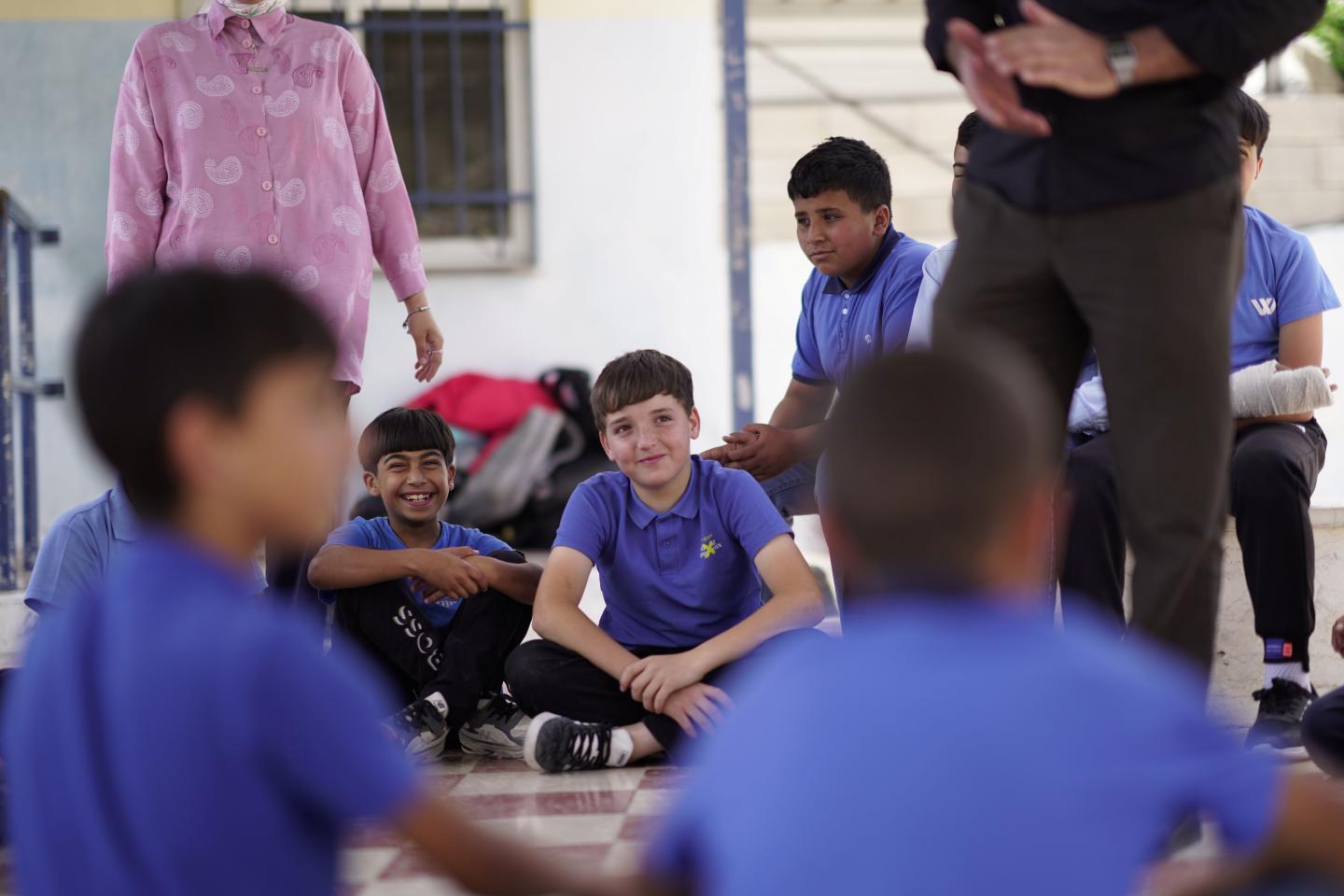
The project also rehabilitated 25 schools to meet minimum standards for safe learning environments, directly benefiting 6,193 students and 496 teachers. In Jala, north of Hebron, pupils in grades 2 to 4 had for years studied in corridors and the schoolyard for lack of classroom space, exposed to weather and, increasingly, to security incidents including armed settlers entering the school grounds. “Children lost their passion for learning without a safe classroom — especially given the growing security concerns in the village,” said Mr Hatem Khalil Nasr Allah, the school's principal.
A new classroom block has changed that. “Now I'm happy that I learn in a new classroom with real walls. It's beautiful, and we will be warm in the winter,” said Mohamad, a Grade 4 pupil, recalling how fear of settler attacks had once kept him home. Classmate Salma agreed: “The first time I entered the new classroom, I was so happy! Even though the circumstances are hard in the area, I feel much safer.”
Beyond infrastructure, all 61 targeted schools were assessed by the Palestinian Civil Defence and a disaster risk reduction (DRR) expert, resulting in tailored school safety and intervention plans. Close to 17,000 students across 58 schools received fire safety and evacuation training, all 61 schools received DRR tools and first-aid kits, and three age-appropriate DRR educational games were distributed to students, with 10,000 copies of each printed to sustain the learning beyond the project's lifetime.
As the project comes to an end, World Vision and its partners point to a legacy designed to outlast the funding: trained teachers, supervisors and counsellors; stronger referral pathways for at-risk children; safer school buildings; and a catch-up and SEL model that the Ministry of Education is now working to embed in the national curriculum."
This project proved that even amid crisis, children can recover — academically and emotionally — when education, protection and mental health support are delivered together. The real measure of its success is in the thousands of children who walked back into a classroom and found not just lessons waiting for them, but safety, and a reason to hope again," said Dua Awad, project Manager at World Vision.
Notes to editors
About the project
“Safe Access to Inclusive and Dignified Education and Protection Services for Children in Crisis” ran for 24 months with €2.8 million in funding from the European Union's Civil Protection and Humanitarian Aid Operations (ECHO). It was implemented by World Vision in partnership with the Teacher Creativity Center (TCC) and the Palestinian Ministry of Education across 61 schools in 13 governorates of the West Bank.
About Teacher Creativity Center
The Teacher Creativity Center (TCC) is a Palestinian non-governmental, not-for-profit organisation, registered since 1995. It was founded by a group of primary and secondary school teachers from public, private, and UNRWA schools. TCC’s primary objective is to promote socially responsible education within the occupied Palestinian territory.
TCC has become a leading organisation in the West Bank and Gaza for providing Psychosocial Support (PSS) and Social and Emotional Learning (SEL) interventions. Its innovative approach integrates technology, particularly through a platform called e-forum, to enhance these interventions.
The main office is located in Ramallah, West Bank, with a branch office in Gaza City. TCC focuses its operations in areas where education and SEL interventions are most needed. It receives funding from several donors, including HI, UNESCO, the Global Education Fund, and others, all with an emphasis on education and protection.
About World Vision:
World Vision International is a Christian relief, development and advocacy organisation dedicated to working with children, families, and their communities to reach their full potential by tackling the root causes of poverty and injustice. World Vision International serves all people, regardless of religion, race, ethnicity, or gender.
World Vision has been operating in the occupied Palestinian territories (oPt) since 1975. Since then, the organisation has developed one of the most extensive community-based presences amongst organisations operating in the West Bank, with 90 dedicated staff and more than 300 volunteers. Since October 2023, World Vision has implemented an emergency response across the whole of the West Bank focusing on protection, food security, mental health, access to healthcare and access to safe education. Over the first two years of this response, more than a million people benefited from its humanitarian programmes.
Note: the names of children and some caregivers quoted in this release have been changed to protect their identities.
Media contact:
Mathieu Andre, Communications & Advocacy Manager at World Vision Jerusalem - West Bank, mathieu_andre@wvi.org | +41 78 242 92 44