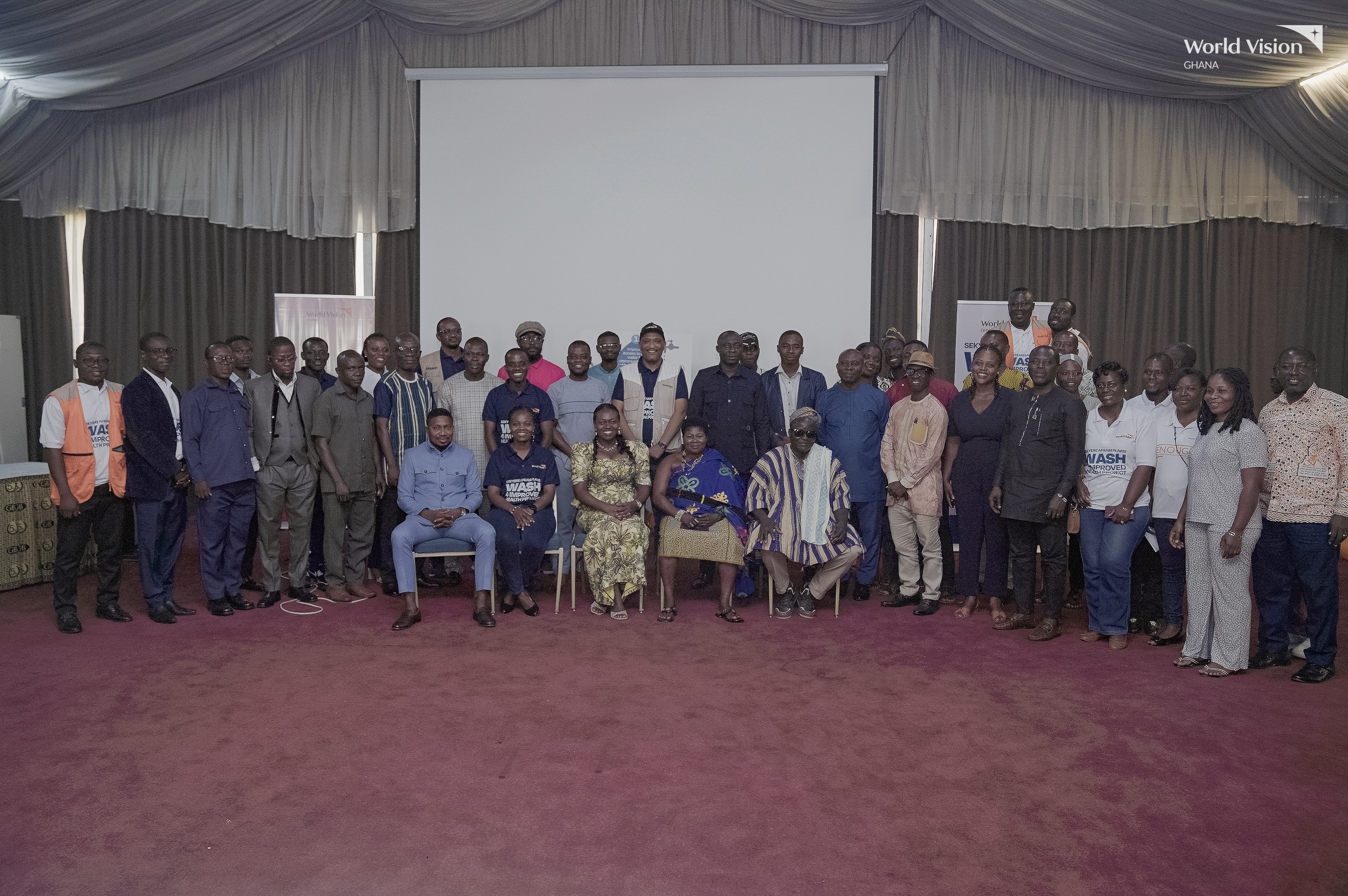
Restoring Dignity Through Water: World Vision Launches WASH Initiative in Sekyere Afram Plains

By Priscilla Adjei-Laryea, Grants, Marketing & Communication Specialist
The Sekyere Afram Plains District in Ghana’s Ashanti Region is rich in opportunity: its fertile land and strong agricultural base echo great potential. Yet, this promise is held back by serious infrastructure challenges: poor roads, limited telecommunications, and deficient public services. Most urgently, access to clean water, sanitation, and hygiene is severely limited.
About 99.5% of households lack improved toilet facilities, forcing many residents to use unprotected rivers and streams, a major health hazard. Schools and health facilities are also gravely affected, with poor sanitation undermining public health, dignity, and educational outcomes. Very often, children spend hours walking just to fetch water: time that could otherwise be used for learning or play. Although the land is fertile, many families struggle simply to survive, not because of a lack of potential, but because of a lack of reliable water infrastructure.
Historically, the district has been one of the poorest in the region, its development constrained not only by WASH (Water, Sanitation, and Hygiene) deficits but also by limited healthcare infrastructure and difficult terrain. Previous health and sanitation efforts have been hampered by funding shortages and logistical challenges. Yet, a turning point has arrived. Recognising the urgent needs, World Vision Ghana has launched a five-year "Sekyere Afram Plains WASH 4 Improved Health Project," funded by a philanthropist via World Vision Canada.
Simultaneously, the Grundfos Foundation is supporting a one-year intervention to upgrade WASH infrastructure in two local schools. Combined, the interventions will span 19 communities, four health facilities, and 19 schools, aiming to serve more than 25,000 people by 2029.
The project uses a holistic, community-centred strategy: WASH in Schools and Pay-As-You-Fetch water systems. These are not just infrastructure interventions, they are about empowerment: training locals to operate, maintain, and own their water and sanitation systems in the long term. At the launch, Nana Adu Akosua Fofie II, Queen Mother of Drobonso, pledged the backing of traditional authorities to help sustain the project, while government officials emphasised its alignment with Ghana’s national development priorities.
World Vision Ghana brings technical strength to the effort, using mechanical drilling methods, supported by the GI-WASH programme. Together with district authorities, environmental health officers, and community leaders, there is strong local ownership and accountability. The planned infrastructure is ambitious: 12 solar-powered mechanised water systems, seven upgraded hand pumps, 12 institutional latrines (disability-friendly, with menstrual hygiene facilities), 144 dustbins, and 40 hand-washing stations. In the two target schools, the project will construct two four-seater disability-friendly latrines, a dedicated water system, and hygiene facilities including dustbins and hand-washing stations.
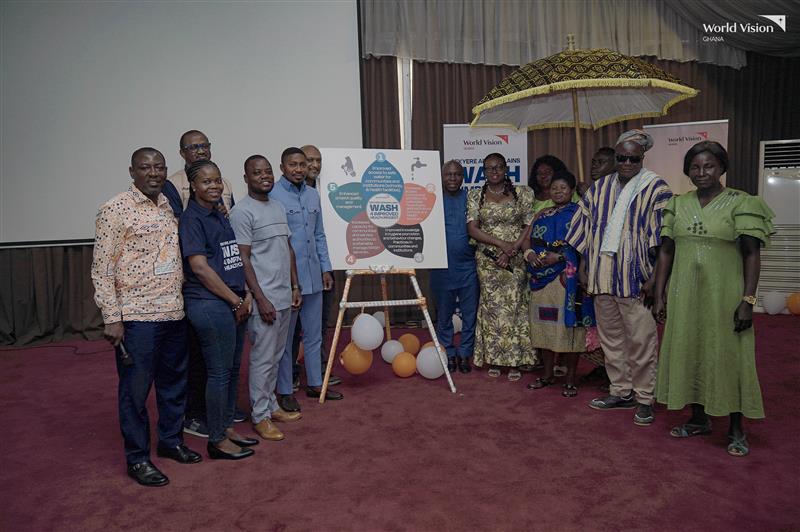
The initiative goes far beyond physical structures, it is fundamentally about restoring dignity. By guaranteeing safe water and sanitation in homes, schools, and clinics, the project supports healthier lives, better education, and a renewed sense of self-worth across the community. The effort has been lauded by local and regional leaders; a representative of the Ashanti Regional Minister described the project as a “bold statement of hope and renewal,” highlighting how it aligns with Sustainable Development Goal 6: Clean Water and Sanitation.
Central to its long-term success is a strong focus on behaviour change: communities will be sensitised on open defecation, hygiene education, menstrual health, and will be supported through community-led WASH committees to manage their own services sustainably.
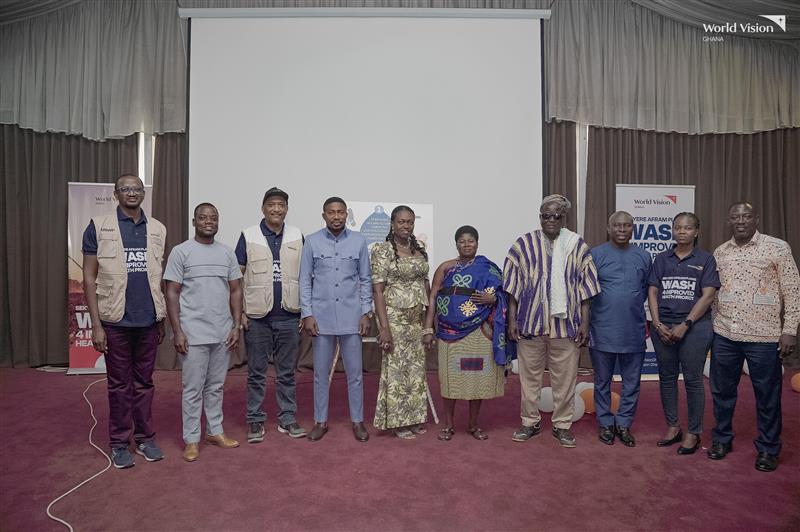
World Vision Ghana’s wider vision for the district stretches beyond latrines, taps, and boreholes. Since formally adopting Sekyere Afram Plains as one of its Area Programmes in October 2023, the organisation has also launched the CARE Project, LEARN Project, and a Sponsorship Operation Plan, each designed to address broader development needs and uplift the most vulnerable.
Through WASH investments, World Vision aims to restore dignity, support those in greatest need, and spark a healthier, more hopeful future for every child and family in Sekyere Afram Plains.
This is not merely development work; it is a renewal of dignity, transforming lives one drop, one latrine, one child at a time.