
World Vision and Corporate Ghana Is Standing Up for Girls' Health and Dignity

Fanteakwa, Afram Plains, Bawku West, Wa West, Wa East, June 2026
World Vision Ghana's mission is to work with children, families, and communities to overcome poverty and injustice. Its vision is a world where every child experiences the fullness of life. For adolescent girls across Ghana, that fullness of life is interrupted every month not by biology, but by the structural failures that surround it. Across five Area Programmes and through two corporate partnerships, World Vision Ghana is working to change that.
The Need: Menstruation, Hygiene, and the Education Gap
In Ghana, an estimated 600,000 adolescent girls miss school every month due to menstruation. The cause is rarely pain alone. It is the absence of sanitary products, the lack of private, functional sanitation facilities in schools, and the stigma that surrounds a natural process that has never been adequately addressed in public health programming or school curricula.
The consequences accumulate. Girls who miss school during their periods fall behind. Those who fall behind lose confidence. Those who lose confidence disengage from school, from peers, and from the pathways that education is meant to open. UNESCO estimates that girls in sub-Saharan Africa miss up to 20% of their school year due to menstruation-related challenges, translating directly into lower completion rates, reduced earning potential, and diminished agency over life decisions for millions of young women.
The hygiene gap extends beyond menstruation. Access to hygiene products and facilities is not evenly distributed across Ghana. The country's northern regions consistently record lower sanitation coverage, higher rates of waterborne disease, and greater challenges around personal hygiene management than the national average. According to the UNICEF and WHO Joint Monitoring Programme, only 14% of schools in Ghana's northern regions have adequate sanitation and hygiene facilities. In communities in Bawku West, Wa West, and Wa East, that statistic shapes daily life for children and families in ways that compound poverty and limit participation in school and community life.
The solution is not complicated: access to sanitary products, hygiene education, and safe facilities. What has been missing is consistent investment from the private sector, government, and communities to make that access universal and sustained. Two corporate partners are helping to close that gap.
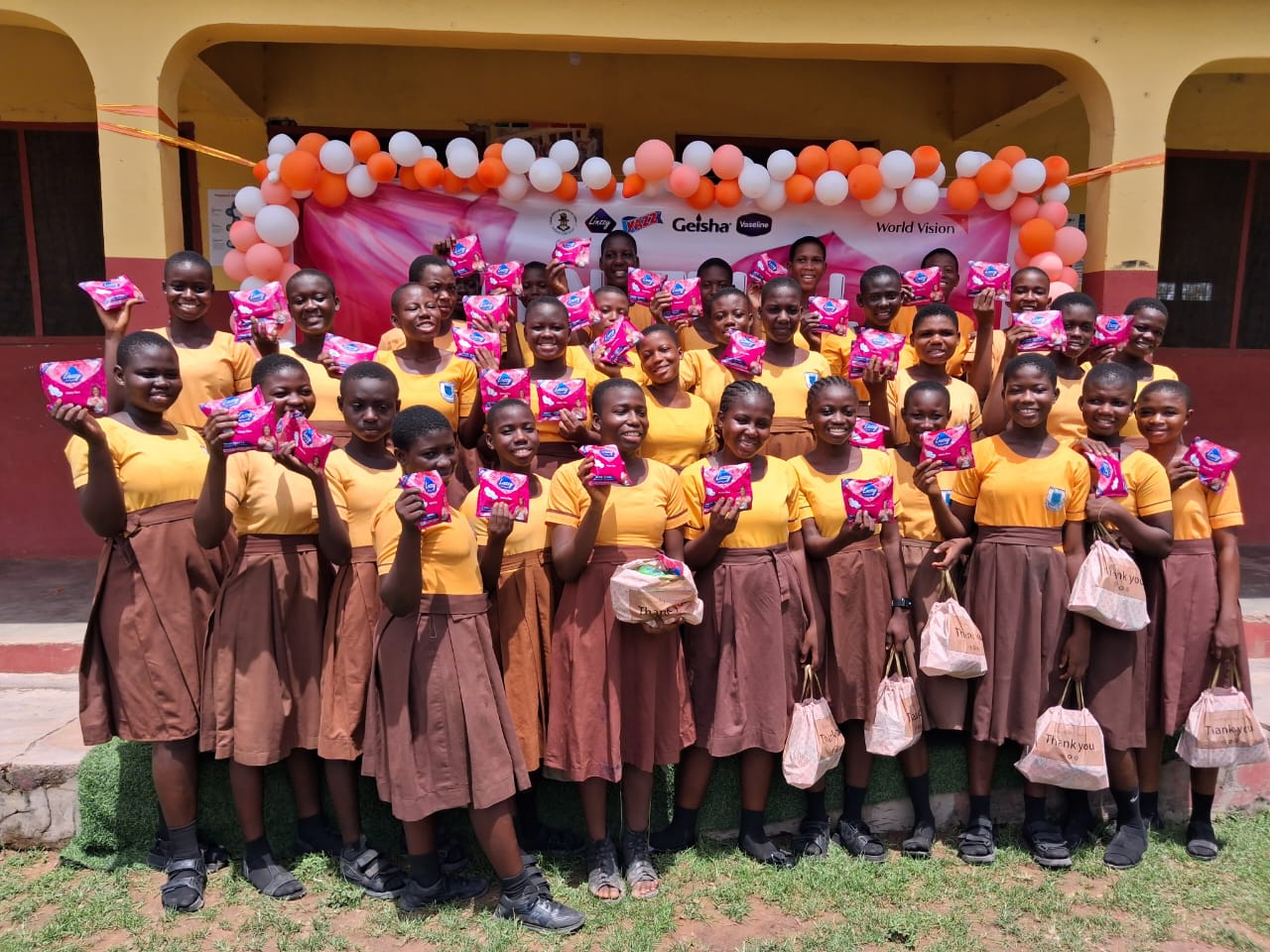
Yazz and Linzzy Sanitary Pads in Afram Plains: Access Where It Is Needed
In Afram Plains, Yazz and Linzzy Sanitary Pads donated over 500 sanitary pads to support menstrual hygiene activities in the Area Programme. For girls in Afram Plains, a community with limited access to commercial markets and essential hygiene products, this contribution was practical and immediate.
Girls in rural and peri-urban communities across Ghana are disproportionately likely to use makeshift materials during menstruation, materials that are less effective, less hygienic, and associated with higher levels of anxiety and discomfort during school hours. The donation by Yazz and Linzzy, integrated into World Vision Ghana's hygiene education programming, addressed both the physical and psychosocial dimensions of the problem. Girls in Afram Plains had what they needed to attend school and manage their health with dignity, without having to stay home because they had no alternative.
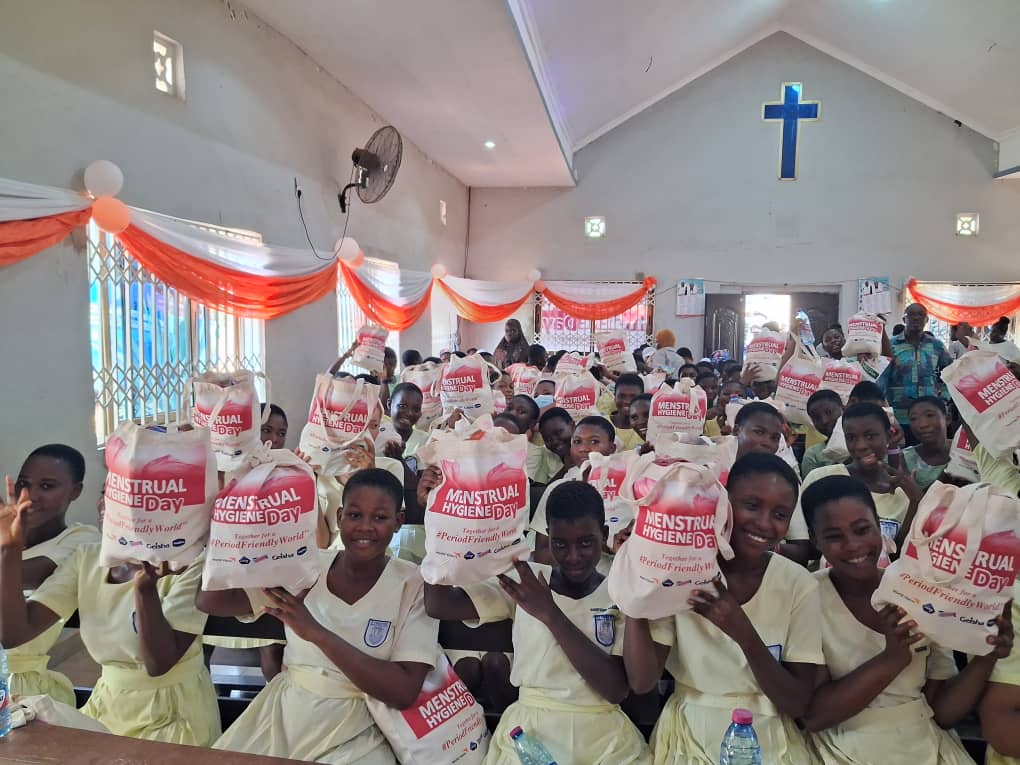
Unilever Ghana Across Five Communities: Three Brands, One Commitment
Through its Geisha, OMO, and Vaseline brands, Unilever Ghana extended hygiene support across five World Vision Ghana Area Programmes, Fanteakwa, Afram Plains, Bawku West, Wa West, and Wa East, as part of menstrual and personal hygiene interventions reaching communities from Ghana's south to its far north.
Each brand addresses a distinct dimension of the need: Geisha for personal cleansing, OMO for household hygiene, and Vaseline for skin care together forming a practical hygiene package for communities where access to these products is inconsistent. In Fanteakwa and Afram Plains, the products complemented Menstrual Hygiene Day activities. In Bawku West, Wa West, and Wa East, support extended into broader personal hygiene programming where limited infrastructure and low product access make sustained intervention most critical.
Most corporate social investment in Ghana gravitates toward the south, where infrastructure is stronger and logistics are simpler. Unilever Ghana's decision to extend its support into Ghana's far north reflects a different approach: that need, not convenience, should determine where investment goes. Discussions are now underway to formalise this collaboration through a Memorandum of Understanding covering all three brands, transforming the relationship from project-level support into structured, long-term partnership with defined targets and shared accountability.
What These Partnerships Mean
The contributions of Yazz and Linzzy Sanitary Pads and Unilever Ghana are different in scale and geography, but they share a common recognition: that girls' health is not a peripheral concern. It is a foundational investment in Ghana's future.
Girls who manage their health with confidence stay in school. Girls who stay in school complete their education. Girls who complete their education earn more, participate more fully in economic and civic life, and raise healthier children. The return on investment in menstrual and personal hygiene is documented, significant, and compounding.
World Vision Ghana is grateful to each of these partners for choosing to act in the communities where the need is real and the impact is direct. This is what it looks like when corporate Ghana invests not in its image, but in its people. And this is what World Vision Ghana's vision looks like in practice: a world where every girl, in every community, experiences the fullness of life she deserves.