
World Vision Ghana is Partnering With Corporate Ghana to Invest in the Next Generation of Readers

Fanteakwa Area Programme June, 2026
World Vision Ghana’s purpose is clear: to work with children, families, and communities to overcome poverty and injustice. Its vision is a world where every child experiences the fullness of life. That vision is nowhere more urgent than in the classroom and nowhere more visible than on a school field in Fanteakwa, where 400 children gathered to celebrate what learning can look like when communities and the private sector choose to invest in it.
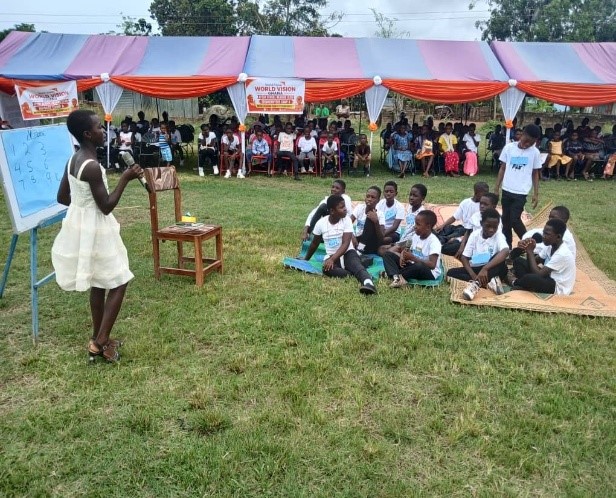
The Reading Camp Festival at Hemang SDA School Park brought together 220 girls and 180 boys from nine reading clubs across the Fanteakwa Area Programme. They came to recite poetry, stage drama, compete in spelling bees, display books, and perform choreography. They came, above all, to be seen, and to demonstrate what months of reading, practice, and encouragement had built in them.
The Need: Ghana's Literacy Gap
The backdrop to this celebration is a national challenge that demands honest attention. Ghana has made significant gains in school enrolment over the past two decades, but enrolment alone does not guarantee learning. According to the World Bank, more than half of children in Ghana's primary schools are unable to read a simple sentence by the end of Grade 2. By the time children reach upper primary, the gaps that formed in the early years have widened and many never close.
In communities like those within the Fanteakwa Area Programme, the barriers to literacy are compounded by limited access to books and reading materials, large class sizes, and insufficient time for structured reading practice outside school hours. Children from low-income households are least likely to have books at home and most likely to fall behind. The reading club model that World Vision Ghana runs in Fanteakwa is designed precisely to address this: creating structured, community-based reading environments that supplement formal schooling and build the habits and confidence that learning requires.
The stakes are not abstract. A child who cannot read fluently by age ten faces significantly reduced prospects for secondary school completion, further education, and economic participation. For girls in particular, low literacy is associated with earlier marriage, lower earning potential, and reduced agency over health and life decisions. Investing in reading is, in the most direct sense, investing in futures.
What Piccadilly Biscuits and Jay Kay Publishing Brought to Fanteakwa
The Reading Camp Festival did not happen by accident. It was the result of months of community mobilization, children's preparation, and teacher support and it was made possible in its final form by two corporate partners who chose to show up.
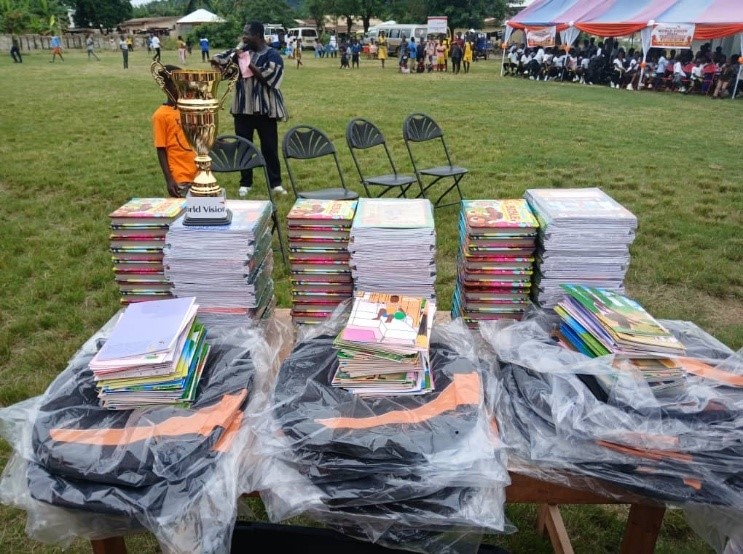
Jay Kay Publishing House donated exercise books to the children and attended the festival in person. Their physical presence at the event carried a message that a financial contribution alone could not send: that a publishing company whose entire business is built on the value of the written word stood behind these children and their relationship with reading. When institutions whose work depends on literacy invest in children's reading development, it validates the effort in ways that communities notice and remember.
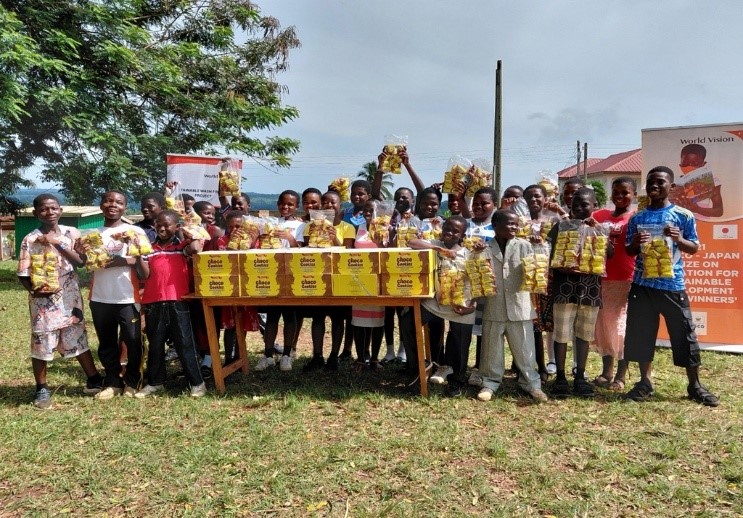
Piccadilly Biscuits supported the event with refreshments, contributing to an atmosphere of celebration that transformed what could have been a school activity into a community occasion. For the 400 children in attendance, many of whom are growing up in households where organised, well-resourced events are rare, the festival was an experience of being valued by their teachers, their communities, and the companies that chose to invest their time and resources in the day.
The Role of Partnership
World Vision Ghana's approach to community development is grounded in the belief that lasting change requires partnership. No single actor, not government, not civil society, not the private sector, can address the complexity of Ghana's education challenges alone. What the Reading Camp Festival in Fanteakwa demonstrates is what becomes possible when each partner contributes what it does best: World Vision Ghana provides the programming infrastructure and community trust; Jay Kay Publishing brings expertise in literacy and a direct stake in reading culture; Piccadilly Biscuits brings the resources to make the day memorable.
Together, they created something that none could have produced independently a moment in which 400 children experienced the fullness of what learning can feel like when it is celebrated, supported, and taken seriously by the adults and institutions around them.
That is the vision World Vision Ghana is working toward. And days like this one in Fanteakwa are proof that it is achievable.