
From Barren to Blooming: How Salina Revived Her Land and Future

Sitting under the cool shade of a tree at her homestead in Kasio village, Baringo County, Salina Kogei radiates gratitude. Birds chirp from nests woven in branches that were once cut down, and a gentle breeze sweeps across the land that only a few years ago resembled a desert. For the 46-year-old wife and mother of seven, the transformation of her farm is nothing short of remarkable. It is a story of redemption, resilience and renewed hope made possible through Farmer Managed Natural Regeneration (FMNR).
When Salina and her family settled on their land in 2001, it was covered with mature acacia trees. Unaware of their value, they cleared them to make room for crops and to burn charcoal for income. For years, selling charcoal was their only means of survival, though it barely met their basic needs.
“We thought trees destroyed farms and interfered with the growth of crops,” she recalls. “So we cleared them. Only later did we learn the importance of conserving indigenous species after being trained by World Vision.”
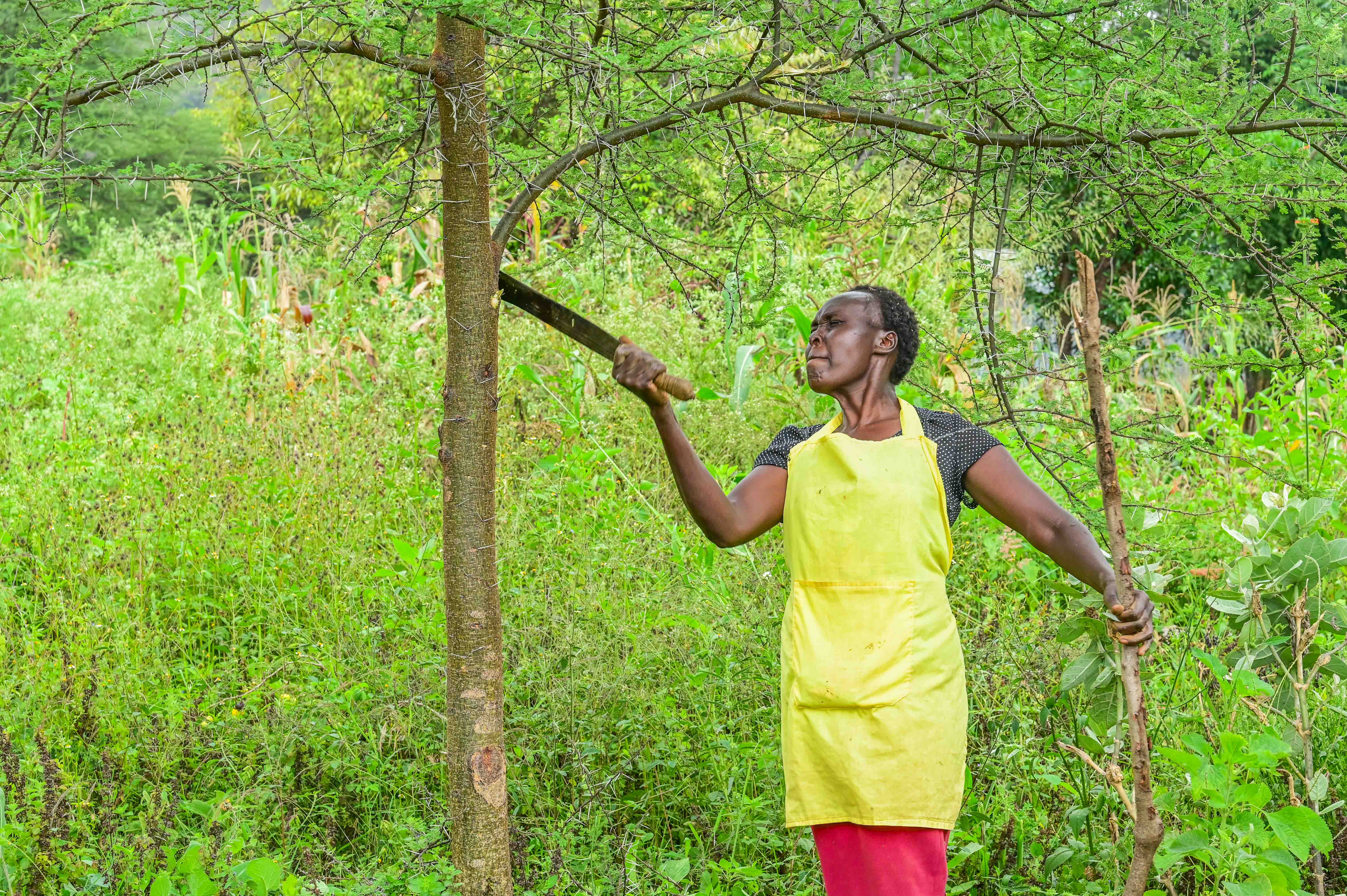
The decision to cut the trees came at a heavy cost. The land became bare, dry and unproductive. The scorching sun made it impossible to sit outdoors, shade disappeared and farming became a struggle.
That changed in 2022 when Salina received training on FMNR from World Vision. Her perspective shifted completely. With her husband’s permission, she immediately set aside three of her five acres for tree regeneration. Through simple yet powerful practices like pruning, thinning and protecting tree stumps, she began to witness trees that were once cut, regenerate.
“All it takes is effort,” she says. “Once you have the knowledge, you must put it into practice.”
Where deep gullies once existed, she has now built terraces using rocks from her farm to hold soil and water in place. Indigenous trees and grass have regenerated, bringing life back to her homestead.
“It was once like a desert, but now we have shade, cool air and even birds nesting in our trees,” she says with pride.
The once hostile environment is now welcoming, not only for her family but for the crops and livestock that thrive where nothing could grow before. Before FMNR, her family sometimes went to bed hungry. Today, her flourishing kitchen garden ensures they always have ENOUGH food. She grows pawpaws, sweet potatoes, cassava, maize, mangoes, vegetables and tree tomatoes.
“We have never bought vegetables again since the training,” Salina says. “Now we eat well and even sell the surplus.”
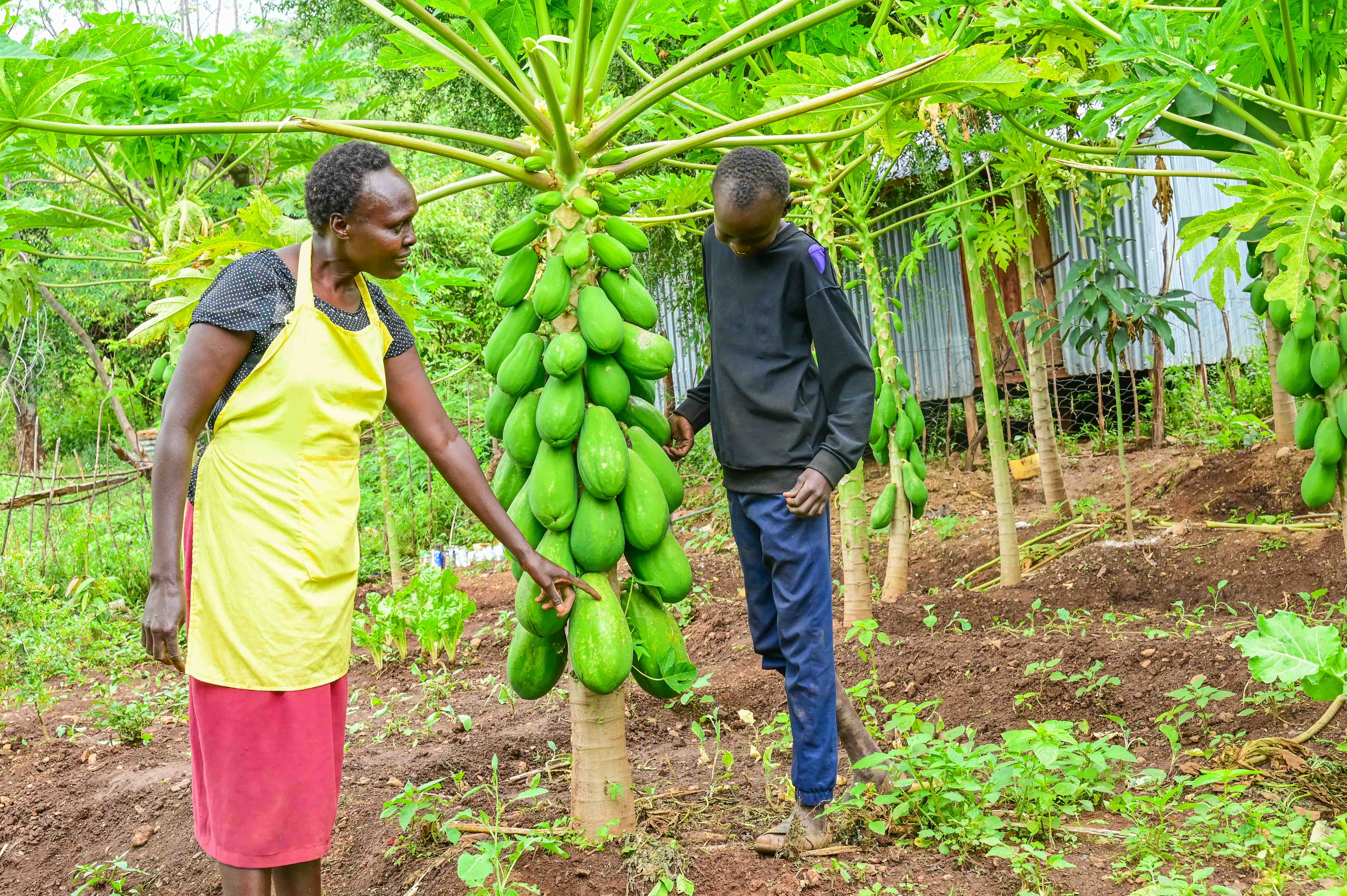
This shift has improved her family’s nutrition, providing milk, fruits and eggs, a sharp contrast to the days when hunger was constant.
Some of Salina’s most painful memories are tied to her livestock. She recalls walking for hours in search of grass or losing cattle to accidents, drought and disease. In 2011, she lost three cows after they fell while grazing from the steep valleys and 5 others due to drought. Later, 14 more died after eating suspected aflatoxin-contaminated fodder bought from the roadside.
Today, her story is different. Her farm now produces abundant fodder for her 12 healthy cows, including Sudan grass that she once nearly uprooted thinking it was a weed. She harvests and stores grass, feeding her livestock using a cut-and-carry method to protect regenerating plants.
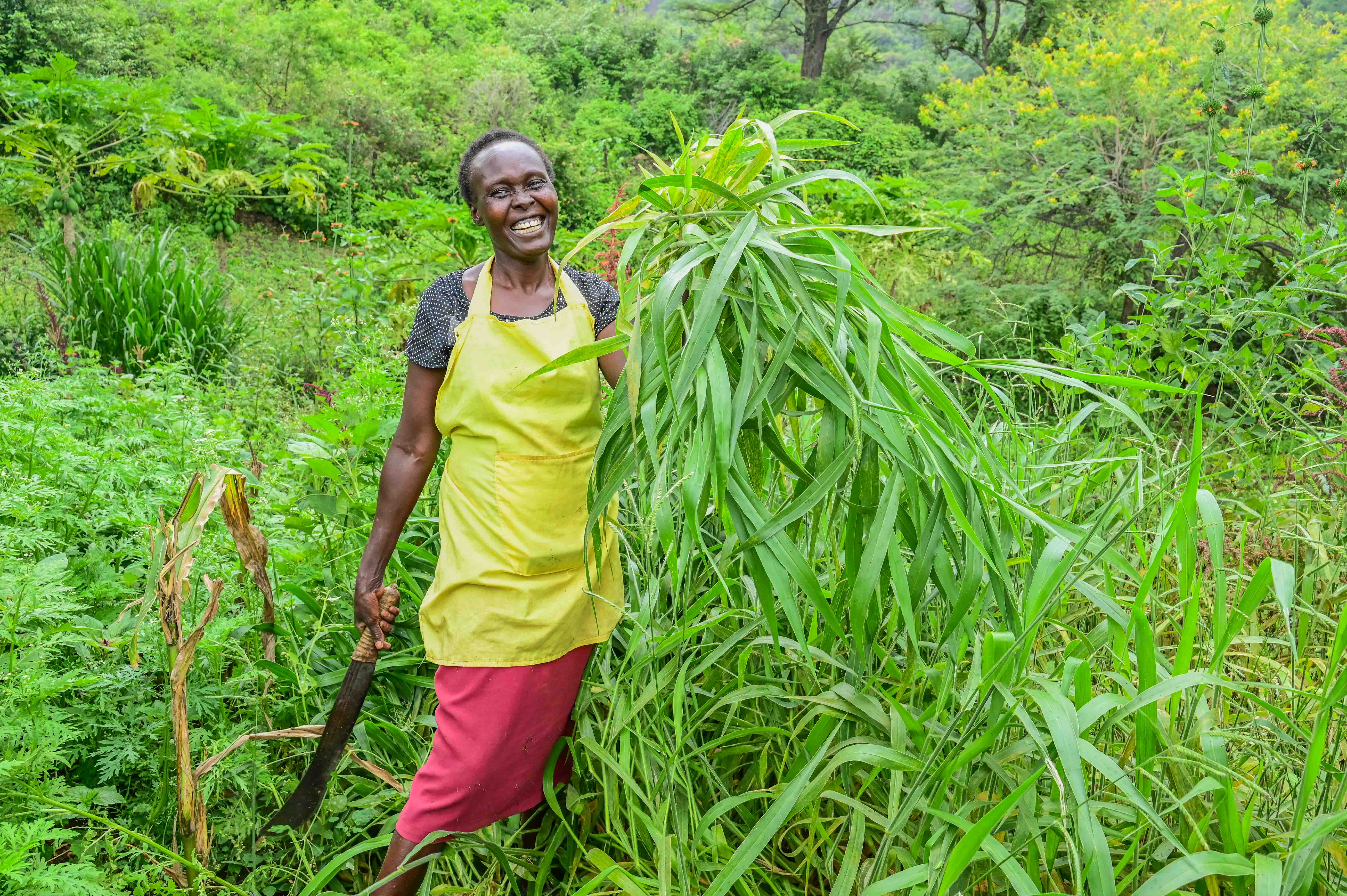
“Since I started FMNR, I have never needed to buy grass again,” she says with relief. Her cows are healthier, seldom get sick and provide reliable milk for her family.
Beyond farming, Salina’s journey extends to financial empowerment. As a member of the Kasio Savings for Transformation (S4T) group, she saves regularly and accesses loans. In her first cycle, she received 38,000 KES (294.12 USD), the largest sum she had ever held and 43,000 KES (332.82 USD) in the second.
“Holding that money for the first time felt like a dream,” she says. “I used it to pay school fees for my children. It made me proud and motivated me to do more.”
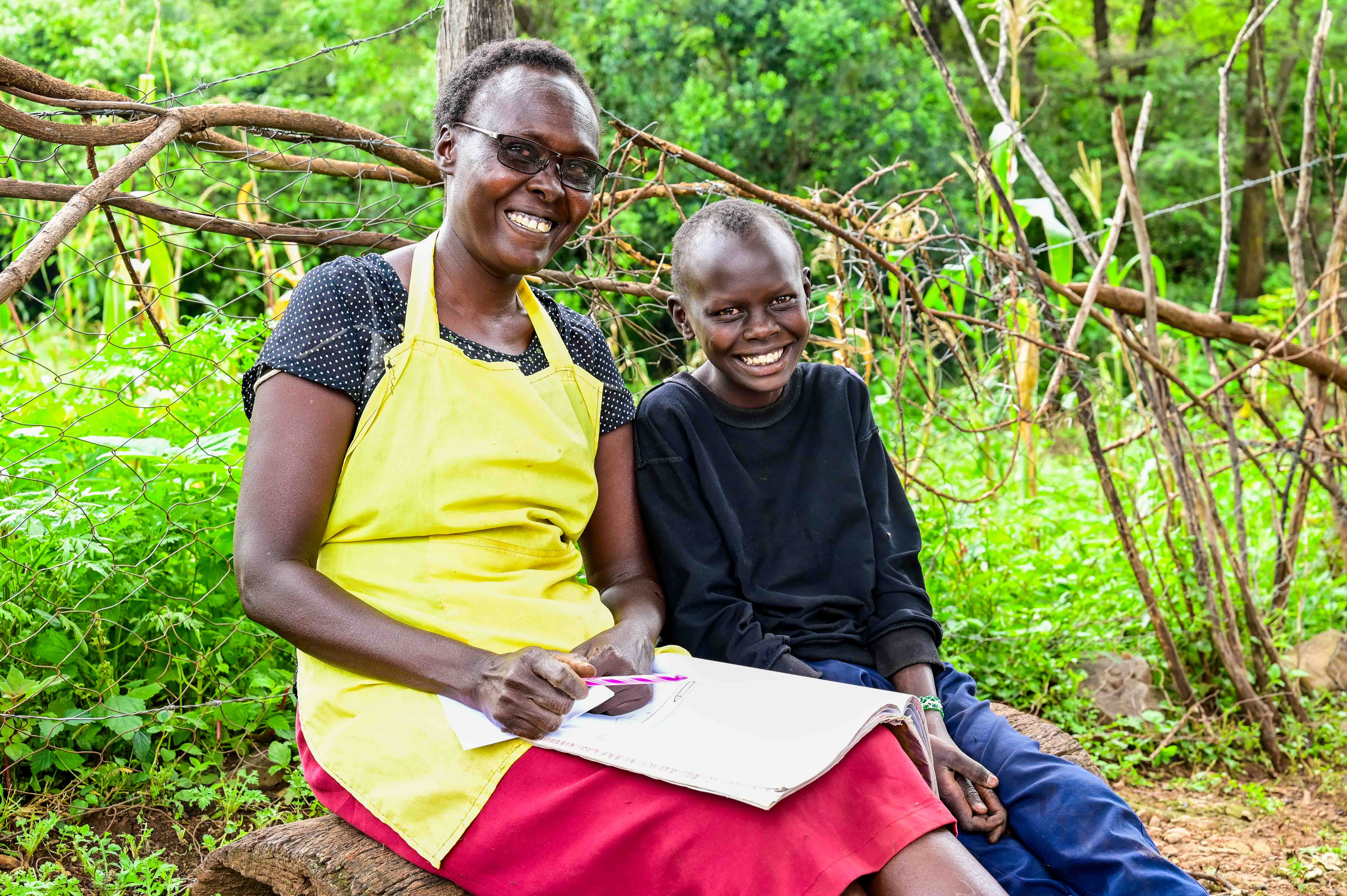
The S4T group’s savings have helped members invest in education, water tanks, small businesses and household needs. Recently, with World Vision’s support, they acquired a hay-grinding machine that they plan to rent out for additional income.
Salina’s transformation now inspires others. She has trained ten replicate farmers, six of whom are actively practicing FMNR and the rest keen to conserve their environment. She often says that once one gains knowledge, the rest depends on one’s effort and determination to put it into practice. She is still amazed that what once felt impossible, like seeing napier grass thrive on her farm, is now her everyday reality.
From enduring hunger, long treks for firewood and devastating livestock losses, Salina now enjoys shade, clean air, fertile soil, nutritious food and financial stability. She has traded the soot of charcoal for the flourishing green of restored land that provides abundance.
“I am grateful to World Vision for how far they have walked with us,” she reflects. “FMNR has given us pasture, fertile soils, firewood and most of all, peace of mind. Now, when I sit under this tree, I just admire the good work I’ve done on my farm.”
Salina’s story is more than a personal victory; it is proof that knowledge, when applied, transforms lives.
The Australian Government funds initiatives such as the Central Rift Farmer Managed Natural Regeneration Scale-Up Project (CRIFSUP) through World Vision, enabling more communities across Kenya’s ASALs to embrace knowledge, take action and restore hope for a resilient future.
By Hellen Owuor, Communications Specialist (CRIFSUP), World Vision Kenya