
Fueling Change: How Clean Energy is Replacing Charcoal Use in Rural Kenya

When Sophia Korir first learned about making briquettes from farm by-products, it felt like a revelation. The very trees that she once burned for charcoal and her once-barren farmland could now be preserved, while still providing her with a sustainable source of income and clean energy.
Sophia, a Lead Farmer from Orapsang Village in Elgeyo Marakwet County, is among over 1,000 smallholder farmers and pastoralists trained on the Farmer Managed Natural Regeneration (FMNR) approach through World Vision’s Central Rift Farmer Managed Natural Regeneration Scale-Up Project (CRIFSUP), funded by the Australian NGO Cooperation Program (ANCP).
“Before, we used to cut down big trees to burn charcoal,” Sophia recalls, “Now we make briquettes from pruned branches after being trained by World Vision about sustainable charcoal production. We preserve our trees and still get the fuel we need.”
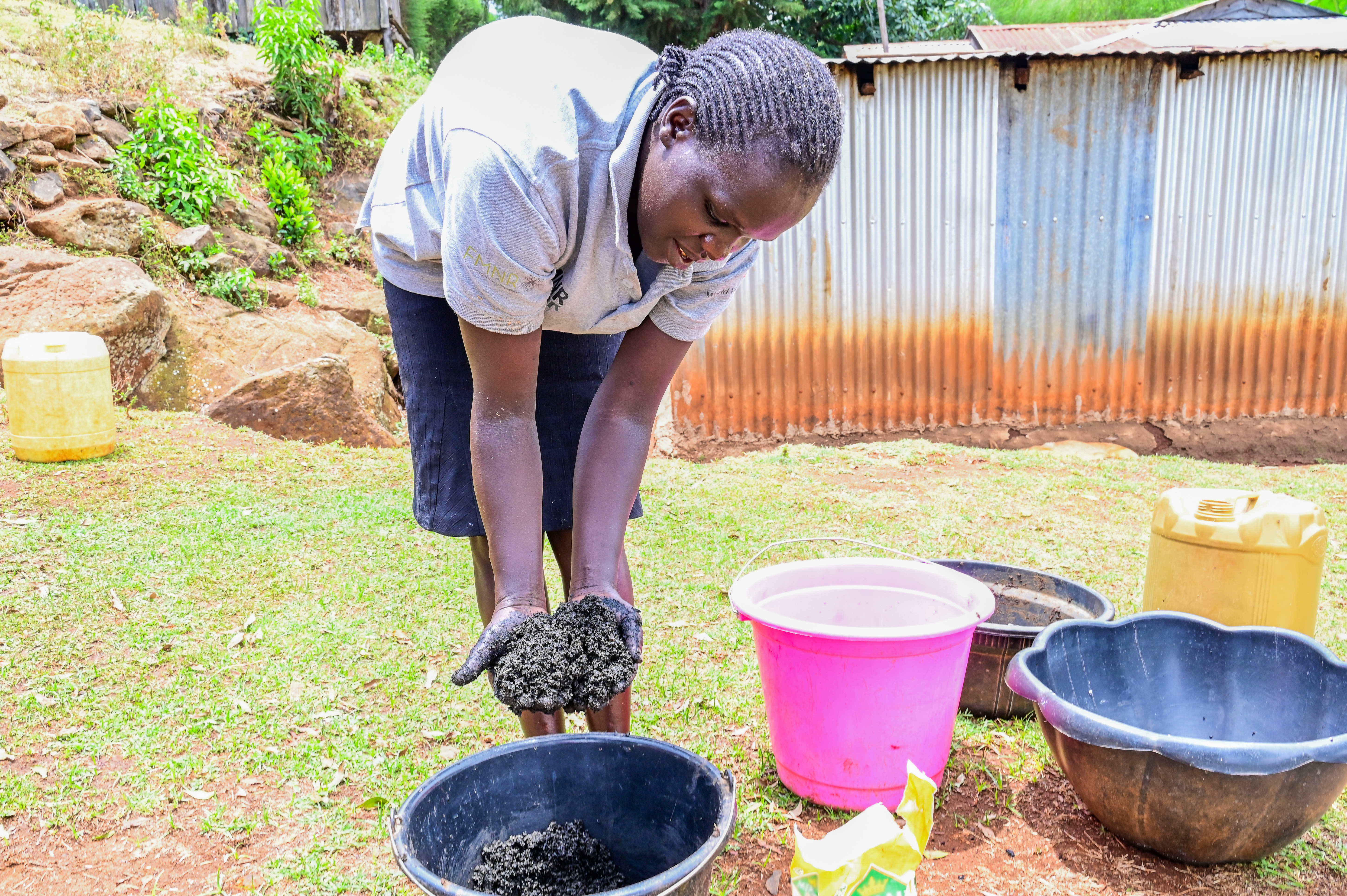
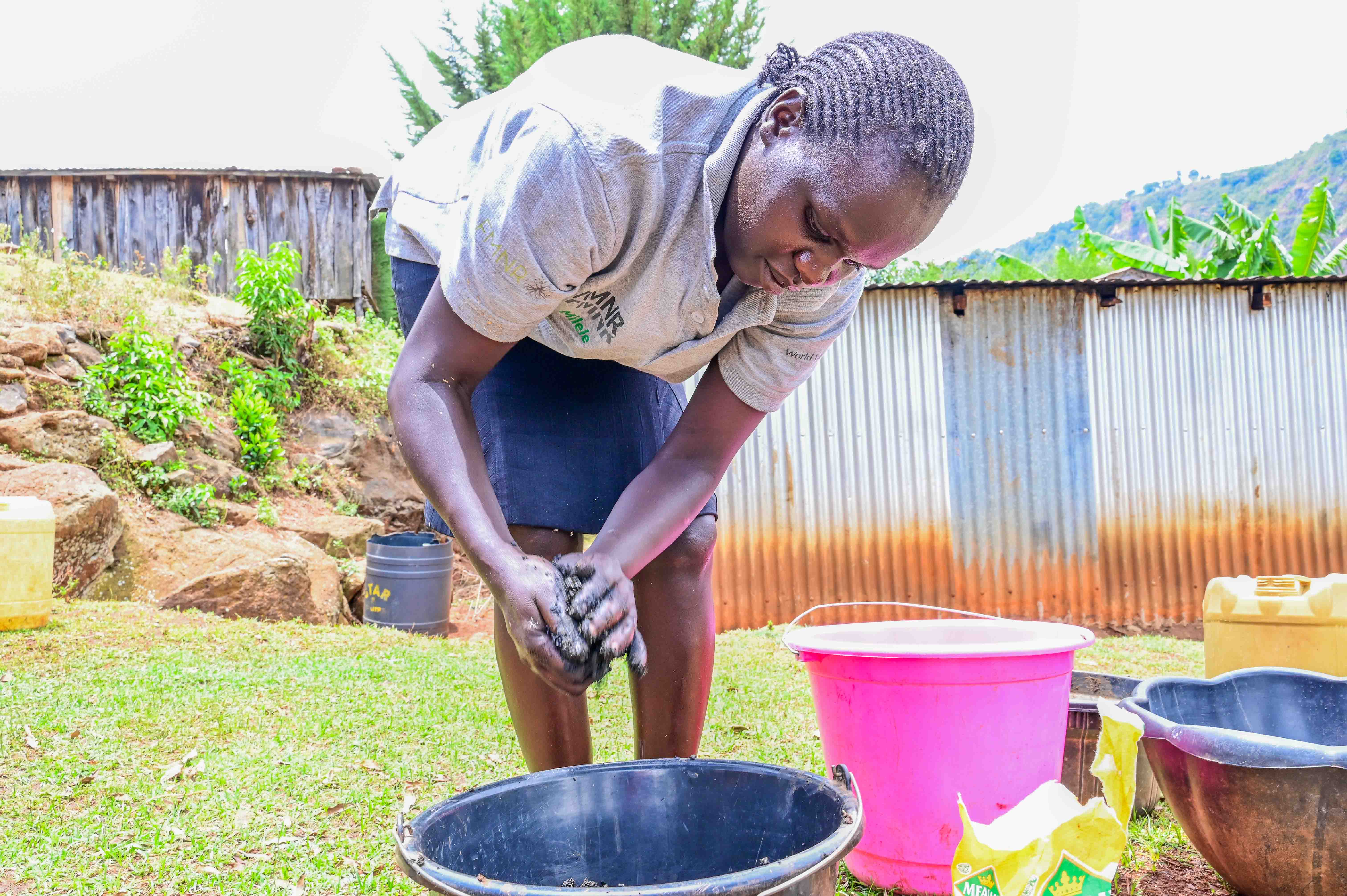
In 2024, Sophia’s group began producing briquettes manually from FMNR by-products such as twigs, branches and leaves collected after pruning trees. The materials are burned to make ash, which is then mixed with cow dung or flour to form energy-efficient briquettes.
“The leaves that we don’t use for briquettes we usually leave them on the farm to decompose and enrich the soil,” Sophia says. “Nothing goes to waste.”
Although their production is still in small-scale, the group has been able to earn up to 50,000 KES (387.67 USD) from local sales. With a goal of purchasing a briquette-making machine that will boost efficiency and expand supply, the group saves their profits in a Savings for Transformation (S4T) group where their money can earn interest.
According to Fiska Kemboi, Elgeyo Marakwet County’s Environmental Officer, this shift from charcoal burning to briquette production is a game-changer, redefining how rural communities relate to their environment.
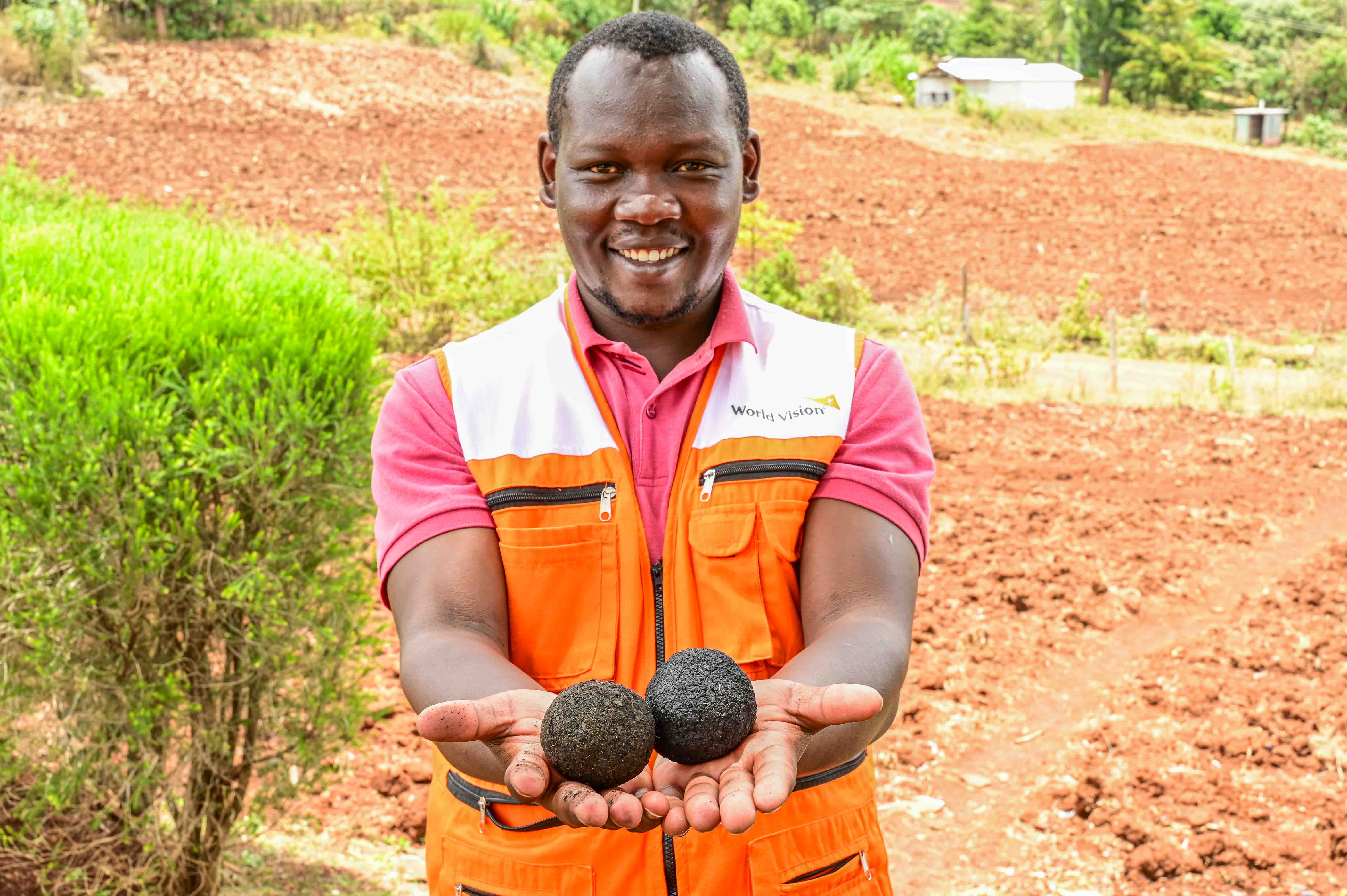
“We now have groups making briquettes instead of burning charcoal,” Fiska says, “This helps conserve our trees while creating new income streams. It’s an alternative source of energy that is lifting our communities.”
For a region prone to landslides, bushfires, and forest encroachment, every briquette sold represents a step towards safety, restored land, and a more resilient environment.
Fiska notes that the success of briquettes is built on strong community foundations initiated by World Vision like S4T and Gender Inclusive Financial Literacy Training (GIFT), which reduce household conflict and promotes joint decision-making.
“We have seen a shift in mindset,” Fiska adds, “Families are now working together, saving together and building cleaner, greener futures together,”
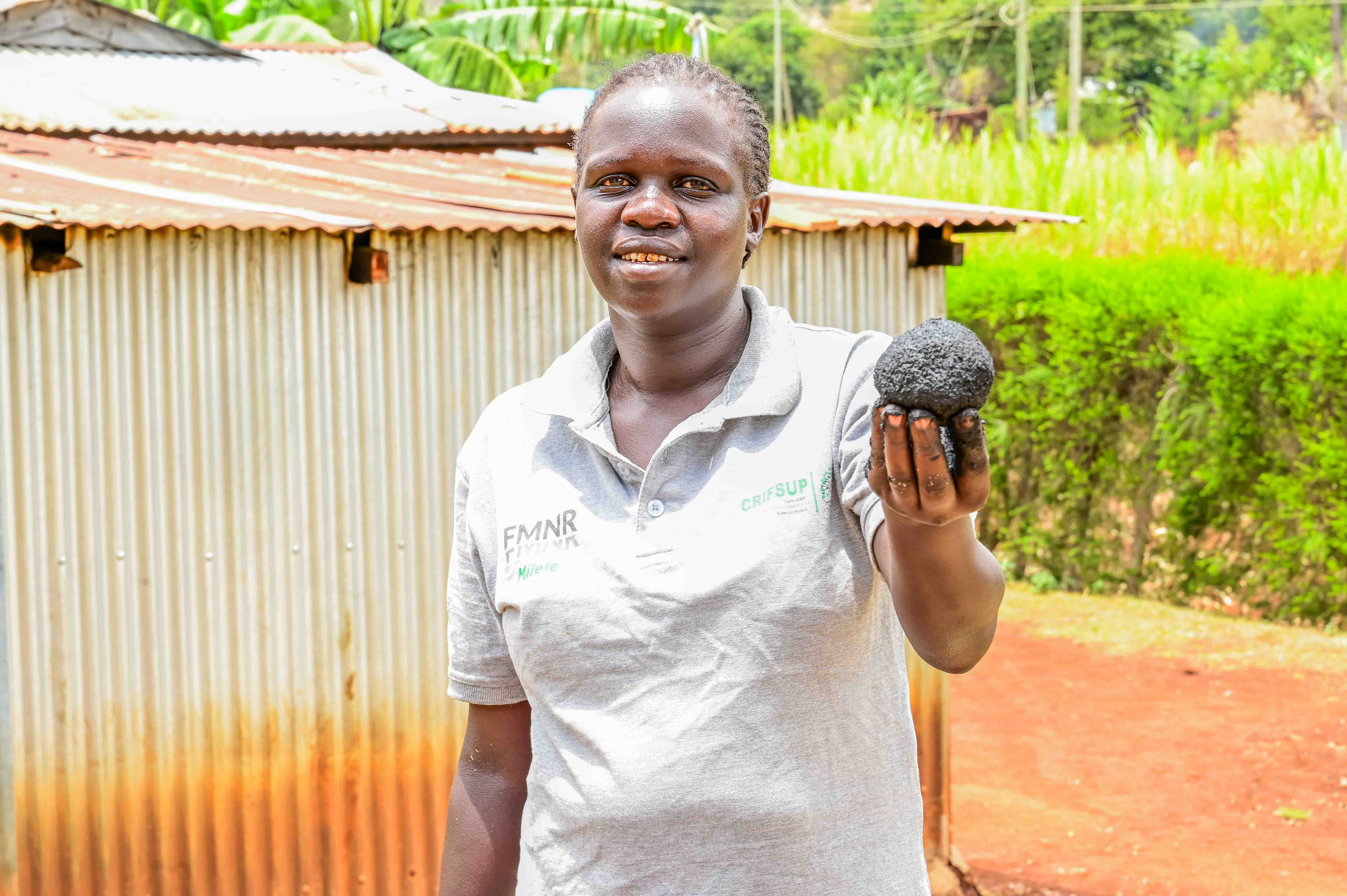
Sophia has a clear vision for a transformed Orapsang Village, one with more trees and thriving livelihoods. With her passion for FMNR and environmental conservation, she is not only protecting her land but also spreading the knowledge to inspire action among other community members.
By Hellen Owuor, Communications Specialist (CRIFSUP), World Vision Kenya