
A Greener Tomorrow: How Christine Took Action and Transformed Her Land

In Tirngongwonin village, deep in the heart of Baringo County, 58-year-old Christine Kurere, an ECD teacher and subsistence farmer, remembers the difficult seasons on her farm: goats trampling her crops, rains stripping away the topsoil, and harvests so poor they barely sustained her husband and their four children.
Seated on a wooden stool beside her mud-walled kitchen, she gestures toward her now-thriving, fenced plot, her face glowing with satisfaction. “It is greener than it has ever been,” she says with a gentle smile.
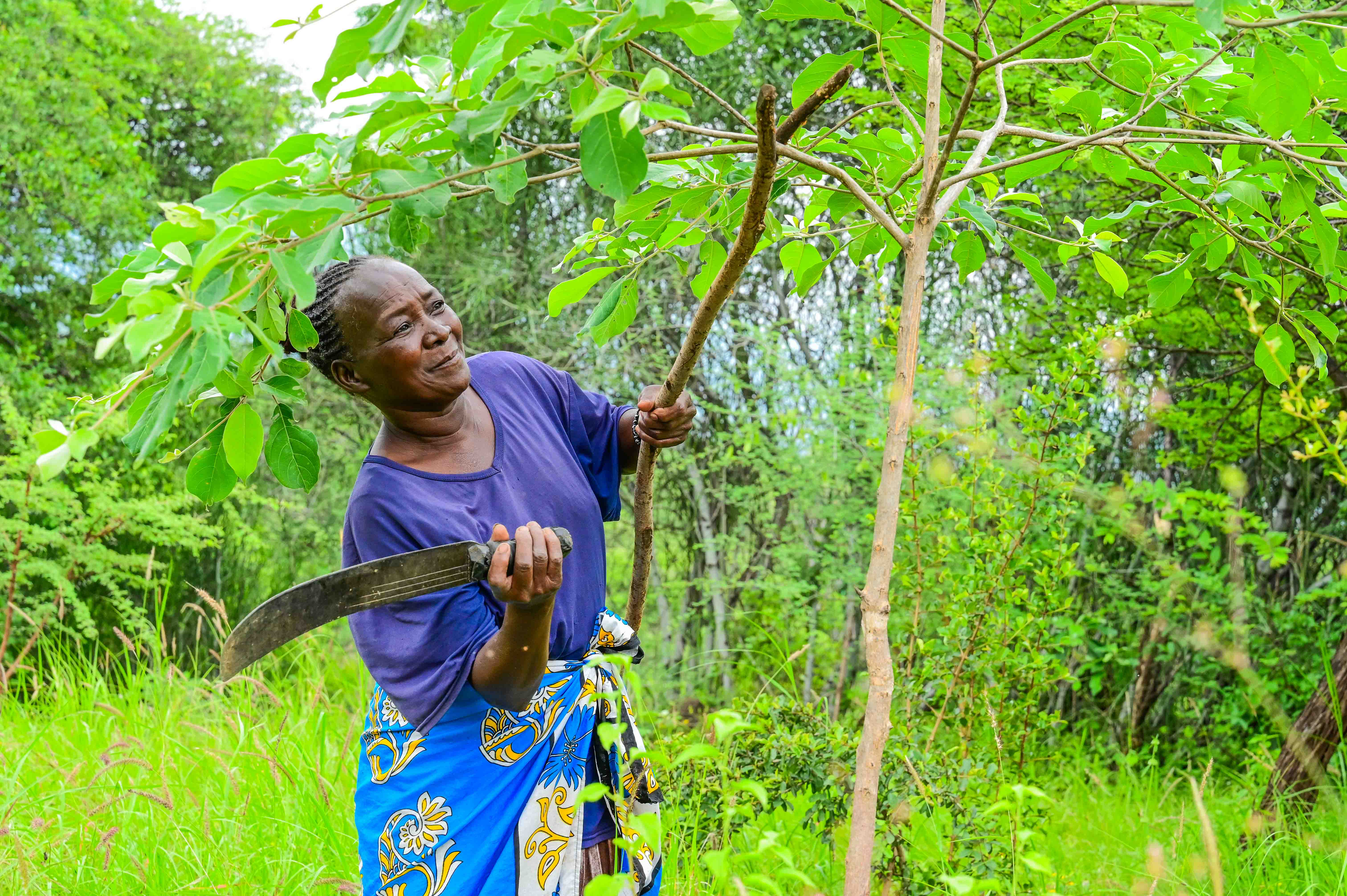
Christine’s journey of transformation began in 2022, when she fenced off a quarter-acre of her land after being trained by World Vision on the Farmer Managed Natural Regeneration (FMNR) approach, a simple yet powerful method of restoring degraded land by managing naturally sprouting trees and shrubs. She was among over1,000 lead farmers selected under the Central Rift Farmer Managed Natural Regeneration Scale-Up Project (CRIFSUP), funded by the Australian Government.
“I took the message of FMNR positively because I knew it was for the betterment of our environment,” Christine recalls. What she didn’t expect was how deeply it would transform not only her land but her entire livelihood and her family’s wellbeing.
With consistent pruning and management, Christine nurtured the new shoots on her farm. Within months, native grasses and trees regrew, providing her with firewood, fencing material, and animal feed. Today, she proudly tends to 13 cows, 60 goats, and dozens of chickens, her farm able to support her livestock and family.
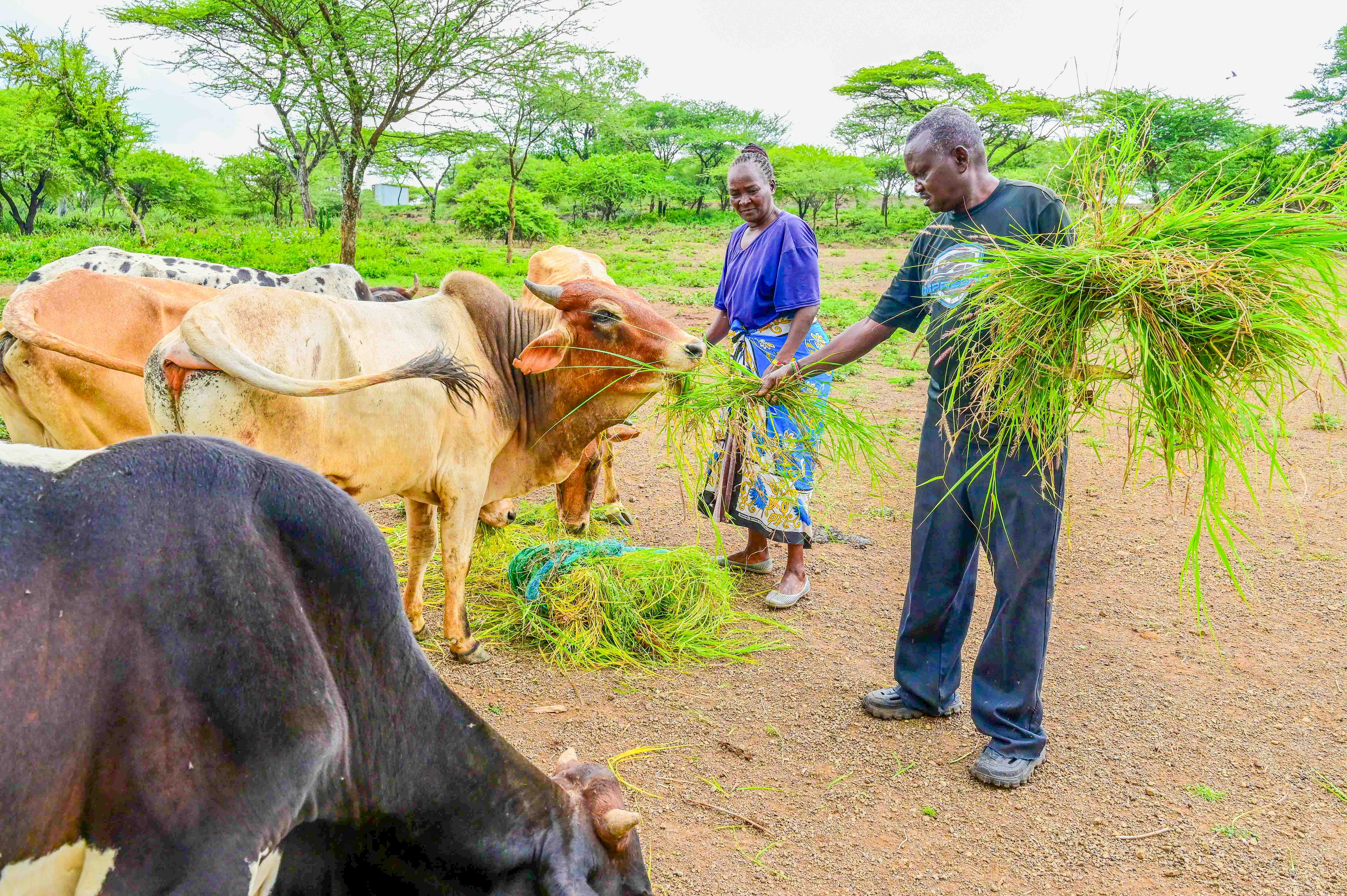
“Before, we used to buy fodder and milk almost daily. Now our livestock are well-fed and produce enough milk for us,” she says with pride. Her animals are healthier, her crop yields of maize, millet, and sorghum have increased, and her household expenses have significantly dropped, freeing up income for other needs.
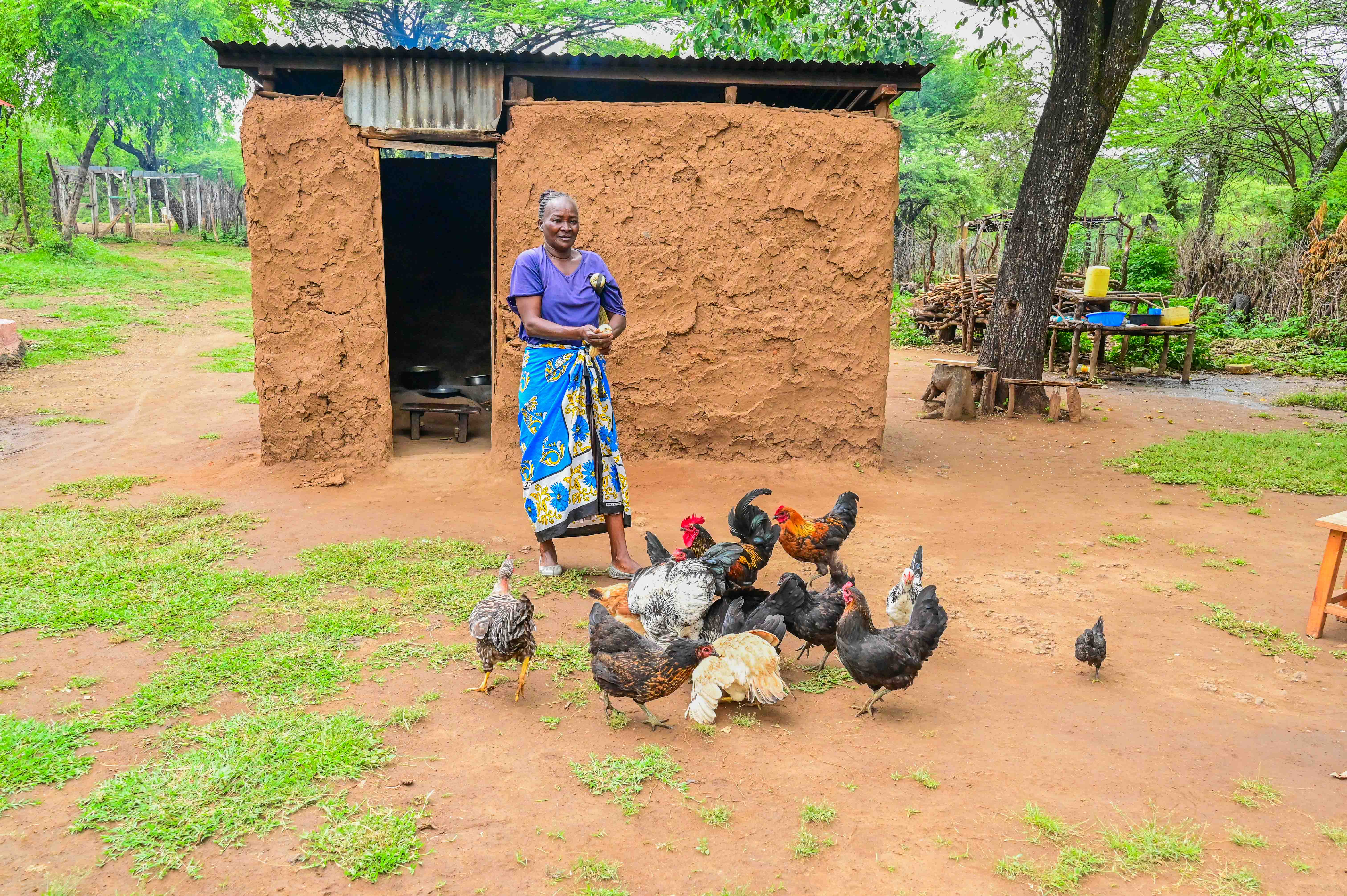
Beyond FMNR, Christine joined the Tirngongwonin Savings for Transformation (S4T) group, completing two annual saving cycles. She saved 24,000 KES (185.76 USD) in the first cycle and 18,000 KES (139.32 USD) in the second, funds she used to pay school fees and cover household needs.
“I may not have saved as much as I hoped, but I’m proud that I managed to save and that our group is growing stronger together,” she reflects.
The impact has spread throughout her family. “There were times we struggled to pay school fees, but now some of my children have been able to finish their studies. Thanks to S4T and FMNR, we are more stable and have extra money for other needs.”
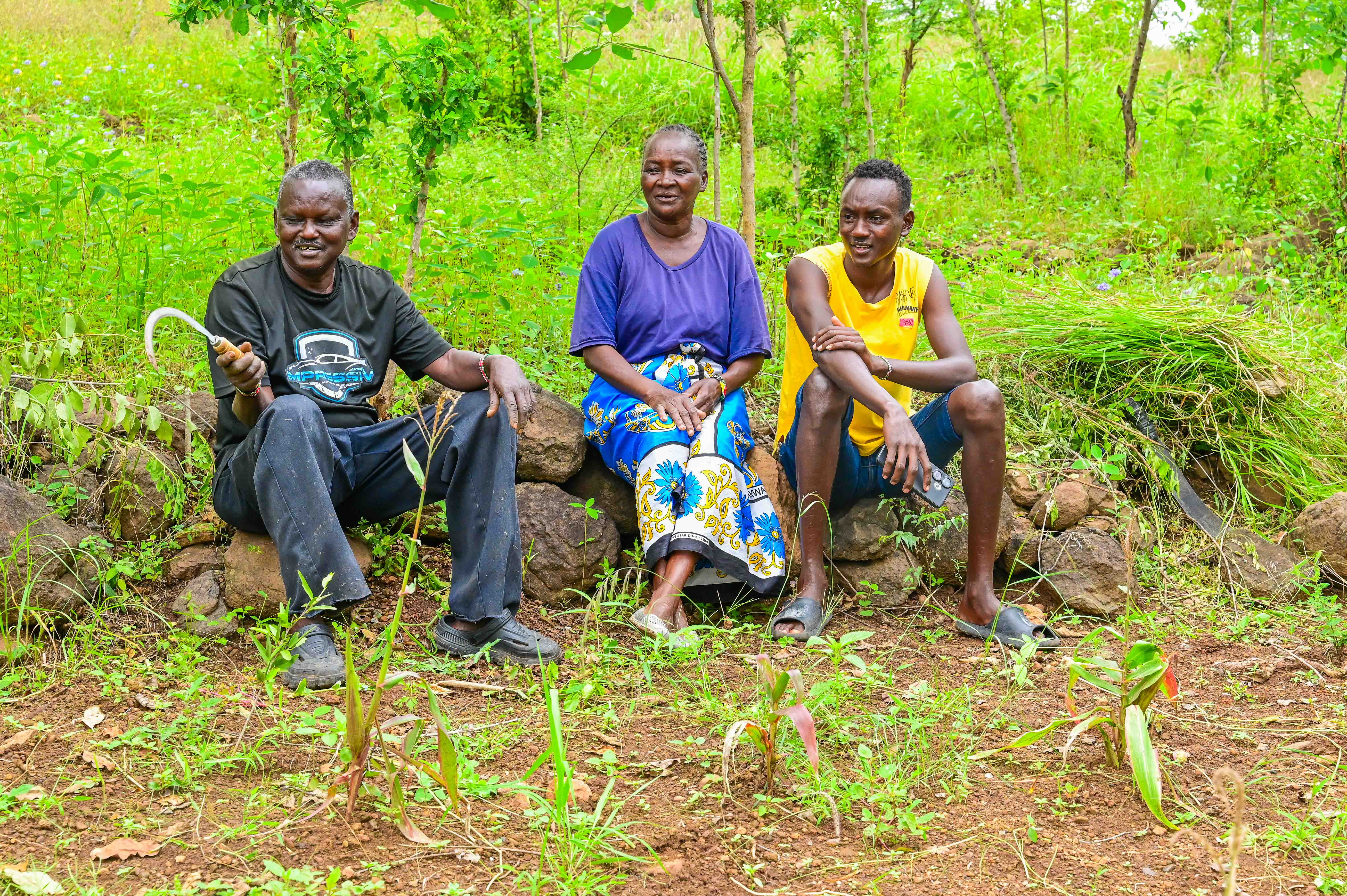
From eroded land to fertile soil and from financial hardship to stability, Christine’s story has proven that change begins with a single simple step-making the decision to act.
“We have implemented what we learned, and it has changed our lives,” she says, her voice full of gratitude. “Our environment is restored, and our family is thriving.”
By Hellen Owuor, Communications Specialist (CRIFSUP), World Vision Kenya