
Seeds of Renewal: Musa’s Transformation Through Farmer Managed Natural Regeneration (FMNR)

After 36 years of service, 60-year-old Musa Amdany retired from teaching and decided to focus fully on farming in his home village of Ng’olbelone, Baringo County. In 2023, he was introduced to Farmer Managed Natural Regeneration (FMNR) by Zakayo, a lead farmer under World Vision’s Central Rift Farmer Managed Natural Regeneration Scale-Up Project (CRIFSUP) funded by the Australian Government.
Through Zakayo’s mentorship, World Vision training sessions, and farmer exchange visits, Musa learned how to manage natural tree regrowth, improve soil fertility, and use his land sustainably. His once-barren plot has since been transformed into a thriving, productive farm. FMNR quickly became an integral part of his daily farming routine, a practice he embraced passionately, thanks to his long-standing interest in environmental conservation and previous experiences with tree planting, where exotic species often failed to survive.
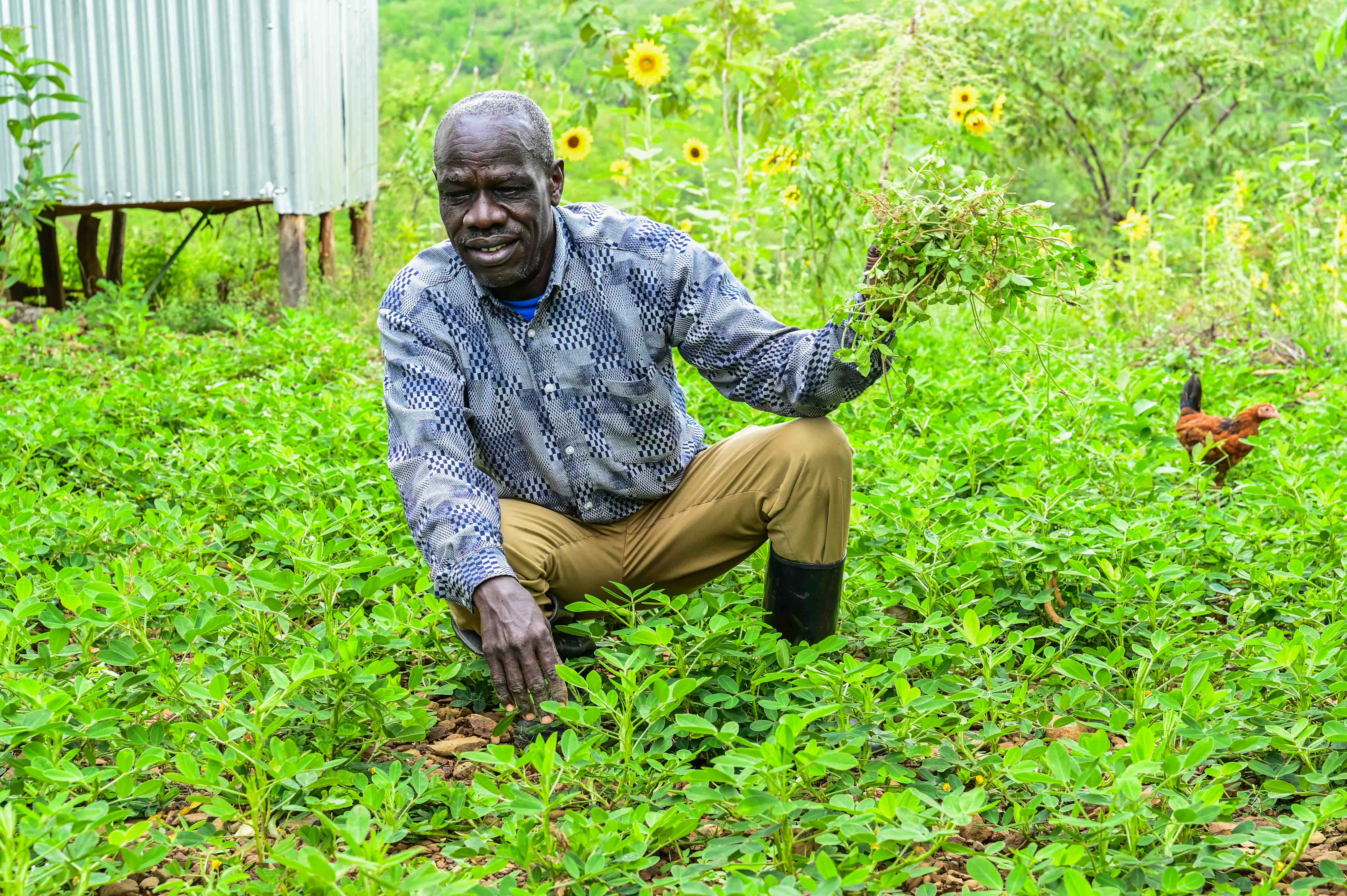
“This land was once bushy and unproductive,” Musa recalls. “I had cut down most of the trees, and wild shrubs had taken over. Even wild animals used to hide here. I wasn’t getting any benefit from it.”
Determined to make a change, Musa set aside five acres of idle land for FMNR. Today, that same land is flourishing with indigenous trees, lush grass, and thriving crops such as groundnuts, maize, beans, sunflowers and fruit trees. Inspired by this success, he now plans to expand FMNR to another five acres.
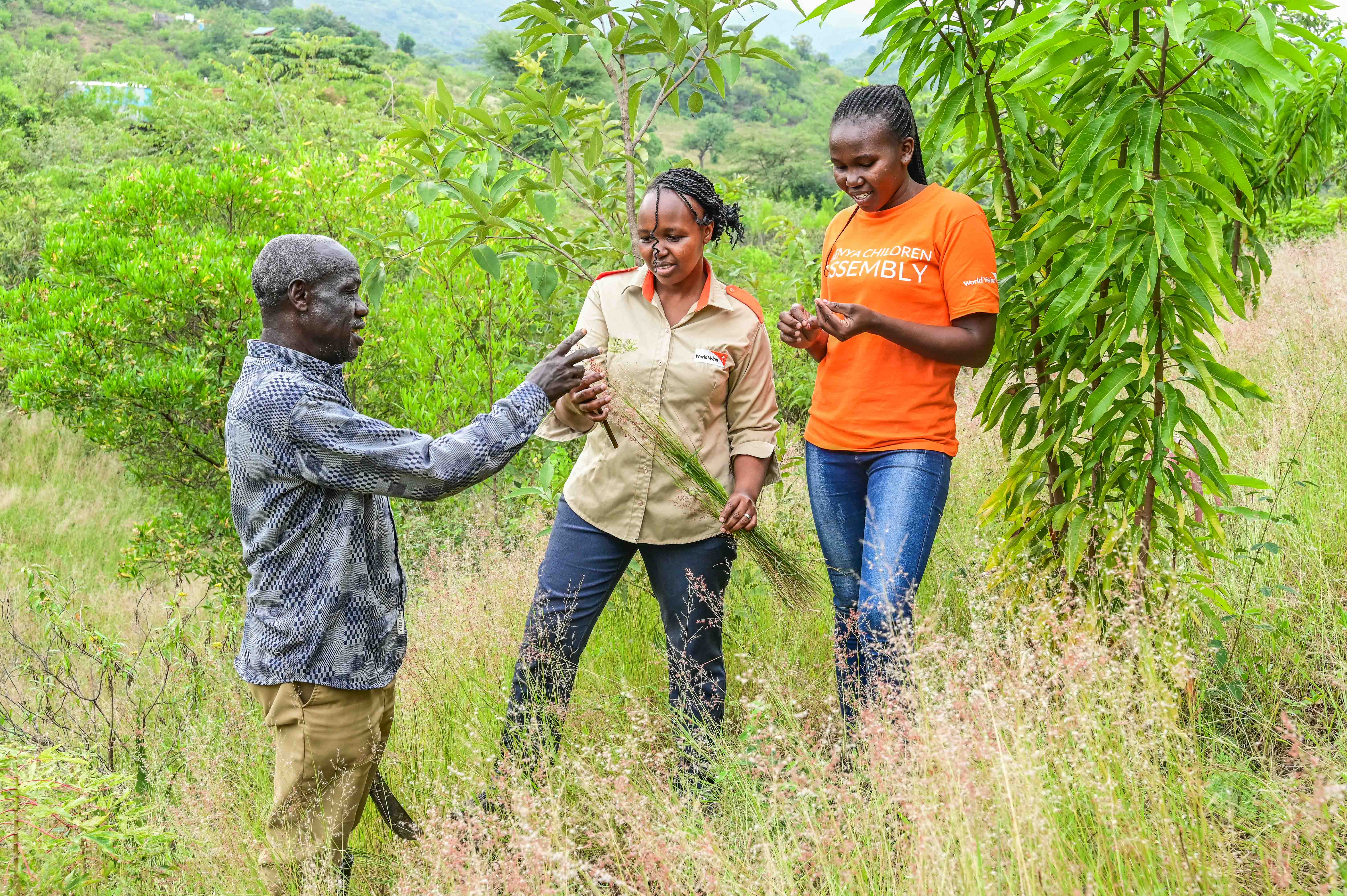
“Thanks to FMNR, my farm has become more beautiful and fertile. I am even seeing tree species I’ve never seen before,” he says proudly.
The results speak for themselves. Musa’s crop yields have doubled, and his income from groundnuts has grown from KES 5,000 in the first year to KES 10,000 in the second, enough to help pay school fees for his children.
Before FMNR, Musa faced regular livestock losses as wild animals, believed to be caracals, attacked his goats from the thick bushes on his land. By selectively thinning the vegetation, he eliminated hiding places for predators and drastically reduced the attacks.
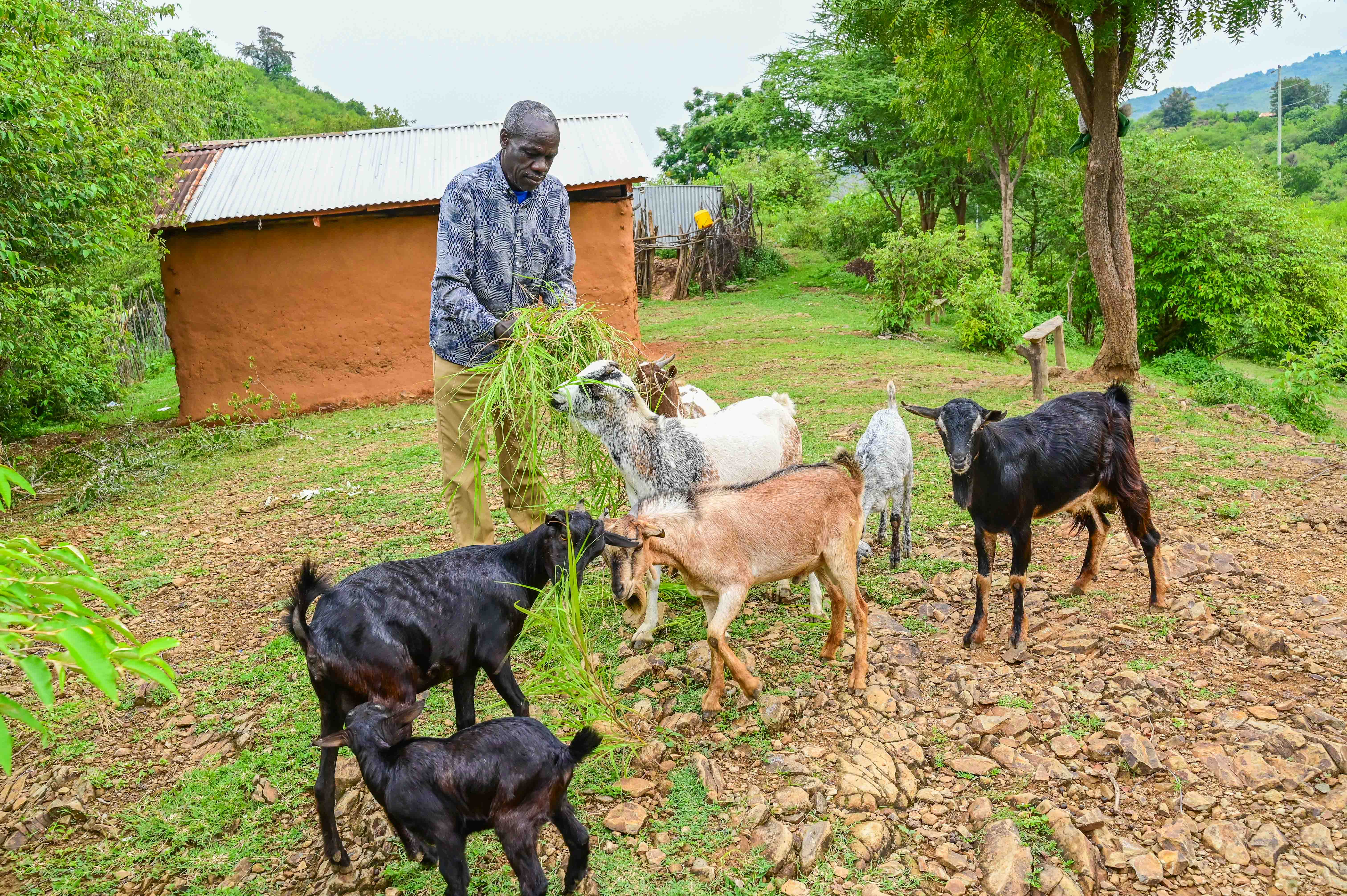
With improved pasture and nutritious grasses like Rhodes and Napier, Musa’s livestock are thriving. He now keeps 15 hens, 20 goats and three dairy cows, producing up to 20 litres of milk daily. He sells about half of it, earning KES 30 per litre, while his feed expenses have dropped by nearly half.
Looking ahead, Musa hopes to diversify his income through beekeeping and sunflower oil processing, both for home use and commercial sale.
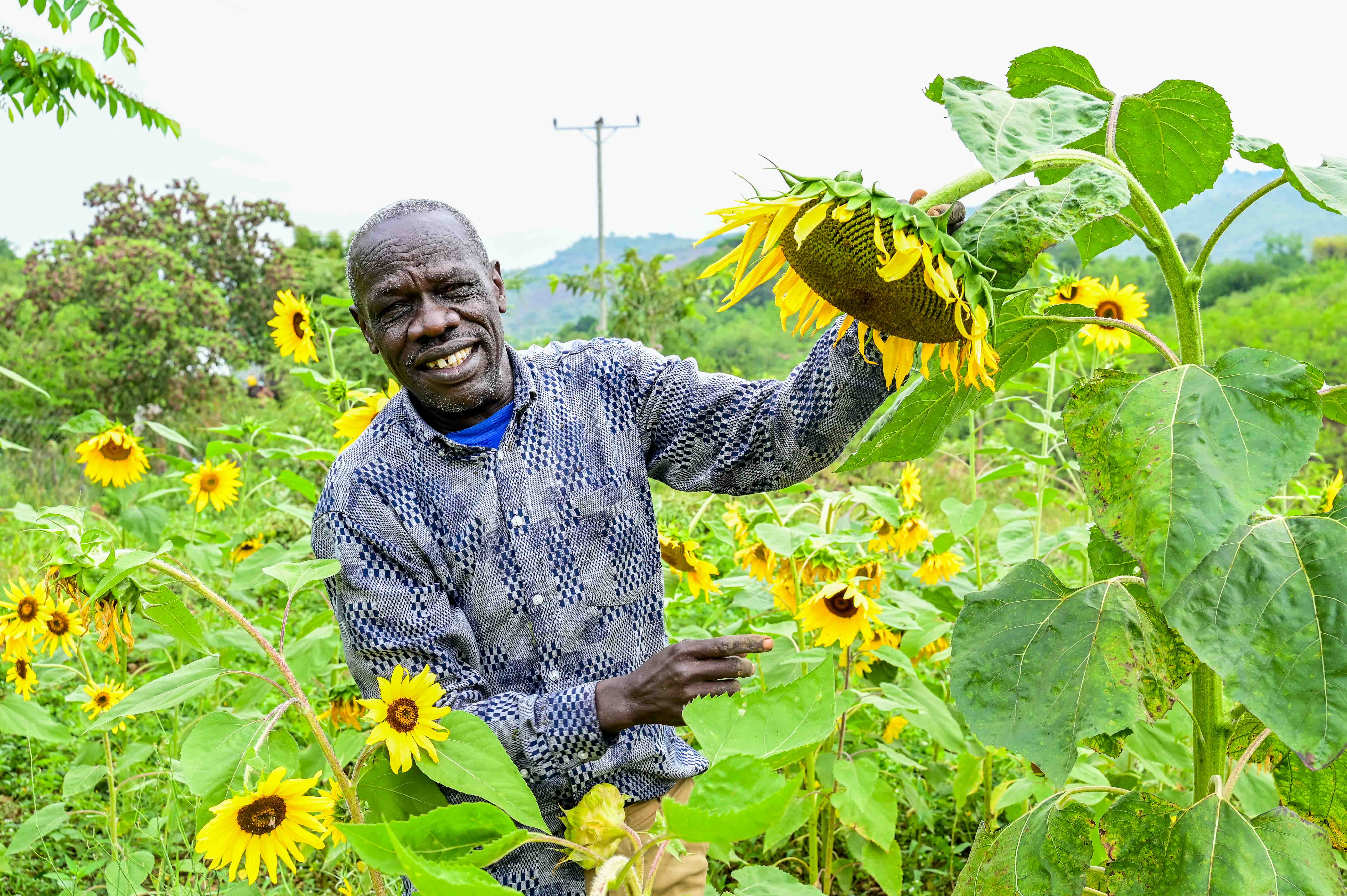
“Most of my trees are still young, but I see a great future,” he says with optimism. “I’ll have timber, firewood, shade, and pasture for my animals. This is just the beginning.”
Now a replicate farmer, Musa regularly shares his knowledge with neighbours and has already trained two other farmers on FMNR techniques. His story is inspiring others to restore their land and take pride in sustainable farming.
“FMNR has made my farm productive and my environment pleasant,” he smiles. “I am grateful to World Vision for bringing this knowledge. My prayer is that more people learn and embrace FMNR so we can all develop as a community.”
By Hellen Owuor, Communications Specialist (CRIFSUP), World Vision Kenya