
Farah’s steps toward a stable future

In Northern Syria, years of conflict and economic strain have made it increasingly difficult for families to secure a stable income as 90% of the population live below the poverty line. In rural areas, where livelihoods depend largely on agriculture, income is often unpredictable, shaped by drought, limited resources and cropping seasons.
Amid these challenges, World Vision's NAF livelihood project is helping families take small but steady steps toward stability, managing resources, supporting one another, and investing in new opportunities through community-based savings and loan groups.
43-year-old Farah*, a mother of eleven, is one of them, choosing not to wait for change, but to build it.
She now sits beside rows of newly planted seedlings inside a small greenhouse she purchased through WV support, hopeful for a better tomorrow. But just months ago, this wasn’t her reality.
Previously, like many families in her community, Farah depended on her husband’s seasonal agricultural work as he worked as a farmer. Income was inconsistent and just not enough, often leaving gaps in their needs, too wide to bridge. With a large family to support, even surviving felt impossible, and planning ahead felt even further out of reach. “Our living situation was so horrific. I was looking for any way to support my family as a mother. We wanted something sustainable, not just for certain seasons”, she shares.
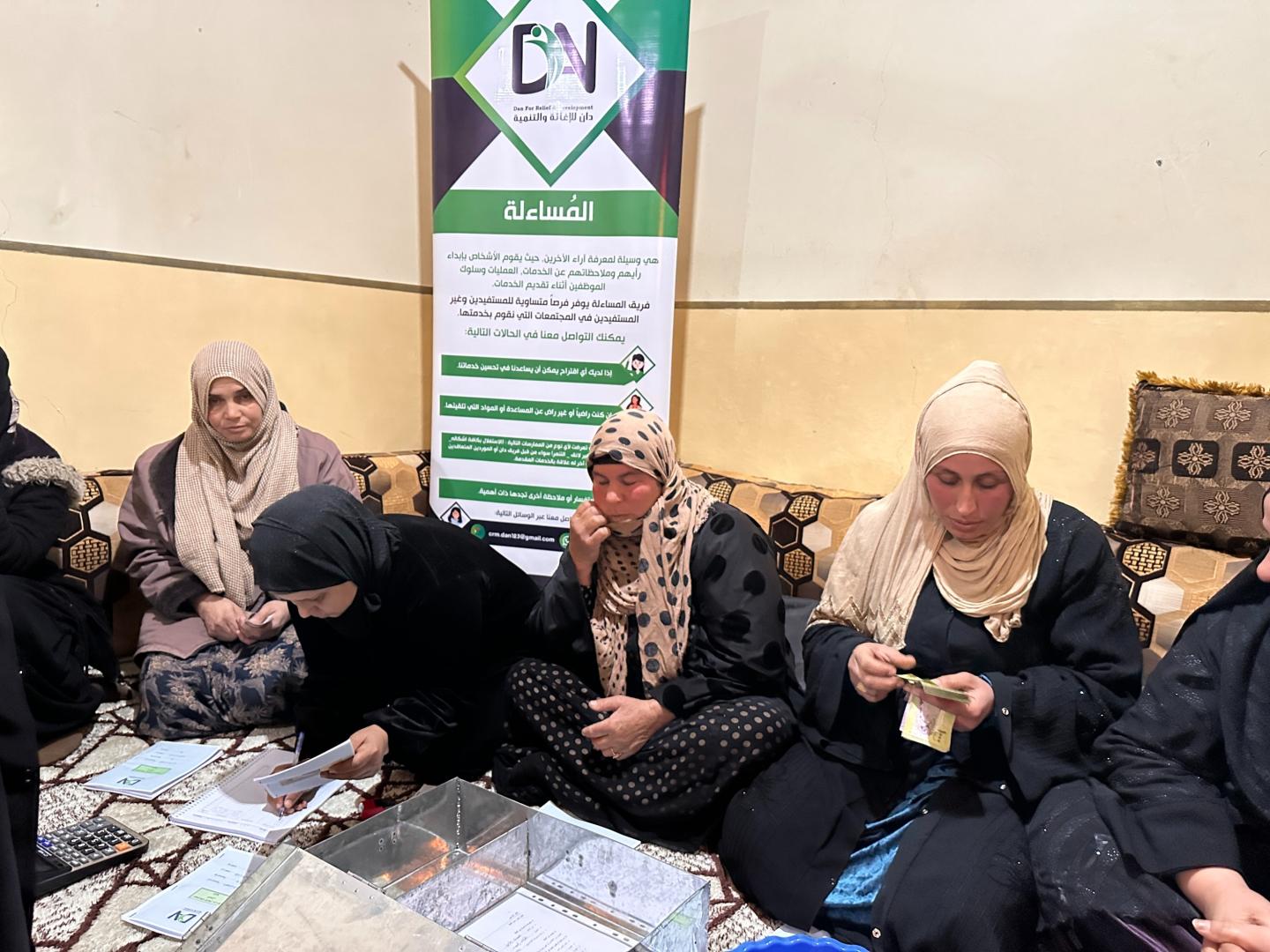
That sustainable opportunity came when she joined a community savings and loan group formed in her area , supported by WV. WV’s partner, Dan Organization for Relief and Development, registered 350 families who showed interest in the project in the targeted area through field visits. Through these groups, members come together regularly to save small amounts of money in a shared fund that they manage themselves. Each contribution is made through a simple share system, where one share is set at 25,000 Syrian pounds, equivalent to 2.25 USD, allowing members to save according to their capacity. Together with other members, Farah began contributing small amounts into a shared fund, an amount that once seemed insignificant, but slowly started to grow into something meaningful.
Alongside this, a small amount is also contributed to an emergency fund to support members during urgent situations.
Over time, these collective savings grew, making it possible for members to access small, interest-free loans. These loans can then be used to cover immediate needs or to start small income-generating activities, particularly in agriculture.
Within weeks, the group was able to offer its first loans. Farah was among the first to take that step.
With a loan of 800,000 Syrian pounds, equivalent to 72 USD, she decided to invest in something she knew well, agriculture. Using her experience and the resources around her, she started a small project producing vegetable seedlings inside agricultural tunnels.
“We began working in the greenhouses, planting seeds. I can’t express the happiness I felt after I was given the loan, it was as if my hands aren’t tied anymore. Now we’re waiting for the vegetable to grow so we can sell them and feed our family. And this is just the beginning”, she explains.
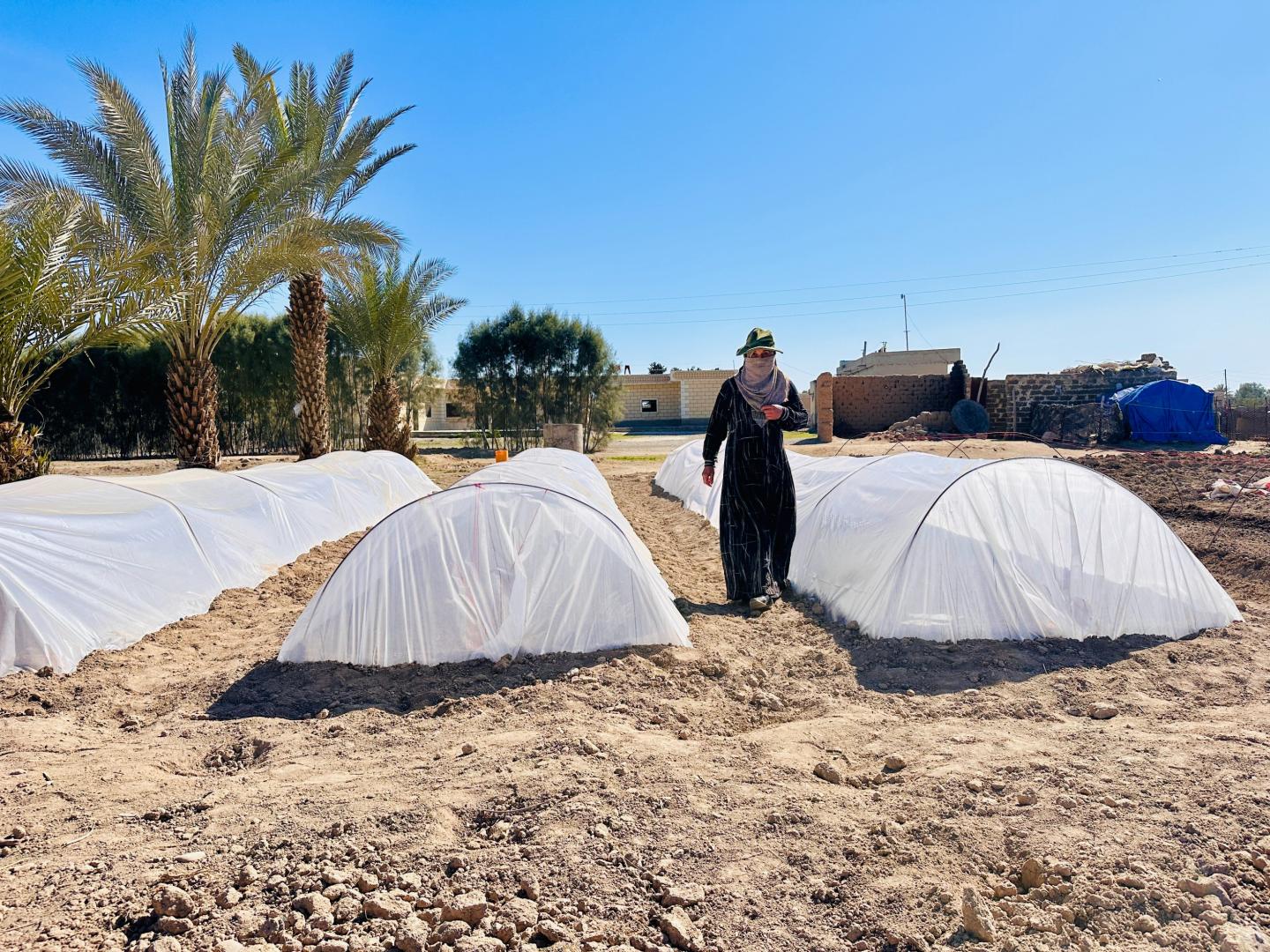
“I hope to expand the project,” she says. “To increase the number of greenhouses and improve our income step by step so we can finally taste stability.”
In a place where financial services are limited and opportunities are scarce, savings groups are opening new possibilities. Farah’s story is one of many yet to come as the project will continue its support in the next six months, then it will be managed by the community, a project in which its impact will extend for years to come and open doors and opportunities for many families in the area.
For Farah and others struggling, this project is more than a source of income. It is a shift, from uncertainty toward stability, from dependence toward self-reliance.
*Name has been changed to protect identity.