
A Safe Space Where Children Learned to Share, Respect, and Belong

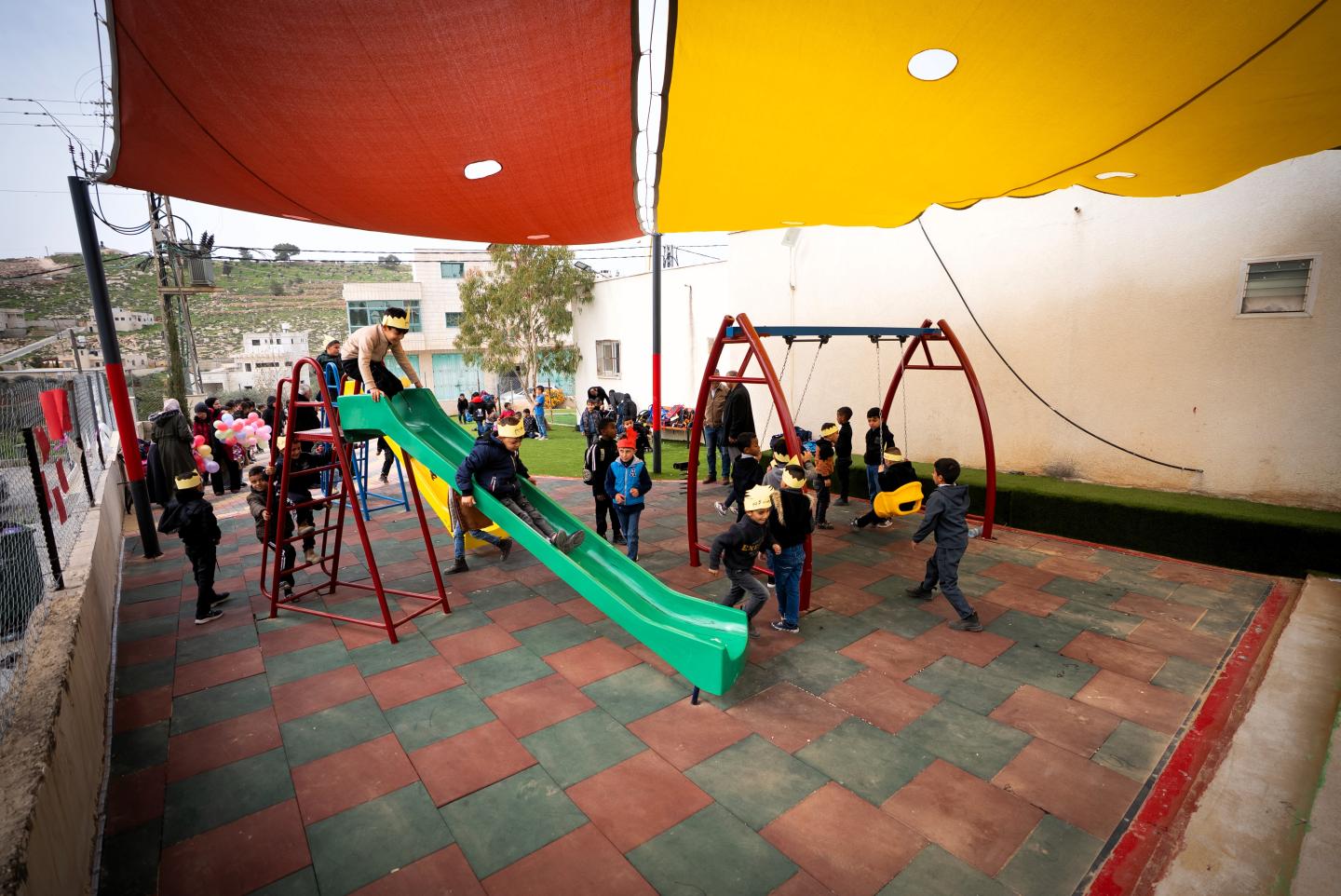
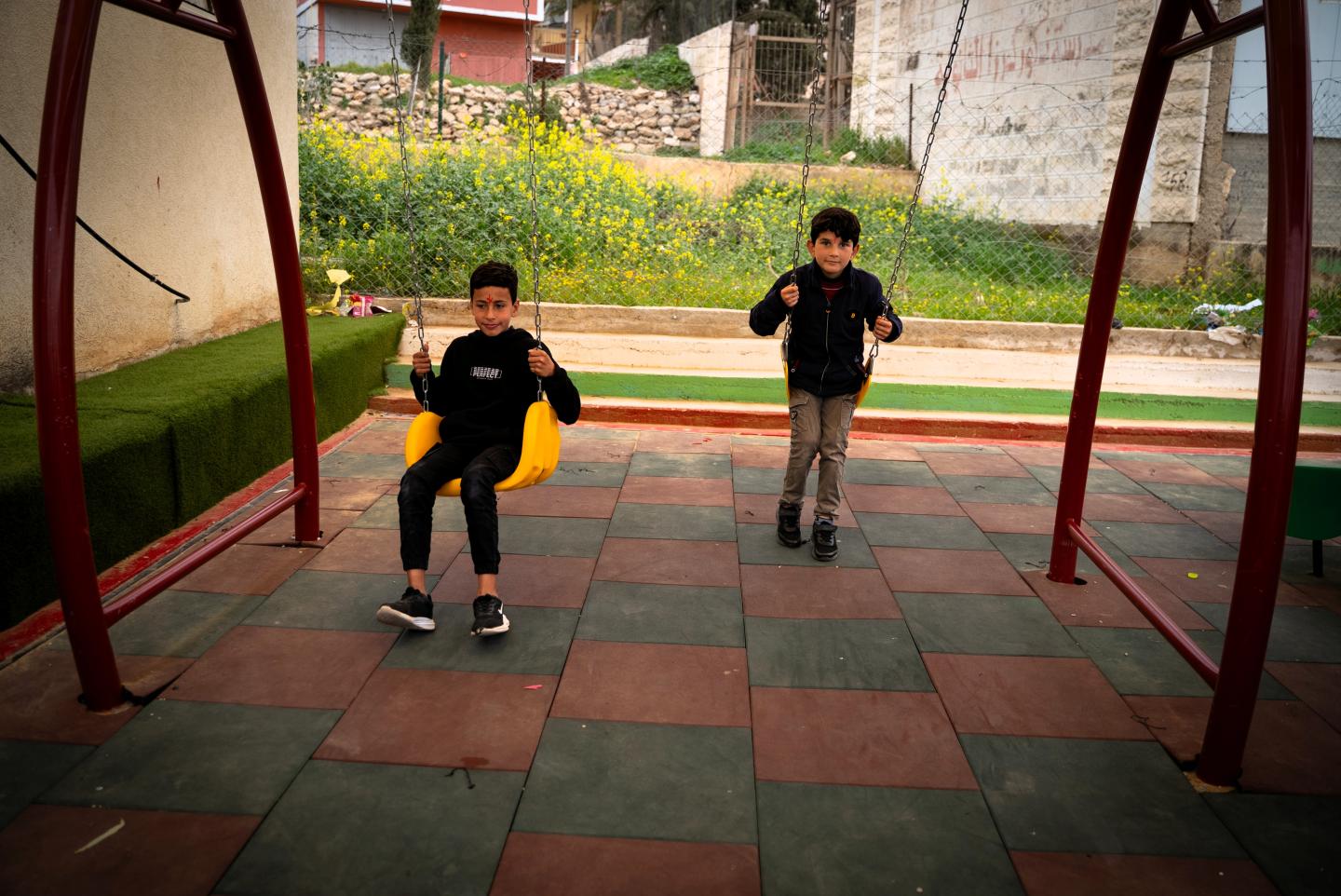
On any afternoon in this small villag from the south of the West Bank, joyful laughter rises from the newly rehabilitated Safe Play Area. Small feet run across the colourful ground, children queue patiently, and cheerful voices call out to one another. What seems like simple play hides a deeper story — one of growth, belonging, and the quiet formation of lasting values.
But this is not how it always was.
When the Streets Were the Only Option
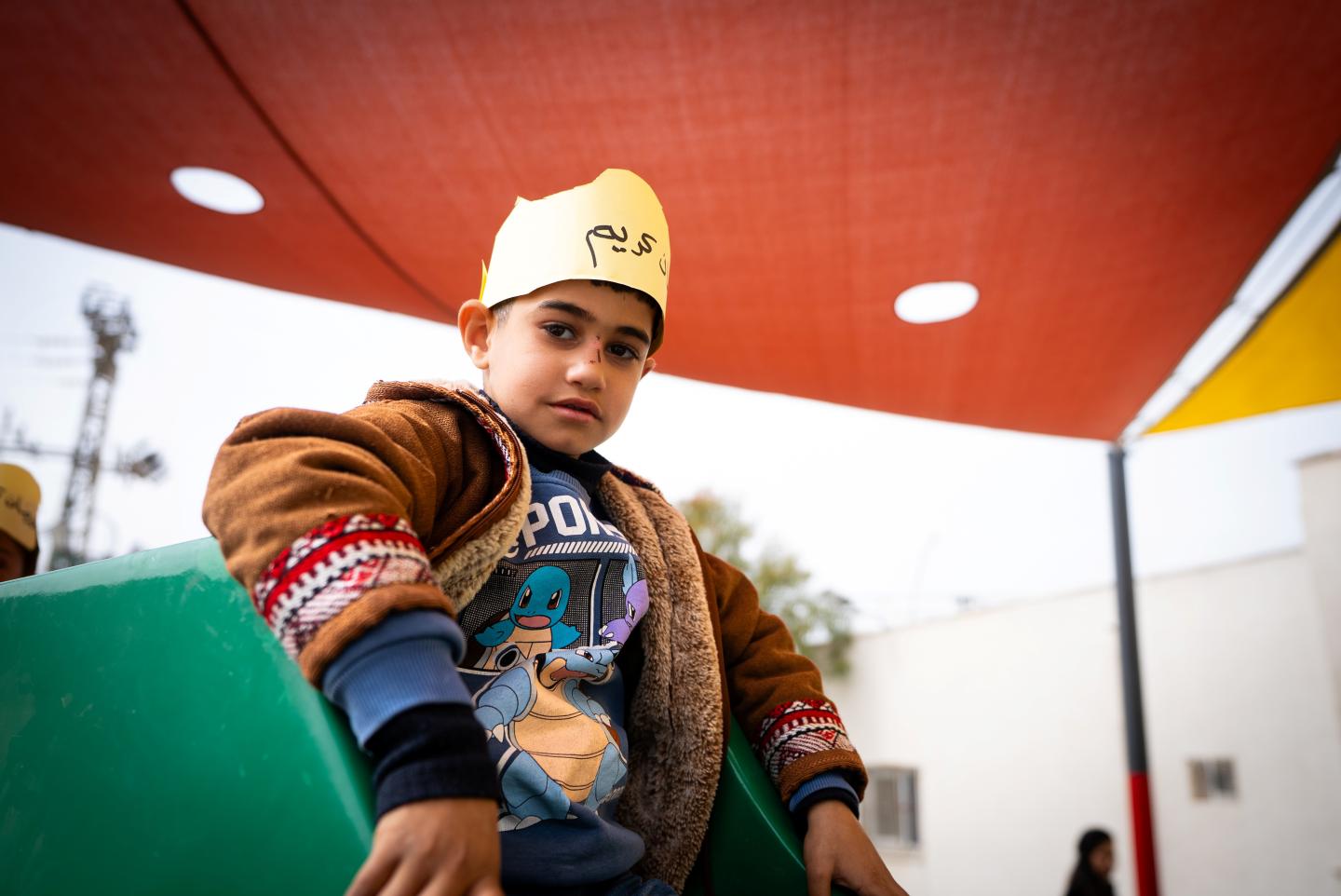
In this village, in the south of the West Bank, childhood used to carry fear. "We used to play in the street," recalls 9-year-old Amer. "There were cars everywhere, and sometimes we were scared of attacks."
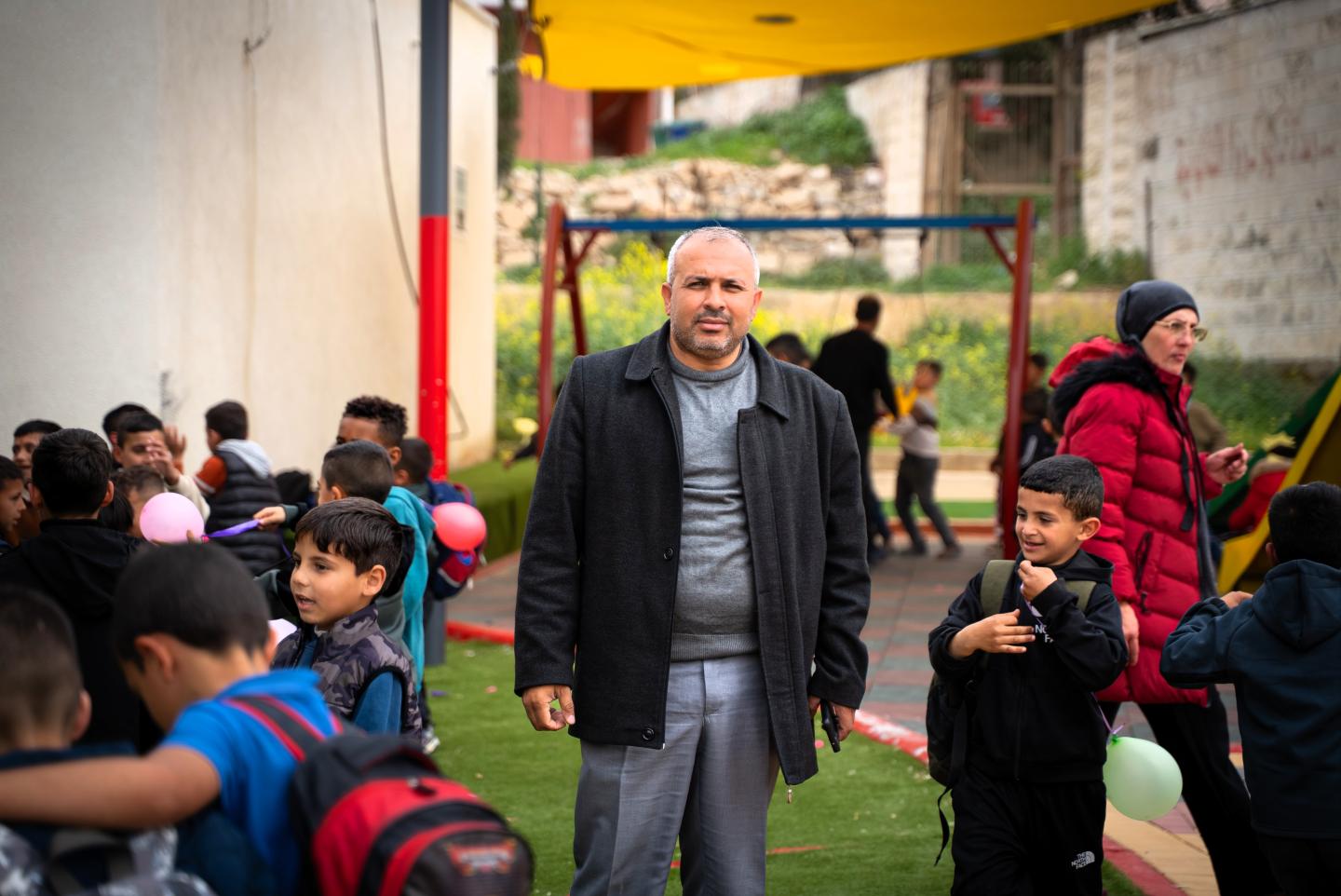
Mr. Atef Al-Arjan, Principal of the school, remembers those days well: "The streets were very dangerous — fast-moving vehicles, no control, and a constant sense of violence could strike at any time. Every time children went out, families worried they might not come back safely."
With no safe alternative, children faced a stark choice: risk their safety outside or remain confined indoors. The toll was visible. "Many children became isolated," Mr. Atef explains. "They spent hours on screens, losing their energy, their confidence, and their connection with others."
After October 2023, this situation became significantly worse. Repeated school closures, economic hardship, and heightened insecurity compounded the pressure children were already carrying. A study conducted in March 2024 among 1,148 Palestinian children and adolescents in the West Bank found that PTSD symptoms were moderate to very severe in 70% of participants. A World Vision study conducted at the end of 2024 further found that 27% of families reported negative behavioural changes in their children since October 2023 — including increased aggression, withdrawal, and anxiety. In Kurza, as across the West Bank, children had nowhere safe to release that weight.
For girls, the situation was even more restrictive. "There was simply no safe place for girls," Mr. Atef says. "As a father, I never allowed my 13-year-old daughter to go out. It was too risky, and there was nowhere appropriate for her to be."
A Refuge Restored
Through a project funded by Giro 555 — a Dutch coalition of leading humanitarian organisations — World Vision worked with the local community to transform this reality. The Safe Play Area was rehabilitated as a protected, open, and visible space: hidden from the dangers of the main road, designed to be welcoming to all children, and intentionally built to be safe and inclusive for women and girls.
The change was immediate and profound.
"Now, my daughter comes here freely," Mr. Atef says. "She laughs; she plays. This is something we were deprived of in our village for years."
"This is the only place where girls can go without fear," he adds. "Mothers sit here peacefully, watching their children. For the first time, they feel safe in a public space."
Learning Through Play
Inside the Safe Play Area, something else is unfolding — something that goes beyond recreation. Children are learning how to care for one another.
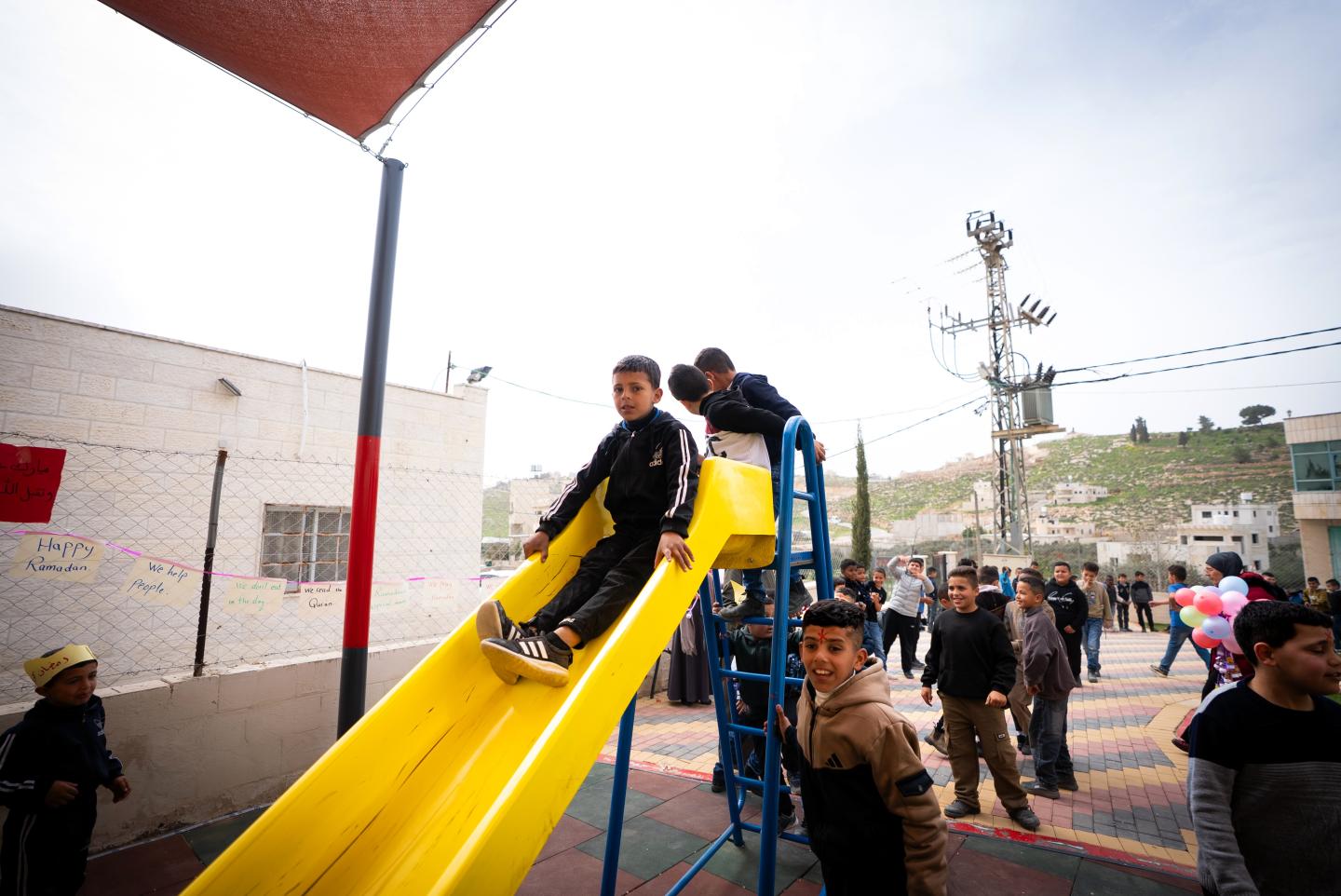
"We don't fight like before," says Amer, now 9. "We make a line, and we wait. We wait because everyone deserves a turn."
Ten-year-old Fares describes a moment that speaks volumes: "Sometimes I really want to go first, but when I see smaller children, I step back. They can't push like us. So we let them go first."
These are not lessons anyone has explicitly taught. "What makes this transformation even more powerful is that it is happening naturally," Mr. Atef observes. "No one tells them to organise themselves. They learned it on their own, through play."
The results are a quiet but unmistakable shift in character. "If someone tries to skip the line, we tell them it's wrong," Fares says. "This place is for all of us."
Mr. Atef smiles as he watches them: "This place unites children. It has strengthened cooperation, respect, and kindness. They are learning patience, fairness, and empathy — life lessons that will stay with them forever."
Reaching Children Across the West Bank
What is unfolding in this village is not an isolated story. Through this Giro 555-funded project, 10 safe, child-friendly, and accessible play areas across the West Bank have been rehabilitated or newly created, providing approximately 7,200 children with gender-sensitive spaces for recreation, learning, and social development.
Amer runs past, calling his friends. Fares waits his turn, watching the younger children go first. In this village, play has become the language through which a generation is learning to heal — and to belong.