
Still a Mother: How Esraa Found Her Way Back to Her Sons

After the death of her six-year-old daughter, grief consumed Esraa, a 32-year-old mother from South Hebron in the West Bank. Overwhelmed by sadness and anger, the woman who once played for hours with her children had become withdrawn, irritable and struggling with even the smallest of their requests.
"I could not hug or kiss them. I could not bear the sound of them playing, their voices, or even hearing them call for me," says Esraa. At night, she was filled with guilt, wondering whether she still deserved to be a mother.
Esraa used to see herself as blessed. In 2018, while already the mother of two beautiful sons, Esraa gave birth to a little girl she named Saba. "The day she was born, I felt as though I had brought a queen into our home," she recalls. "She captured our hearts from the first moment. She was the most beautiful gift from God."
But when Saba was around 18 months old, she was diagnosed with cerebellar atrophy, a progressive degenerative condition that gradually affected physical and cognitive abilities, including her movement, speech, hearing and sight.
Desperate to find a treatment, Esraa left her sons in her sister's care and travelled with Saba to Egypt. For seven months, she visited every single doctor and physiotherapy centre she could afford. Each time the diagnosis would be the same: there was no treatment that could stop the disease.
When Esraa realised that her time with Saba was limited, she decided she would make as many memories with her daughter as possible. She took her on the pilgrimage to Mecca, carrying her in her arms as they walked for hours. She brought her to Al-Aqsa Mosque. "I did not feel tired," she says. "I was thinking about the day that would come when I would miss carrying her."
As Saba's condition deteriorated, she could no longer see and only recognised her mother by her voice. On 13 September 2024, Saba died at the age of six. Everyone around Esraa cried, but she could not.
"I told myself: You were always afraid your daughter would die. Now she has died, and you are not crying. I felt that I had no emotions," said Esraa. She initially tried attending psychosocial support meetings, but even the simplest steps felt beyond her emotional capacity, and she withdrew, cutting herself off from her sons and family.
Around a year later, Esraa became pregnant again. However, after medical tests showed that the foetus had a serious health condition, doctors advised that the pregnancy be terminated.
While under anaesthesia, Esraa called for her sons. When she was told what had happened, something shifted inside her. The love she thought she had lost was still there, buried. "I thought, I have to try to be the mother my sons need again. I have to come back to them."
Esraa took part in five sessions of the Group Problem Management Plus approach facilitated by World Vision. The sessions didn't try to erase her grief or ask her to forget Saba. Instead, they helped her understand that withdrawing from her sons did not mean she had stopped loving them. Fear, exhaustion and loss had run her life for years, but she was now fighting back.
Through slow breathing, behavioural activation, structured problem-solving and strengthening social support, Esraa began taking small, manageable steps. She learned to pause before reacting, replace shouting with conversation, listen to her sons and gradually participate in their daily lives again.
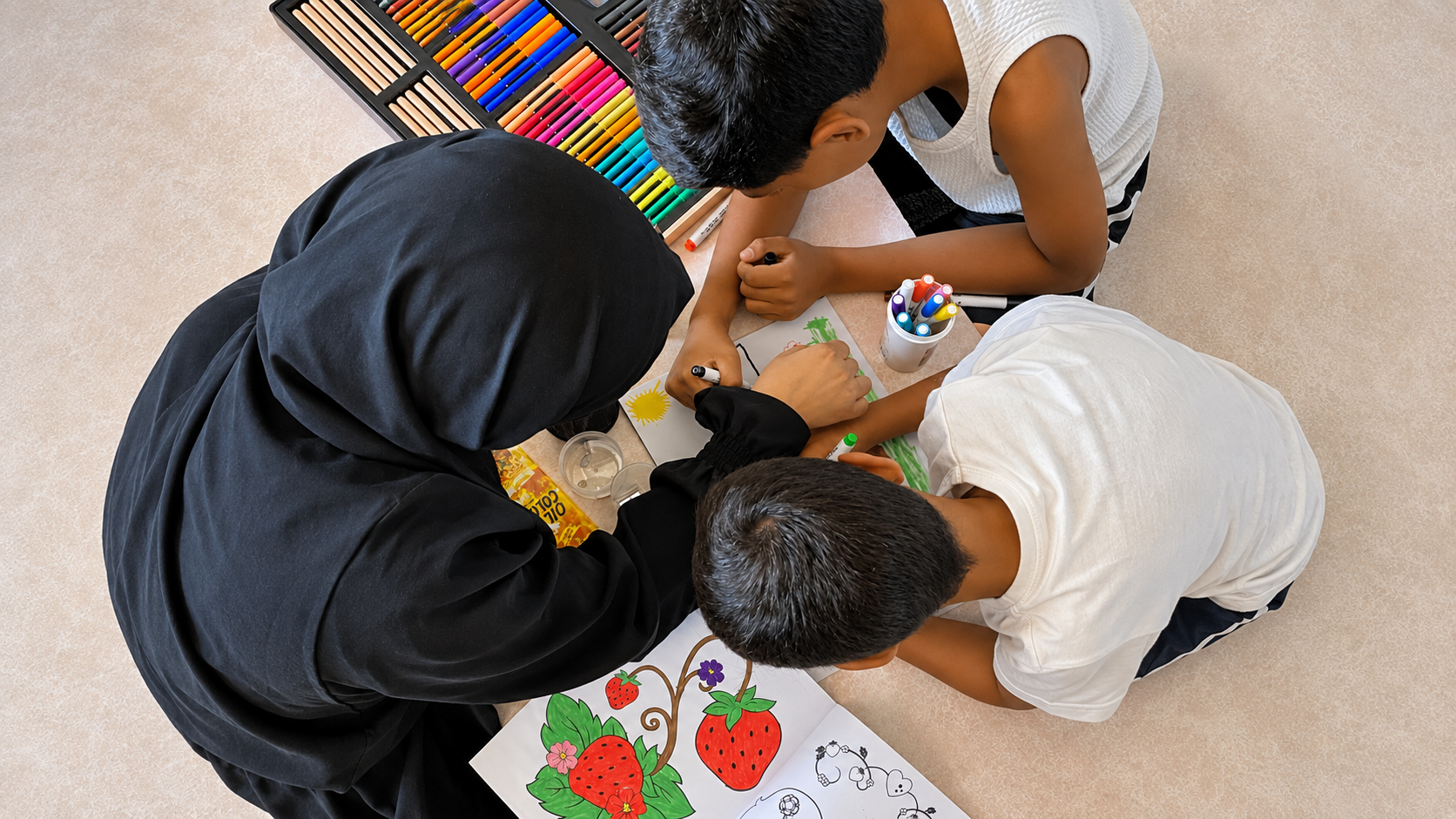
One day, Esraa returned from the gym to find that her sons had prepared her favourite breakfast, tidied their room and the house, and even organised the laundry. Encouraged by her efforts, they were trying in their own way to reach their mother again. Overwhelmed by love, she hugged them and felt that she had finally returned to them.
Esraa knows her recovery is not a transformation that has ended. It is a path she continues to walk, one small step at a time. Her grief is still there, but it no longer controls every moment of her life. She has learned how to find the strength to listen and be supportive, caring and involved in the lives of her two sons.
"Every day is a lot of hard work on myself to continue the journey," she says. "But in the end, this is what being a mother is all about."
Esraa's journey is part of the 'Enhanced Access to Mental Health and Psychosocial Support Services for Vulnerable Communities in Qalqilya and South Hebron Area Programmes' project, implemented by World Vision with funding from World Vision Taiwan.
Through Group Problem Management Plus sessions, the project has supported more than 450 caregivers to manage stress, address daily problems, strengthen social support and rebuild relationships with their children. In 2025, World Vision's mental health and psychosocial support programmes across the West Bank reached around 30,000 children and 8,100 caregivers.