
Shoes for Smiles: Partnership Puts 10,000 Vulnerable Children on the Path to School

For many children in rural Zambia, the walk to school is not a simple journey. It begins before sunrise, stretches across kilometres of rough terrain, and ends, if the child arrives at all, with feet that are cut, blistered, or caked in mud. For families living on the margins, a pair of shoes is not a small thing. It is often the difference between a child who goes to school and one who stays home.
Zambia's government made a significant commitment to children when it introduced the Free Education Policy, removing school fees that had long kept vulnerable children out of classrooms. Enrolment numbers rose. Doors that had been closed to the poorest households opened. Yet for many families, the cost of education never truly disappeared, it simply shifted. Uniforms, books, and shoes remained out of reach, and for children walking long distances on unpaved roads, the absence of shoes became one of the most persistent barriers standing between them and the classroom.
It is a barrier that a new partnership is working to address.
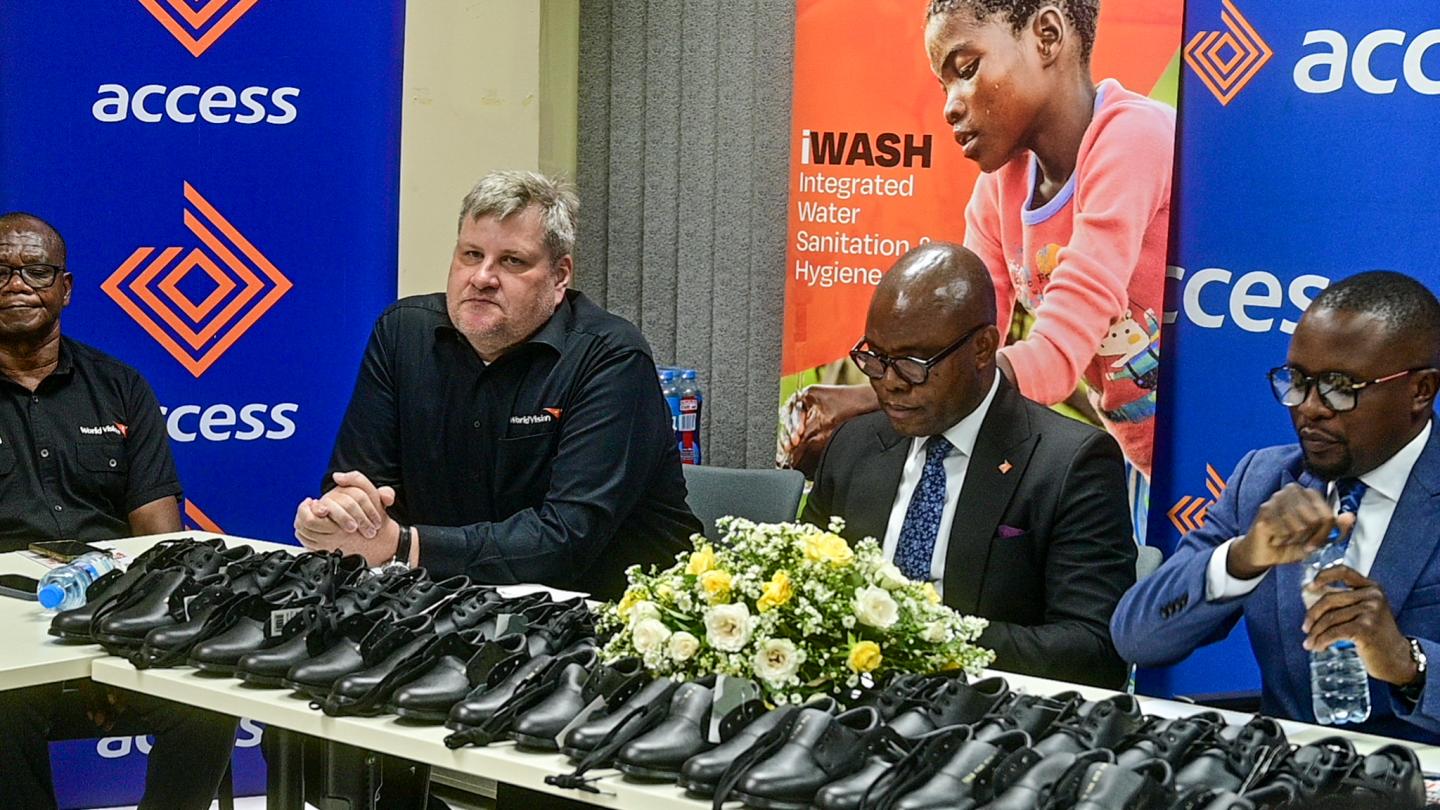
Village Steps Foundation, Access Bank Zambia, World Vision Zambia, and Zamshu have joined forces under the Shoes for Smiles: Walk This Way campaign, an initiative aimed at placing 10,000 pairs of shoes on the feet of vulnerable children in government schools across rural Zambia. Beyond protecting feet, the campaign is designed to restore something less visible but equally important: dignity, confidence, and the belief that school is a place where a child belongs.
Speaking at the handover ceremony, Access Bank Zambia Chief Executive Officer and Managing Director Dr. Iheanyi Nwogu said the bank's involvement reflects a wider commitment to the communities it serves.
"Providing school shoes to vulnerable children is not only restoring dignity," Dr. Nwogu said, "but also giving them hope, confidence, and belief in a brighter future."
World Vision Zambia National Director Marc Nosbach drew a direct line between the donation and what children experience on the ground.
"For many children, the lack of shoes remains a major barrier to accessing education," Mr. Nosbach said. "Even where school fees have been removed, children are still walking kilometres to school on rough roads without adequate footwear. This donation will help reduce that challenge, one pair at a time."
He noted that distribution will prioritise the most vulnerable children in rural communities, those for whom the daily walk to school is longest and the resources at home are most limited.
Village Steps Regional Director Emmanuel Kunda said the campaign reaches beyond footwear.
"This is about restoring hope, dignity, and confidence among vulnerable children," he said, adding a call for corporate institutions and individuals to join the effort and help create lasting change in children's lives.
Zamshu General Manager Mulwanda Sichone said the company takes pride in producing quality shoes for children who need them most.
"These shoes will help build confidence among children and give them an opportunity to work towards a better future," Mr. Sichone said, echoing the call for more organisations and individuals to come alongside the campaign and extend its reach.
Zambia has made meaningful progress in opening school doors to every child. Ensuring those children walk through them safely, comfortably, and with their heads held high is the work this partnership has taken on, one pair at a time.