
How Citizen Voice and Action Training Transformed a Refugee into a Community Advocate in Palabek settlement

In a modest classroom tucked inside Palabek Refugee Settlement in northern Uganda, a quiet transformation is unfolding.
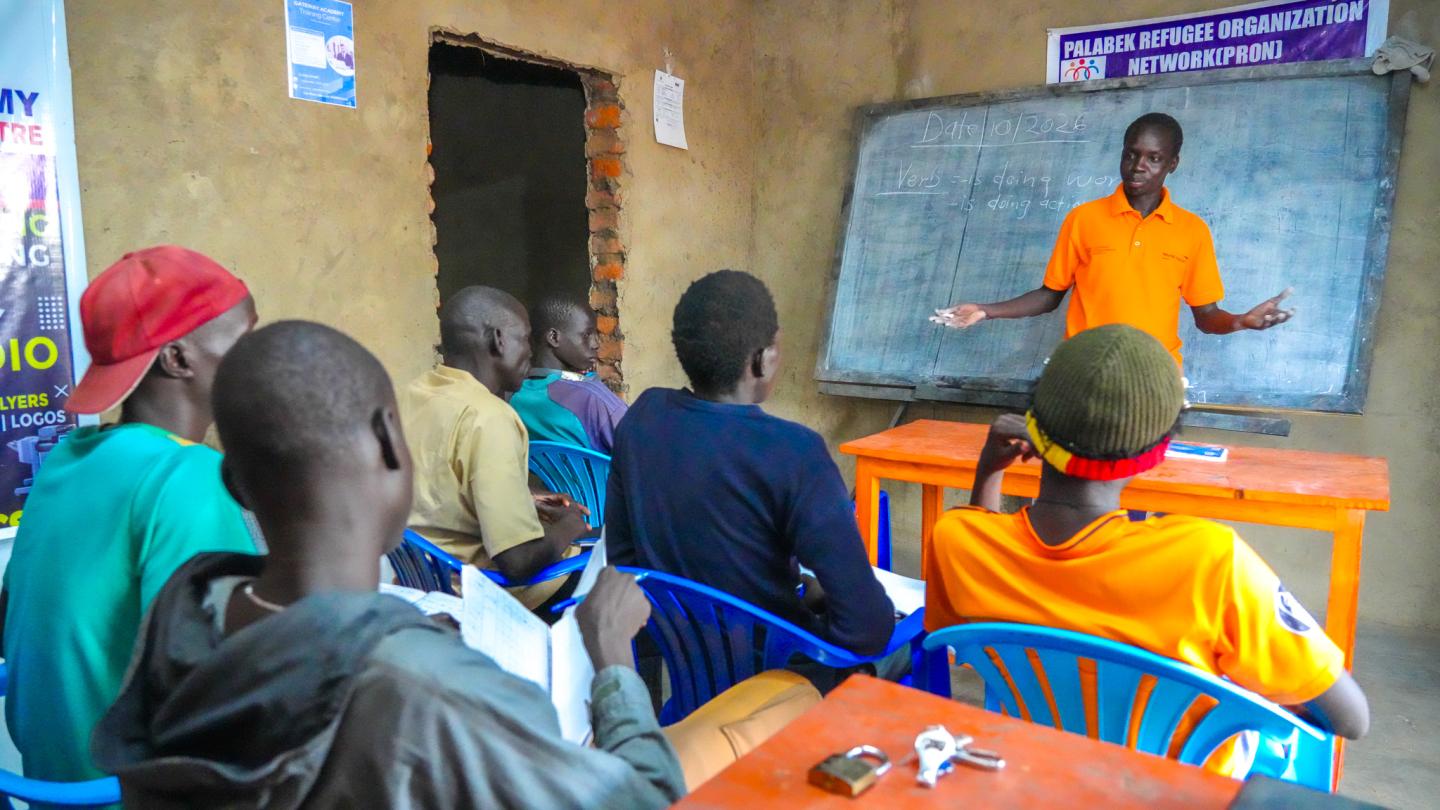
On one side of the room, John Aurthur Kuol writes English words neatly on a blackboard. On the other, South Sudanese refugees lean over worn notebooks and scraps of paper, carefully copying each word as they learn to navigate a new language and a new life.
For many in the room, English is more than a subject. It is a bridge to services, communication, and opportunity in an unfamiliar environment. Back home, they relied on Arabic and local languages to communicate. “Without English, it is difficult to express yourself,” John says.
John understands this struggle deeply. He fled conflict in South Sudan in 2019 with his family, arriving at Palabek Refugee Settlement with little certainty about the future. Like many refugees, the early days were defined by waiting and searching for purpose. “I had no work and spent most of my time idle,” he recalls.
That changed when he was elected as a refugee leader, a voluntary role that connected him to community structures and humanitarian partners. The position exposed him to the realities facing fellow refugees from poverty and unemployment to cases of gender-based violence and limited access to services. “I could see many problems, but I did not know how to address them,” he says.
Everything shifted when John received training under the Citizen Voice and Action (CVA) model, introduced by World Vision. The CVA approach equips communities with practical tools to identify issues affecting them, engage service providers and local leaders, and advocate for lasting solutions.
“Before CVA, we only saw problems,” John explains. “After the training, we knew how to respond.” The training marked a turning point not just for John, but for the wider community. Using CVA tools, he and other refugees began holding structured community dialogues, documenting challenges, and engaging leaders more intentionally.
One of the most urgent issues they addressed was gender-based violence, which John says was often rooted in deep-seated cultural norms. “We started raising awareness and encouraging people to report cases,” he says. “Some issues were resolved within the community, while serious cases were referred to authorities.”
Over time, these efforts began to shift attitudes and strengthen trust within the settlement. More community members started speaking out, and reporting of protection concerns increased.
In October 2024, John founded the Palabek Refugee-Led Organisation Network, bringing together community-based groups to strengthen advocacy and coordination. The network focuses on preventing sexual and gender-based violence, promoting sexual and reproductive health, and supporting community development initiatives.
“In South Sudan, cultural norms often do not value women, and gender roles are strictly divided,” John says. “Some men even believe beating women is a form of discipline. I wanted to change this mindset.”
Through the network, community members are now promoting positive gender roles, encouraging women’s participation, and working to build a more inclusive environment.
The impact, according to community members, is becoming visible. Reports of abuse are increasingly being addressed, families are engaging in small-scale economic activities, and more children are attending informal learning sessions including English classes led by John.
“My organisation has helped bring services closer to the people,” he says. “There is growing trust. Child protection cases are being reported, and families are becoming more empowered.”
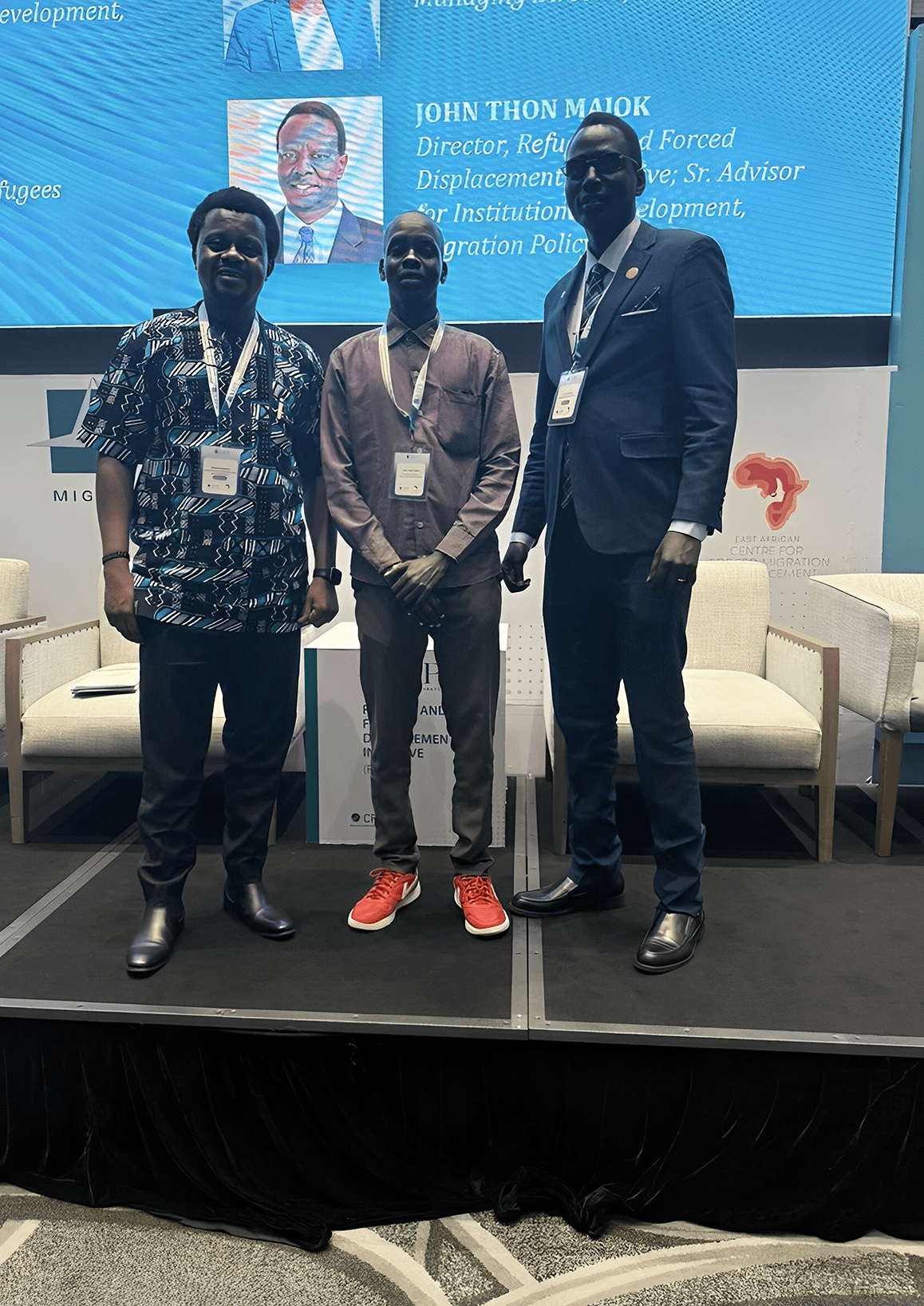
Beyond the community changes, John says CVA has also reshaped him personally. “I have gained confidence to speak and engage leaders,” he says.
Today, he works closely with local authorities and partner organisations to amplify refugee voices and advocate for improved services across the settlement.
His vision extends beyond Palabek. He hopes to expand his work to other refugee settlements in Uganda and eventually contribute to similar efforts in South Sudan.
“Communities need to be empowered to solve their own problems,” he says. “When people are given the tools, they can create change.” Back in the classroom, the lesson continues. Words are written, erased, and written again. Pens move steadily across paper as learners practice, correct, and try once more.
It is a simple routine but one that reflects something far greater. In Palabek, CVA has not only equipped a community with tools for accountability. It has helped unlock voices, build confidence, and turn experience into action.
By: Derrick Kyatuka, Communications manager, World Vision Uganda