Bringing Nature to Children: A Mobile Environmental Museum Inspires Hope in Vulnerable West Bank Communities
Environmental education is a cornerstone of long‑term environmental protection. When children understand the natural world, they are more likely to adopt sustainable behaviours and protect the resources their communities depend on. This is the mission of the Palestine Museum of Natural History (PMNH) in Bethlehem—a scientific institution whose collections preserve the rich natural heritage of the region, from animal and plant specimens to geological and climatological records. Through its work, the museum aims to share the beauty and diversity of nature while promoting conservation of the fragile environment of the occupied Palestinian territory.
This mission has never been more urgent. The Palestinian territory is among the places most vulnerable to climate change. Limited natural resources, severe water scarcity, soil degradation, and environmental contamination—combined with restricted access to land and constrained financial capacity—make communities increasingly susceptible to environmental shocks.
Yet, for many families in the West Bank, visiting the museum itself is nearly impossible. Movement restrictions, economic hardships, and increasing violence limit mobility. With daily life marked by so many challenges, families have little time to think about long‑term environmental issues.
 A Museum That Comes to the Children
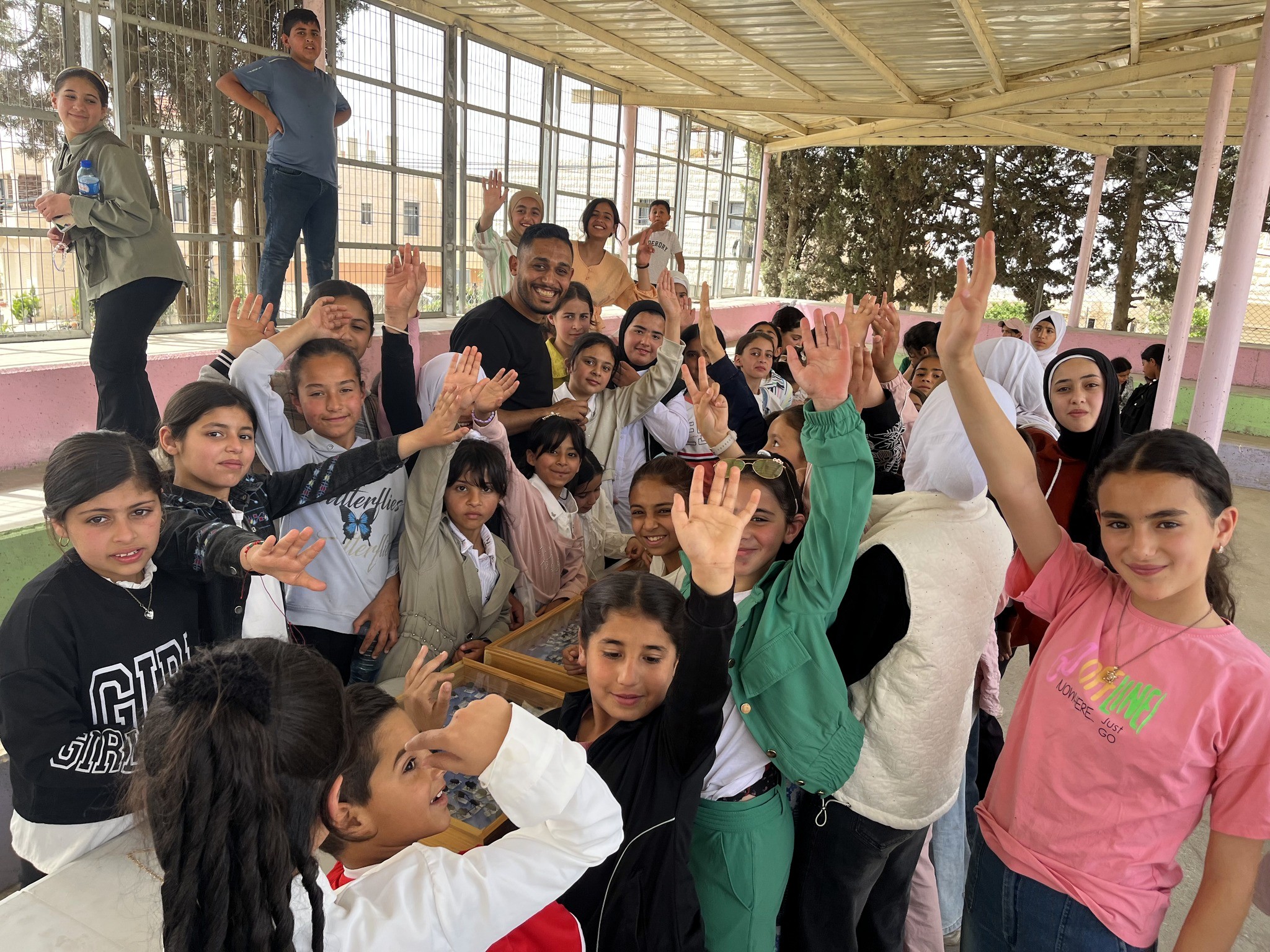
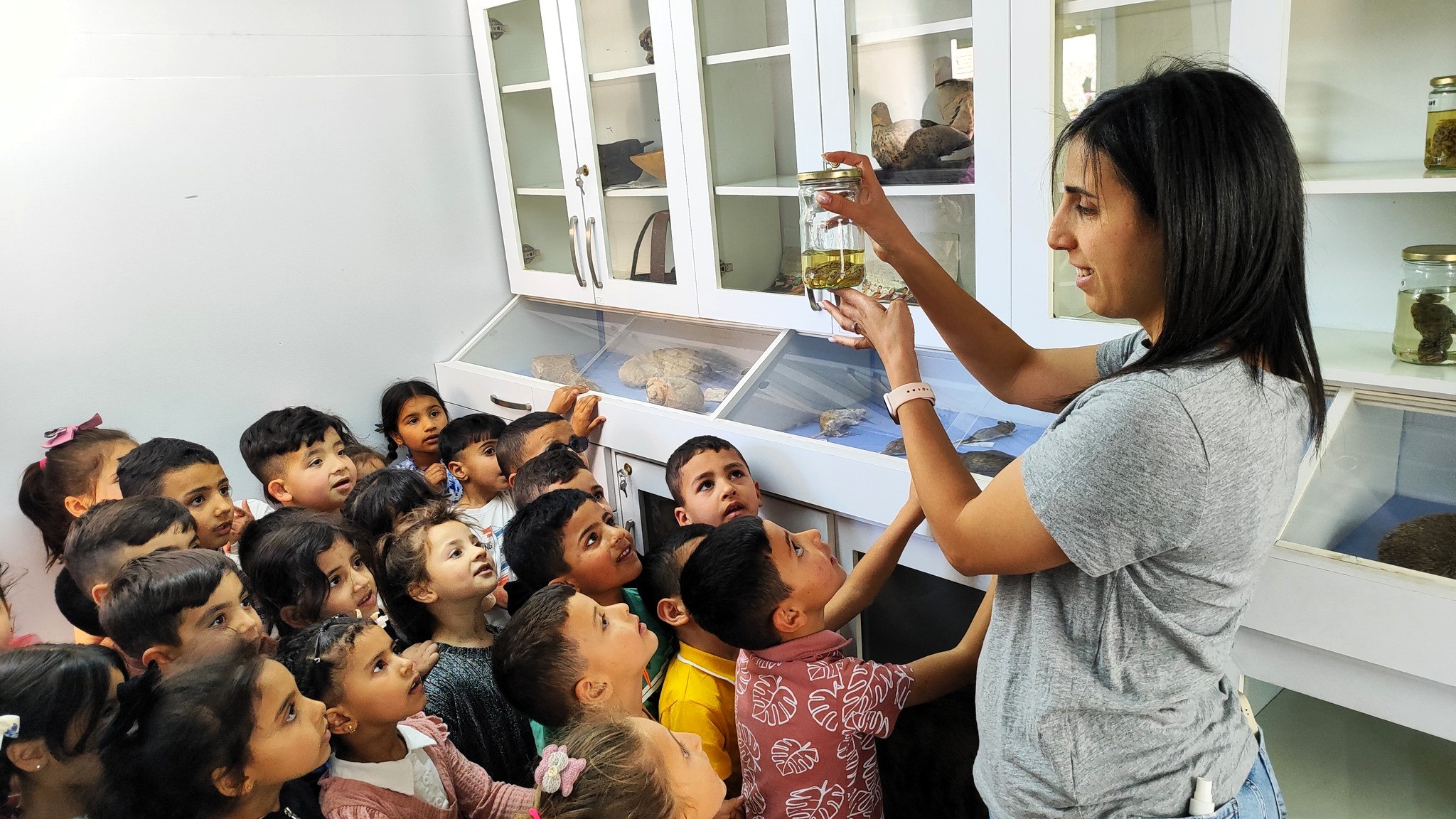
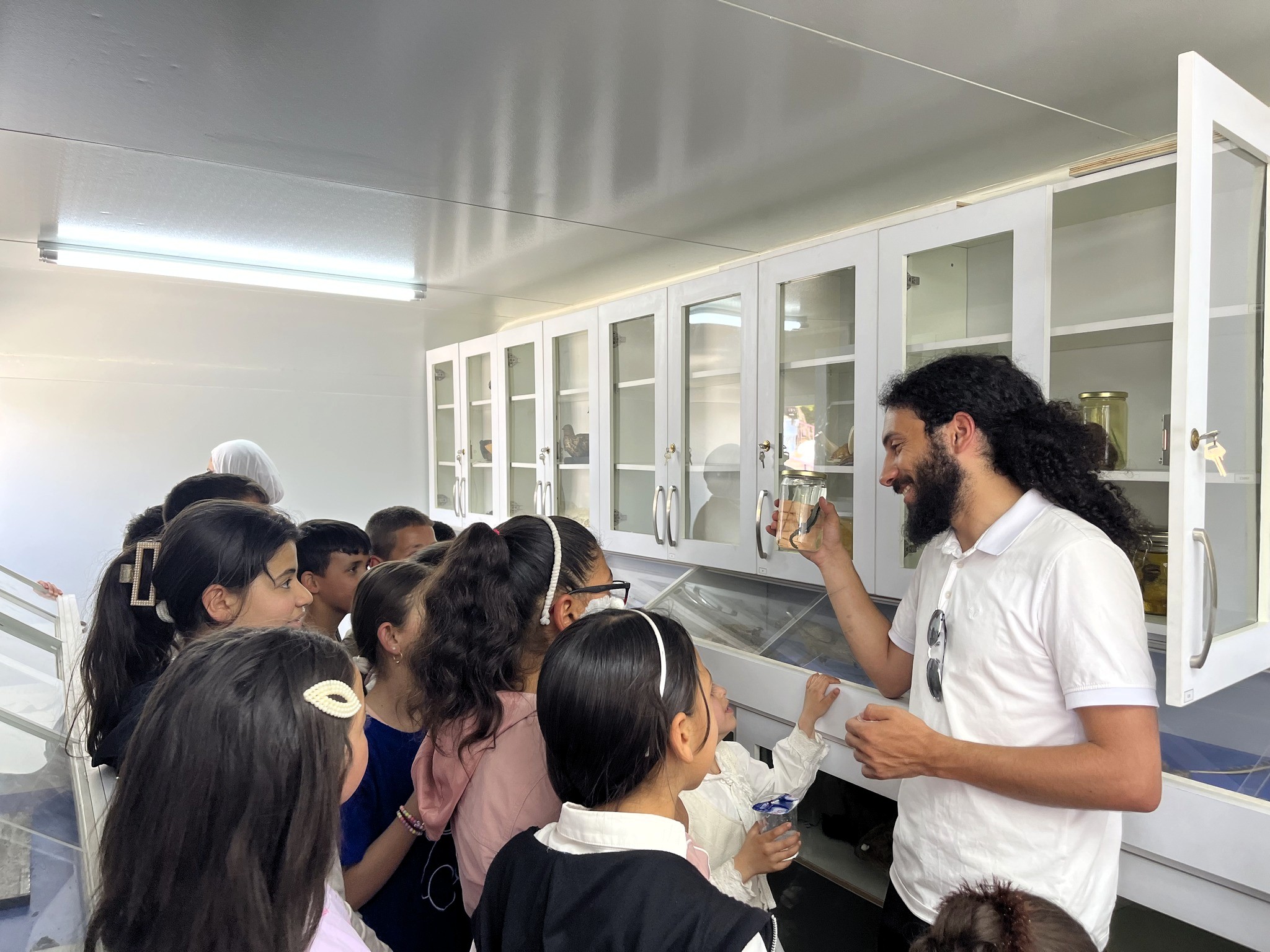
To overcome these barriers, the Green Palestine Project—in partnership with the Palestine Institute for Biodiversity and Sustainability at Bethlehem University—brought the Mobile Environmental Museum to 40 vulnerable communities across the West Bank in 2025. Through 80 hands‑on visits, the Mobile Museum reached more than 10,000 children and 1,200 adults, offering an engaging introduction to Palestine’s biodiversity, natural heritage, and climate challenges.
Children explored animal and plant specimens, learned about endangered species, and discovered how small, everyday actions can help protect the environment. Outdoor learning stations introduced the geological history of Palestine, soil types, and the ecological role of insects and invertebrates.
“I didn’t know we have so many animals and plants in Palestine. Now I want to protect them”, said Bushra*, a 12‑year‑old girl from Nablus governorate. “I learned that even small things like not throwing plastic can save animals”, added Ayham*, a 10‑year‑old boy from Salfit governorate.
 Children Inspired to Take Action
A survey conducted among the children participating shows that this approach is working. Following the visits, 85% of children were able to correctly identify key environmental risks, 93% to identify practical mitigation solutions.
Many children expressed clear intentions to adopt environmentally friendly behaviours:
44.8% plan to plant trees or care for plants
27.4% will reduce plastic use
26.6% aim to share what they learned with others
“I liked seeing the insects and learning how they help nature”, said Dua*, a 9‑year‑old girl from Qalqiliya governorate. “The museum made me want to plant trees at home”, added Nader*, a 14‑year‑old boy from Hebron governorate.
Building Climate‑Resilient Communities
The visits of the Mobile Environmental Museum are part of the Green Palestine Project, implemented by World Vision and MA’AN Development Center and funded by the German Federal Ministry for Economic Cooperation and Development (BMZ). The project aims to strengthen the resilience of communities in Areas B and C of the West Bank to climate change and environmental hazards.
By bringing nature directly to children in remote and underserved communities, the Mobile Museum is nurturing a generation of young environmental stewards—children who understand their natural heritage and feel empowered to protect it.
*Names were changed for this article.