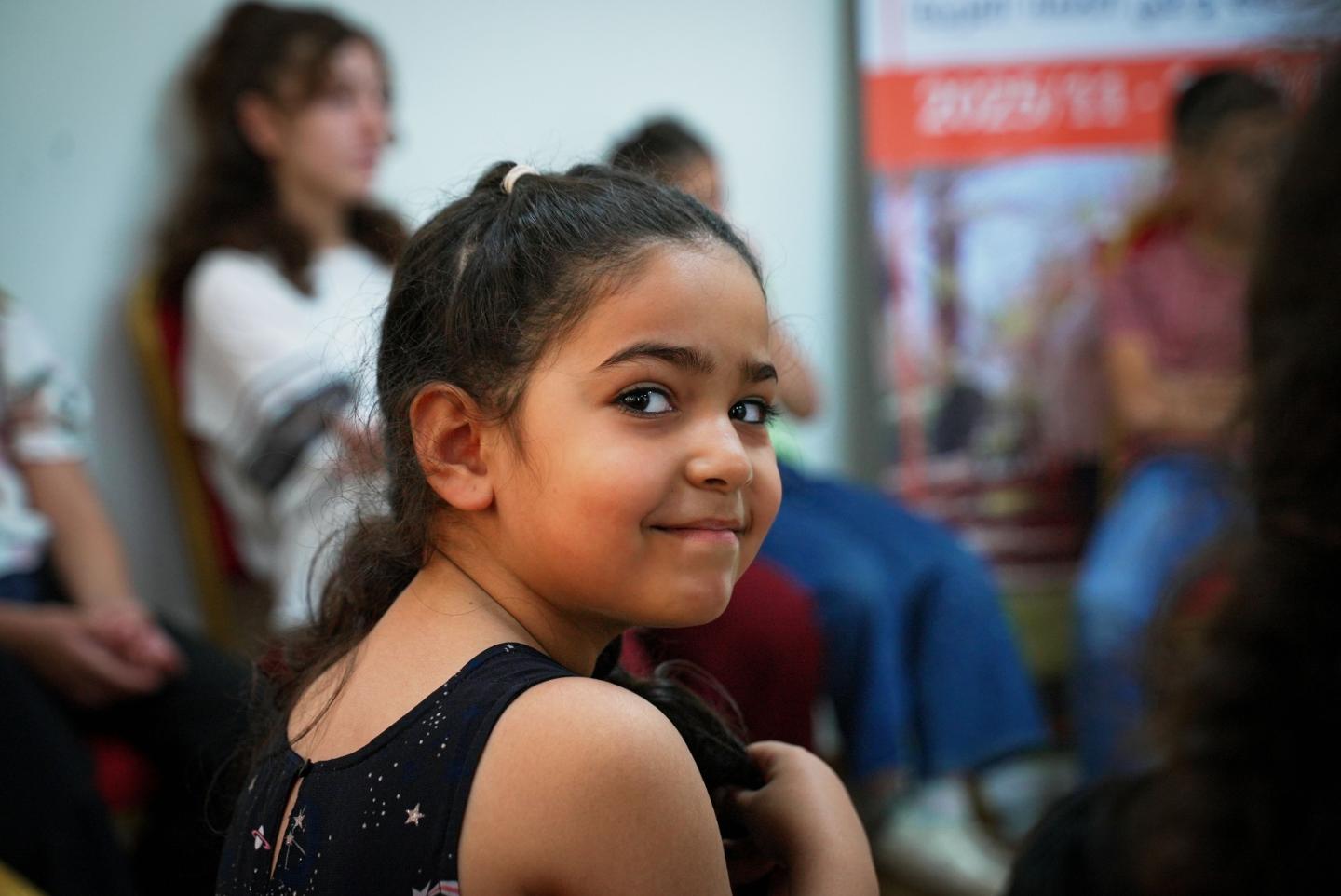
Razan's Story: When Friends Become a Lifeline

At 12 years old, Razan is barely able to remember a time when life in her village felt simple: walking to school, greeting neighbours, spending time with friends, and returning home to family at the end of the day, not worrying about risks of violence or if there will be food on the table. That fragile sense of normality shattered in October 2023. Children now grow up under constant stress — escalating violence, movement restrictions, and economic hardship have created an atmosphere of uncertainty that reaches into everyday life, shaping how they feel, cope, and relate to one another.
Palestinian children have lived under conditions of chronic stress, insecurity, and trauma for generations. Pre-existing research documented high rates of anxiety, PTSD, and depression long before October 2023, driven by the normalised violence, movement restrictions, and economic precarity. A 2022 World Bank study found widespread exposure to political violence among Palestinian children and documented strong links between that exposure and elevated PTSD symptoms. Since October 2023, these pre-existing conditions have been dramatically compounded. World Vision's assessment of Palestinian children in the West Bank found that 70% exhibit moderate to very severe PTSD symptoms. A World Vision study conducted at the end of 2024 found that 27% of families reported negative behavioural changes in their children since October 2023, including increased aggression, withdrawal, and acute anxiety.
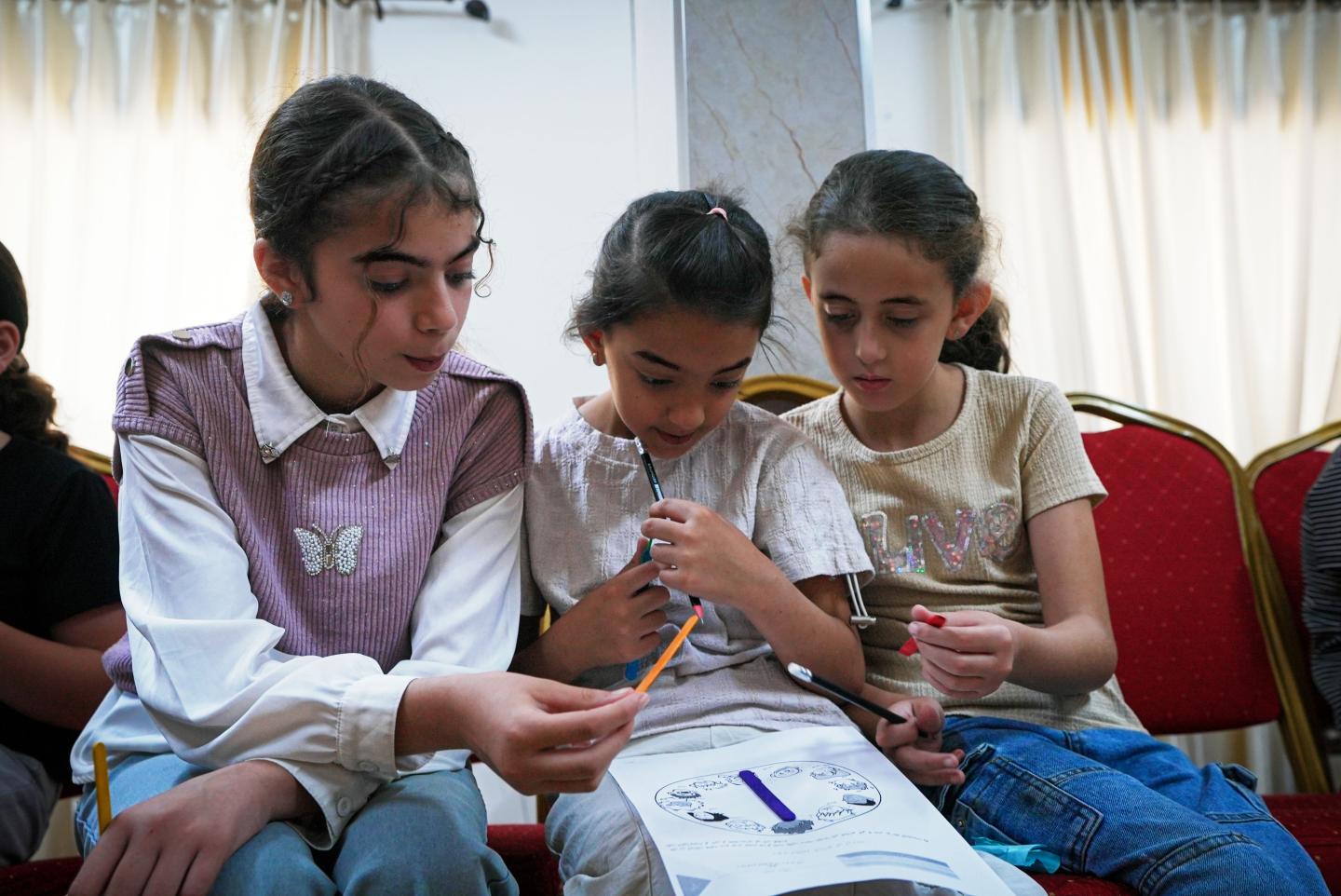
Unfortunately, mental health support is rare in the West Bank and children or their parents have often to process their feelings by themselves. Even among close friends, fear, sadness, and worry can remain unspoken. Through the project "Enhanced Access to Mental Health and Psychosocial Support (MHPSS) Services for Vulnerable Communities in Qalqilya and South Hebron APs", World Vision's I Support My Friend (ISMF) initiative aims to fill this gap and provide support deeply needed. Its objective is to help children and adolescents develop the skills to support one another with empathy, care, and understanding.
Before joining the training, Razan understood support mainly as offering advice or kind words. The sessions helped her discover that true support often begins more quietly. Reflecting on the experience, she shared that the training "added a new treasure to my knowledge" and taught her more about "listening, observation, empathy, and guidance when a problem occurs." She also noted that it strengthened her confidence and made her more aware of how to respond when others are going through difficult moments.
What touched Razan most was realising that friendship is not only about speaking — it is also about helping someone feel safe. As she explained, "Our role is not limited to supporting our friends with words; it goes beyond that to being a source of safety and comfort for them in their hardest moments." Through the training, she learned "how to listen with awareness without making judgements" and "how to show real empathy that makes the other person feel they are not alone."
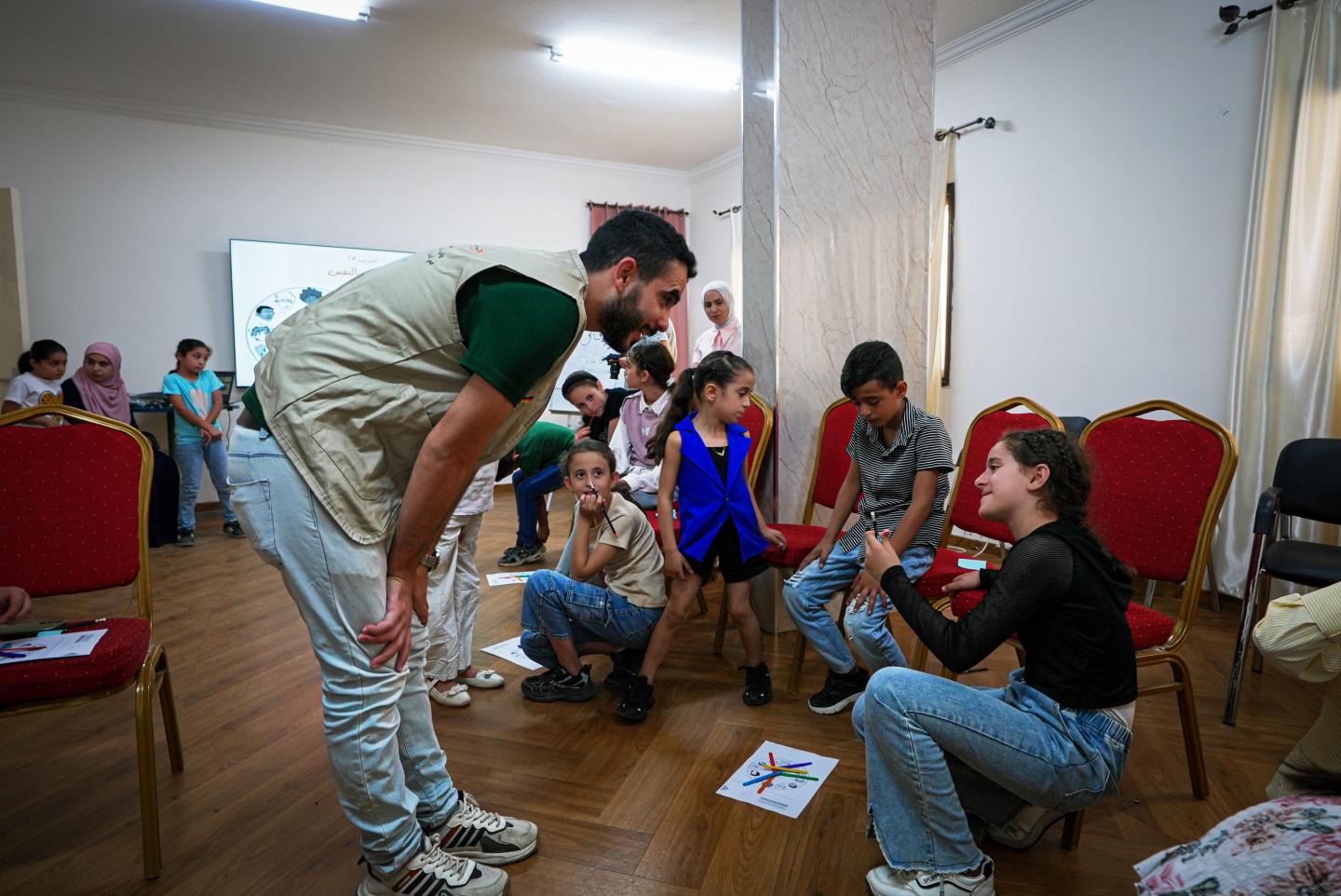
These lessons soon became part of her daily life. Razan recalled a moment when a friend was facing a difficult situation. Instead of rushing to speak or trying to solve the problem immediately, she chose to sit beside her and listen. "I sat next to her and listened to her without pressuring her or offering ready-made solutions," she said. That quiet act of care made a real difference. "I realised that my calm and supportive presence helped her express herself and feel relieved," she reflected.
From 2023 to 2026, the project reached more than 4,800 children through the ISMF activity and more than 480 caregivers through the Group Problem Management Plus (GPM+) intervention. As children and caregivers gain practical tools to cope with distress, strengthen relationships, and support one another, they are helping to build more resilient and compassionate communities across Qalqilya and South Hebron.
Data from the project shows that this approach is working. World Vision's MHPSS interventions in the West Bank, of which ISMF is a core component, have contributed to a 21% reduction in psychological distress among targeted adolescents and caregivers, with half of those previously experiencing distress reporting improved daily functioning.
For Razan, the training was more than a programme — it was a turning point in how she understands friendship, care, and her own role among her peers. "The training changed me for the better from within," she said. It helped her see that empathy is not a weakness, and that even a small, quiet act of presence can help someone feel seen, heard, and less alone.