
Hanan: A Mother’s Story from Strictness to Understanding

Across the West Bank, many parents are carrying the weight of daily life while trying to protect their children from the pressures around them. Movement restrictions, rising costs, limited services, school disruptions and constant uncertainty have placed a heavy emotional burden on families. These pressures often enter the home, affecting the way parents speak, react and connect with their children.
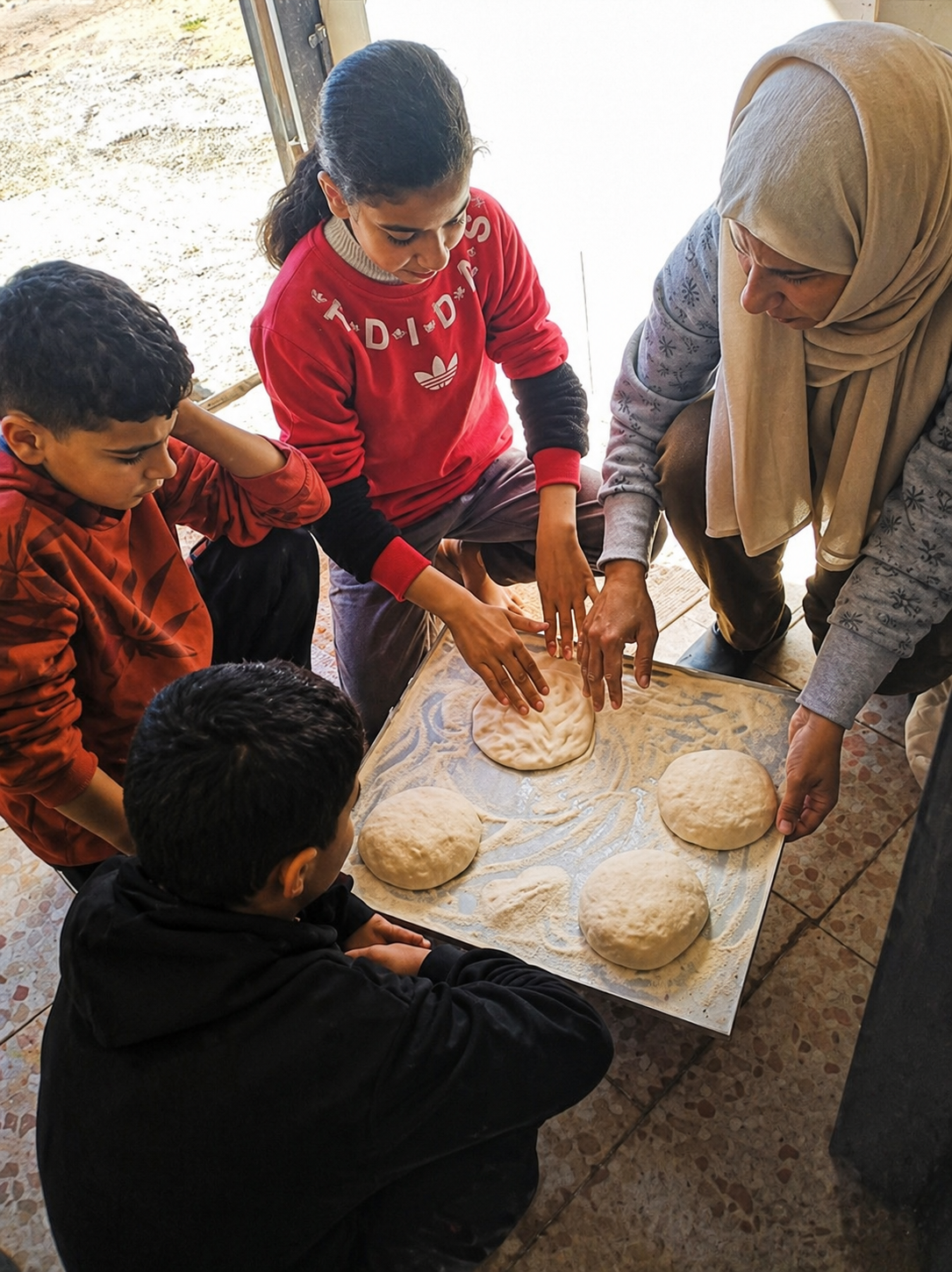
For Hanan, a 42-year-old mother of five and a midwife living south in the West Bank, these pressures were part of everyday life. As a midwife, she is used to caring for others with patience and responsibility. Yet at home, often tired and carrying the weight of daily challenges, she faced another responsibility: raising her three daughters and two sons to be kind, respectful and strong.
For years, Hanan believed that strictness was the right way to guide her children. “We thought we were doing the right thing,” Hanan says. “In our minds, strictness meant love. If we did not correct them firmly, who would? If we did not raise our voices, how would they listen?”
Her husband shared the same belief. Like many parents around them, they had grown up seeing discipline expressed through shouting, commands and firm control. Their home was organised, and the children listened, but Hanan slowly began to realise that obedience did not always mean closeness. “There were days when the house felt heavy,” she recalls. “The children would listen, but there was distance between us. They were quiet, but not open. They were close to us but not truly connected.”
The change began when Hanan joined the Faith and Development Project (CARE), participating in the Celebrating Families workshop and Parent Support Group sessions. At first, she expected to learn practical ways to manage her children’s behaviour. Instead, the sessions gave her a safe space to reflect on herself as a parent. “I went thinking I might learn a few tips,” she says. “I did not expect that I would have to look at myself.”
During the sessions, Hanan joined other parents in discussing children’s emotions, positive communication and the impact of harsh discipline on children’s wellbeing. For the first time, she began to think not only about how her children behaved, but also about how they felt. “When we started talking about children’s feelings, something moved inside me,” she shares. “I asked myself: when was the last time I truly listened to my children? Not to correct them, but to understand them?”
One message stayed deeply with her. “They told us, ‘Your children need your hearts more than your authority.’ That sentence stayed with me,” Hanan says.
Soon after, Hanan tried a different approach at home. When her son made a mistake, she stopped herself from reacting in the way she normally would. “I did not shout,” she says. “I sat next to him and asked, ‘What happened?’ He looked at me in surprise, as if he did not recognise this version of me.”
Then something unexpected happened. “He started talking. Really talking,” Hanan recalls. “And I realised that it was not that my children did not want to share before. It was that they were afraid.”
The change was not immediate, and it was not always easy. Hanan had to pause, control her reactions and remind herself to respond with patience, even on difficult days. But slowly, the atmosphere at home began to soften. “At first, it felt strange,” she admits. “I had to stop myself from reacting the old way. But little by little, we began to understand each other. We started sitting together more, laughing more. Even simple things, like asking for their opinions, made a difference.”
Her husband also became part of the change. After each session, Hanan shared what she had learned, and together they reflected on how they could support their children differently. “We talked together after every session,” Hanan says. “We told each other, ‘If we want our children to change, we must change first.’”
Today, Hanan describes her home with a different kind of pride. The challenges outside have not disappeared, but inside the home, something important has changed. “Our home is not just quiet anymore, it is full of warmth,” she says. “There is love in the way we speak and in the way we listen. My children come to me now. They tell me about their day, their worries and their dreams.”
For Hanan, the sessions did more than teach new parenting techniques. They helped her rediscover the emotional connection at the heart of family life. “I used to think being a strong parent meant being firm and in control,” she says. “Now I know that real strength is being gentle, being present and being understanding.”
Looking back, Hanan sees the journey as a transformation not only in her children, but in herself. “The biggest change was not in my children,” she reflects. “It was in me. And when I changed, everything around me changed.”
Hanan’s story is part of a wider journey of change among families supported through the Faith and Development Project (CARE). Last year, 185 other parents took part in Celebrating Families workshops. This year, 117 parents have participated in CARE Project activities, including Celebrating Families workshops and Parent Support Group meetings, helping parents strengthen positive communication, build warmer relationships with their children and create safer, more supportive homes.
Through the Faith and Development Project (CARE), Hanan’s journey shows how parenting support can help families move from control to connection. Her story is a reminder that even in the midst of pressure, uncertainty and daily challenges, small changes in the way parents listen, speak and respond can bring warmth back into the home and strengthen the bonds that help children feel safe, loved and understood.