
Household clusters transform lives in Uganda

On the slopes of a hilly village in Kamwenge District, Uganda, World Vision is equipping families with tools to overcome poverty. Through household clusters, women and their families are now set on a course to thrive, not just survive.
Among the women in the 25 families that form the Dove household cluster is 54-year-old Dinah, the grandmother and primary caretaker of 12-year-old Javira and his three siblings. In her community, she is commonly referred to as the woman with a big heart.
Dinah was just like any other woman in her village, doing her best to put food on the table and praying that her children become responsible citizens.
“When I was a child, I was not allowed to attend school since school was considered to be [for] the boys,” says Dinah, “my dream is that all my children and grandchildren in my care get a decent education,” she adds.
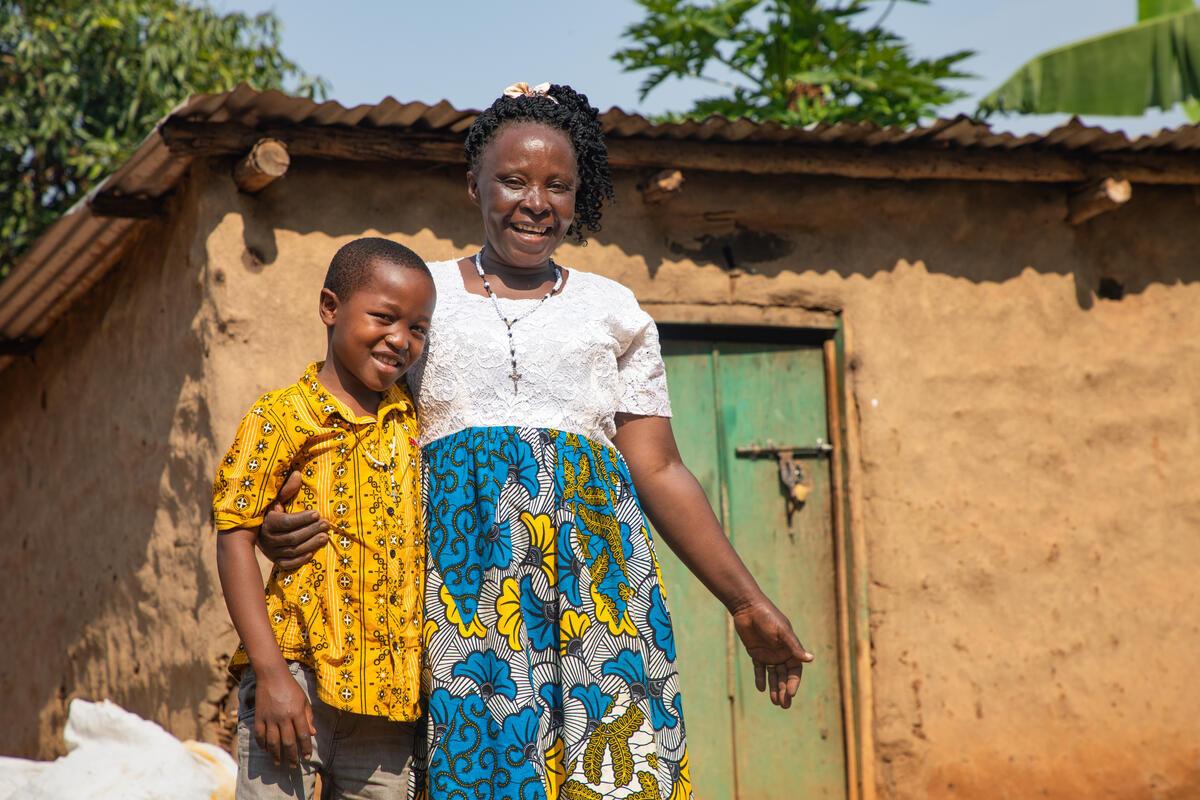
Dinah was a peasant farmer growing corn, cassava, and beans for her family. When she had excess, she would sell it to raise income for her home, but because of the rudimentary agricultural practices she used, her harvest never yielded enough to afford education and healthcare, regardless of the effort she put into her farm.
Dinah tried everything, including involving her young grandchildren in farmwork, but it was all in vain.
“I knew involving children in farmwork was like robbing their childhood, [but] I needed to do all that was possible to survive,” says Dinah. “I always wanted to provide a better life for my family, but it was never easy. It felt like I was making two steps forward and four steps backwards,” she adds.
More than twice, Dinah’s grandchild Javira was diagnosed with malnutrition, a condition that was strange to her. For the first time, she thought her neighbours were using witchcraft to kill her little grandchild and destroy her life.
When Javira turned 3-years-old, Dinah desired for her little grandchild to start school, but she struggled to raise money for school fees and scholastic materials. This forced Javira to wait a full year as Dinah struggled to save up enough money to take him to school.
Each time Dinah tried to borrow money from moneylenders in her village to send Javira to school, they would charge exorbitant interest rates of 100 to 150 per cent.
She says, “Whenever I had pressing needs, I had to sell my produce prematurely to raise money for my family.” Dinah’s premature produce fetched low prices, “but it was better than going through the stress of paying high interest rates from the money lenders,” she says.
When Javira finally joined school, the joy of education was short-lived as his school terms were often disrupted by non-school fees. “I used to feel bad whenever they sent me away from school for pending school fees balances,” says Javira. “It was hard saying goodbye to my friends at school,” he adds.
In 2021, Javira’s life turned around when he joined the Child Sponsorship programme. That same year, World Vision introduced the Household cluster model, and Dinah was among the first pioneers. Her compound became the meeting ground for the Dove Household cluster—a cluster comprising 25 families in her village.
Through household clusters, World Vision empowered community members on key models like Savings for Transformation, Climate Smart Agriculture, and Biblical Empowered Worldview. They learned new hands-on skills like candle making and making petroleum jelly.
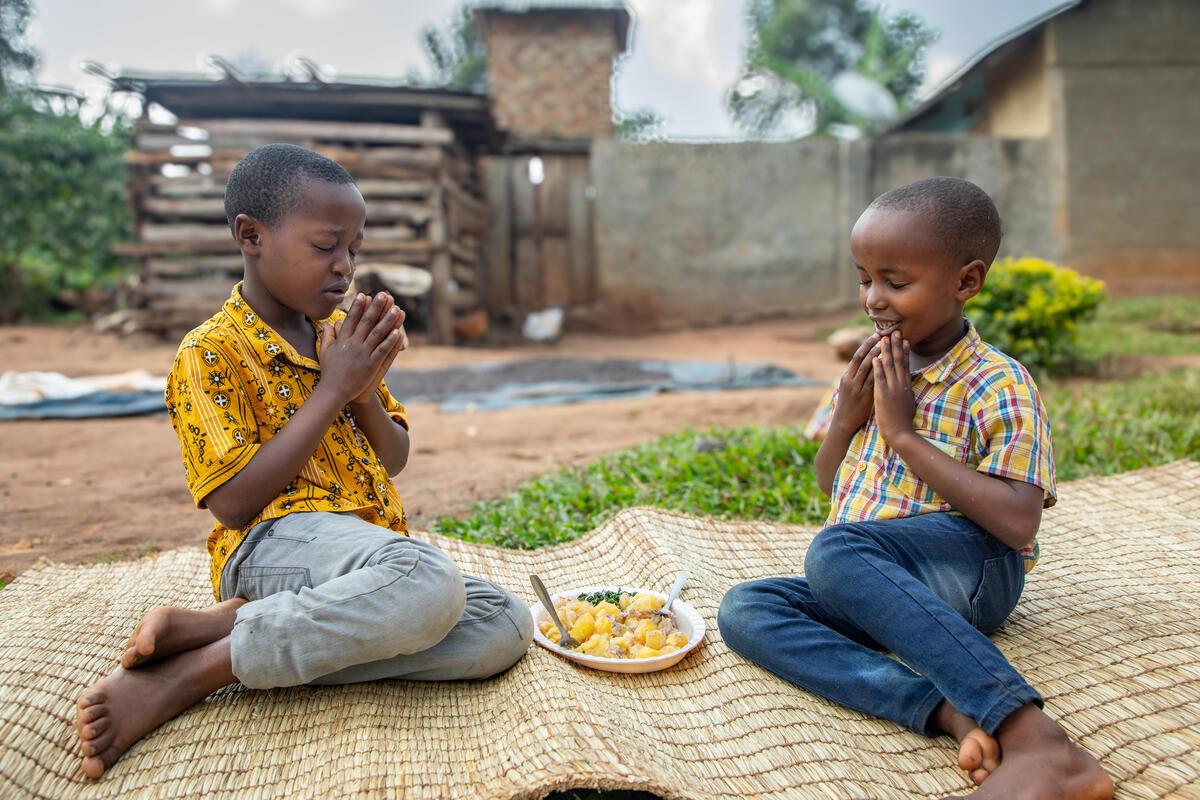
“After the World Vision trainings, I began to view the world from a different perspective,” says Dinah. “For the first time, I knew that my family had hope for a better future.” She continues, “I used to randomly pick vegetables that we found in the garden whenever we went for farm work, but after the World Vision training, I learned how to make kitchen gardens on my compound. My grandchildren can now eat vegetables anytime, and we no longer suffer from cases of malnutrition.”
Dinah’s household cluster started Savings for Transformation, where World Vision teaches each family or household to save 0.56USD per week. Each household acts as an accountability partner for the others, ensuring that every family implements an income-generating activity and saves money at the end of the week.
From the savings, households were able to borrow money at an interest rate of less than 5%, and they all shared the profits at the end of the year.
One of the objectives of the household cluster is to ensure that every child in the family gets access to quality education. “The savings for the transformation group have helped me keep my grandchild Javira and his siblings in school. Whenever I run out of money for school fees, I borrow money from the group and pay it back later,” says Dinah. “I now don’t have to worry about the stress of money lenders or having to sell my produce prematurely; I comfortably wait for them to mature and sell at a higher price,” she adds.
After Dinah was empowered on climate-smart agricultural practices like adding organic manure, irrigation, mulching, and spacing, her yields drastically improved. She no longer has to involve her grandchildren in farming. The children can now enjoy their school and have time to play with other children.
Today, the household cluster buys their produce after harvesting and sells it together so that they can bargain for better prices on the market.
“World Vision has supported the community of Kamwenge to form more than two hundred household clusters each, having between twenty-five to thirty families, and through these clusters, children are assured of enjoying life in all its fullness,” says Mary Nakiganda, the programme manager for Kamwenge-Kabambiro Area Programme
Dinah can now afford to keep Javira in school and provide for his healthcare. She is very determined to provide the life that she has always dreamed of for her children and grandchildren.